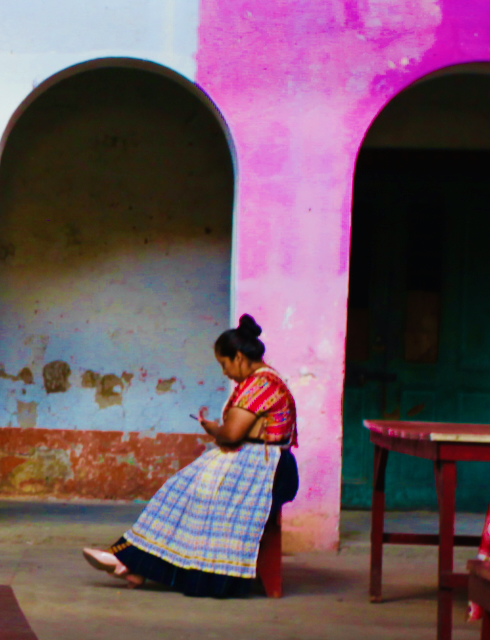
The history of the Women’s Movement in Guatemala traces a multifaceted trajectory encompassing a diverse range of ideologies and agendas that mirror the varied lived experiences of women across social, cultural, and economic spheres. Throughout the 36-year Internal Armed Conflict (1960-1996), numerous women played pivotal roles in the war, akin to their counterparts in the armed conflicts of El Salvador (1980-92) and Nicaragua (1979-90), albeit to a lesser extent as frontline combatants. However, the Guatemalan women’s movement played a significant role in their struggles for equality during a historic, ten-year period (1944-54) governed by democratically-elected presidents, Juan José Arévalo (1944-50) and then, Jacobo Arbenz (1951-54). The scholarship of feminist writers such as Ana Silvia Monzón tout the October ‘44 Revolution (la revolución de octubre 1944) as the event of historical significance in the advancement of Guatemalan women.1 Even so, it should be noted that as a whole, the Maya women were excluded in the historical narrative of activism since their perilous situation in the Armed Conflict far exceeded a vision of themselves as part of a women’s movement. The Guatemalan Women’s Movement had its beginnings amongst a particular segment of women, mostly in the middle-classes, who lived in the capital city (las capitalinas), and that could raise their voices and clamor for democracy. In time, however, women from various sectors joined in the organized struggle for freedoms and justice, ushering in an unprecedented period of activism among Guatemalan women. By the 1990s, women had achieved phenomenal advancements, as described by Monzón: “the élites acquired their demands for quality educational opportunities, especially in higher education, the right to vote, and to participate in the political arena; the women in the workforce, teachers, and unionists made inroads in the fight for dignified labor rights; and the field laborers gained advances in accessing land for growing their own crops.” Although women’s lack of reproductive rights remains relatively unchanged, a growing trend toward a feminist agenda in this regard is evident, if not in substance, certainly in sentiment. The Maya women, who comprise the indigenous demographics that approximate almost half of the total Guatemalan population, have remained steadfast in their demands for collective autonomy.2 Clearly, their advances underscore the multitudes of women’s visions, no less a formidable attempt to seize upon the need to address issues of the discrimination and racism that have plagued Guatemalan society for centuries. The leadership in the popular women’s movement continues to convey the message of unity, emphasizing that the thrust of their work has consistently engaged in struggles for the just cause, and against oppressive conditions experienced by every Guatemalan. What remains uncontested among socially conscious voices is the importance of contextualizing history to aid in a comprehensive understanding of how the past continues to impact the present and how current challenges shape the future.
This essay delves into the experiences of Maya women, many of whose lives were shattered by the atrocities of war. Despite facing immense challenges, they embarked on a courageous journey to reclaim their dignity and resilience. Along the path of healing, they offered support to others, showcasing remarkable perseverance that served as a testament to their spiritual strength and ancestral wisdom. Their journey through a bleak and tragic period, marked by profound consequences and the perpetrators’ display of unimaginable cruelty, underscores the importance of transcultural knowledge. This historical narrative challenges us to examine distinct cultural and ideological perceptions and to analyze these for understanding and connectivity. It also prompts us to consider how storytelling can shape our understanding of the world. As Alberto Manguel aptly puts it, “The telling of stories creates the real world. Is it possible for stories to change us and the world we live in?”3
A Personal Connection
The research project that underpins this paper emerged from the connections I cultivated with individuals from Mayan communities in central and northern Guatemala. Their openness in sharing their extraordinary narratives and deep insights proved indispensable to my research. The ensuing account serves as a testament to the poignant stories that the women graciously imparted to me.
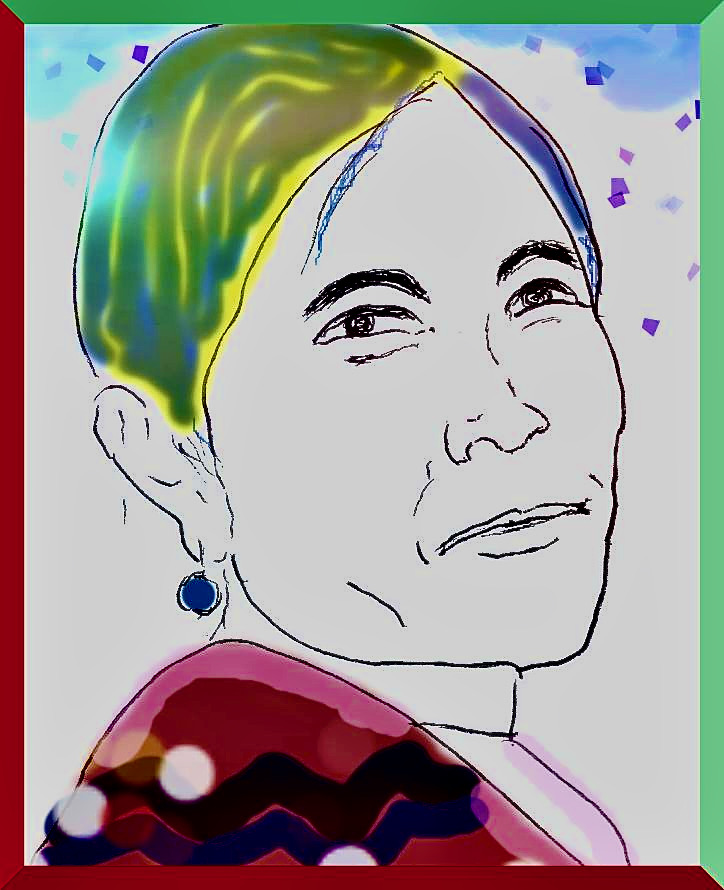
Doña Teresa, a Maya K’iché woman, relaxed and pensive on a mountain slope in Zacualpa, reflects upon her life-changes and transformations from the last three decades.4 She shares with me the story about how she and her family survived the Internal Armed Conflict. She was a teenager when the state military forces’ violent confrontations of terror and chaos shocked her community and thousands of others, causing death and destruction at a unprecedented scale. Historians compare the 36-year catastrophic Armed Conflict in Guatemala with the near-total devastation during and after the conquest of 1524 by the Spanish conquistadors.5 Doña Teresa and her family grew up subsisting in the mountainous part of Zacualpa, an area deemed excessively impacted by the military forces as reported by the United Nations report, Comisión para el Esclarecimiento Histórico (CEH).6 Zacualpa, where Doña Teresa grew up, and two other, K’iche’-speaking pueblos, Joyabaj, and Chiché, constituted one of the four geographical areas in Guatemala that were identified by the state military as the “internal enemies,” a term used to define civilians as insurrectionists. It was a false tactical assessment that served to justify their use of indiscriminate military power, killing and injuring thousands of innocent people.7
Doña Teresa’s healing practices are rooted in the Mayan spirituality and cosmovision, which together, encompass every aspect of her life. She learned the Mayan way of life through the cultural transmission process within her extended family and community. But when the Internal Armed Conflict erupted violently, the cultural and social foundations of life became fragmented and weakened.8 As a result of the tragic devastation of so many lives, as well as the loss of physical property and personal possessions, Doña Teresa turned her attention toward mere survival, for herself and her family.
Several decades later, her long, arduous journey of self-healing has closed a circle, and Doña Teresa’s vibrant and positive outlook on life is a testament of her determination to regain her spiritual strength, and to help others realize their journey of self-healing as foretold by their ancestors. The effects are far beyond the rewards of basic health and well-being. At the core of the principles that she espouses is the belief that a cultural reconstruction of the Mayan culture as an ancestral gift is the best antidote for the affliction that many people continue to suffer, especially the survivors of the war and their loved ones. As a member of a woman’s organization devoted to using native plants for alternative medicine, Doña Teresa is a change agent in the cultural reconstruction process.
WOMEN AS VICTIMS AND PROTAGONISTS
Women were violently targeted, specifically during the genocidal events between 1981 and 1983. The Comisión para el Esclarecimiento Histórico (CEH), the United Nations report on the Guatemalan 36-year Armed Conflict, concluded that at least 25 percent of the human rights violations and acts of violence were directedly attributed to women. However, children were also impacted as a result of the violence that women experienced. The CEH reported that a “large number” of children were also victimized, citing atrocious acts of torture, rape, and forced disappearances. Another document detailing the Armed Conflict, the REMHI investigative report, supported by the Archdiocese Office of Human Rights in Guatemala, includes first-hand accounts of several massacres in which the state military forces, in direct knowledge of villages whose male members had left for work in distant labor jobs, descended upon pueblos of innocent families, mostly women and children, and proceeded to torture, rape the women and young girls, murder, and destroy their entire farms, their homes, crops and farm animals.9 Several hundreds were killed instantly, or died from prolonged illnesses, while many more fled to the mountains for refuge. Disturbing images of graphic violence perpetrated against women and children are included in the internet version of the REMHI document.10 But these massacres were not isolated instances of violence, nor were the brutal massive sexual assaults on the women. The conclusions in the CEH report make reference to the systemic genocidal operations as deliberate actions inherent in a policy that could only have been executed with the specific mandate(s) of the highest governmental bodies. Indeed, the CEH includes statements regarding their investigation’s conclusions that the State of Guatemala is undeniably responsible for “human rights violations and infringements of international humanitarian law.”11 The violations perpetrated against women are underscored in the CEH report, and argues the case of genocidal killings committed by the state, i.e., that the official military plan, “Victory 82”, was part of the overall state’s National Security Doctrine. The report emphasized that the mission was to “annihilate the guerrillas and parallel organizations,” of which the “internal enemy” had been identified as the inhabitants or civilians of the specified locations.12 The State acted to intentionally destroy as many groups of Mayans as it could, and to cause damage to women as a whole and specifically targeting their reproductive capabilities. The data reveal that 89 percent of sexual assaults were committed against the Maya women, and mostly in the massive sexual violence during the massacres or invasions.13
Documenting Women’s Experiences
The documentation of the horrendous acts of crimes against women in violation of their human rights impels investigators to use extensive research methods and analytical lenses by which to study these actions.
Two recent reports, one published by Luz Méndez Gutiérrez and Amanda Carrera Guerra, Mujeres indígenas: clamor por la justicia;14 and another, Tejidos que lleva el alma by Amandine Fulchirone,15 highlight the women’s traumatic events as well as their recovery from their personal perspectives.
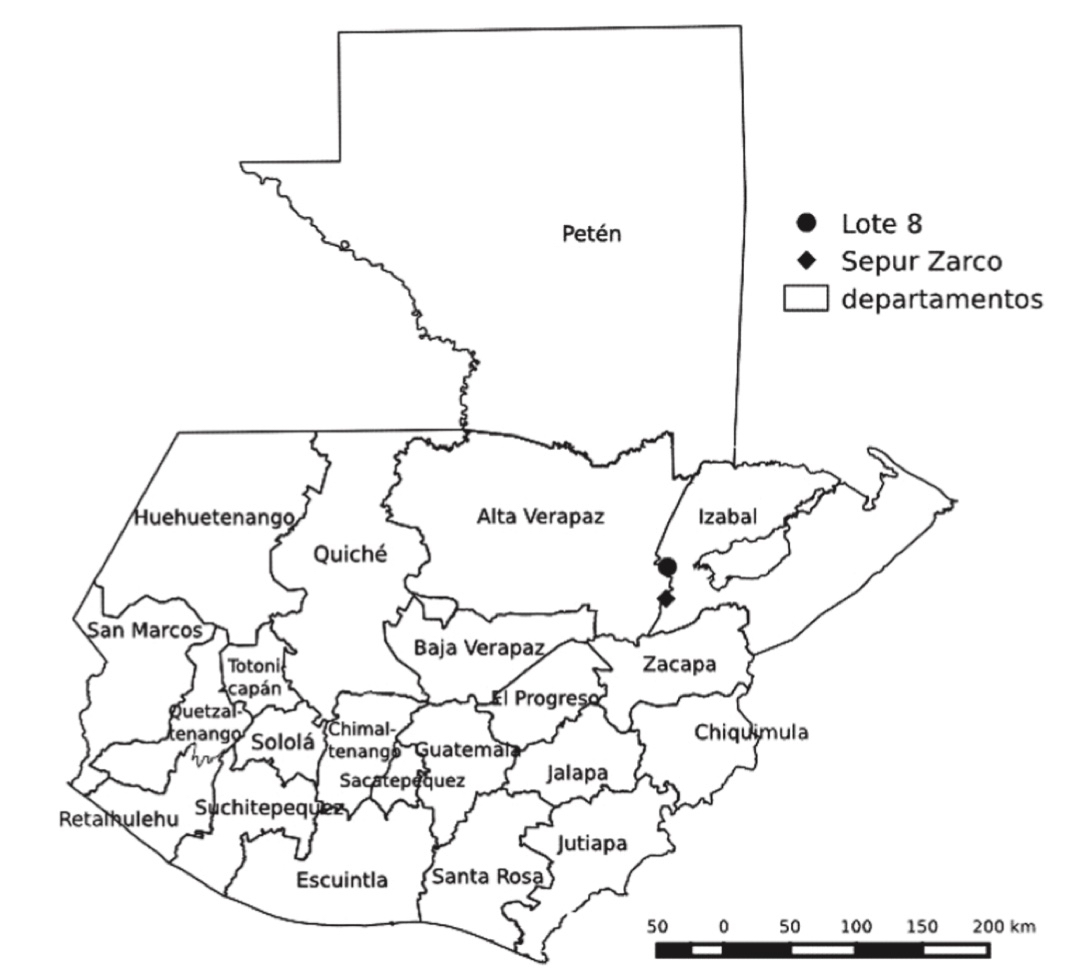
Luz Méndez Gutiérrez and Amanda Carrera Guerra’s study includes two groups of women: the survivors of the Sepur Zarco invasion during the Armed Conflict which occurred between 1982 and 1988; and the survivors of the massive sexual assaults that occurred in Lote Ocho in 2007 during an invasion by the Policía Nacional Civil and Military (government) forces and security units employed by the HudBay transnational mining company, a subsidiary of Compañía Guatemalteca del Niquel (CGN). Both groups of women reside in Q’eqchi’ communities of el Valle del Polochic (El Estor, Izabal, bordering Alta Verapaz) in the towns of Sepur Zarco and el Lote Ocho, respectively. The authors interviewed almost 60 women all together, individually and/or in focus groups. Their pre-established premise forms the basis of their study, i.e., in Guatemala’s institutions the indigenous populations are systematically discriminated against, and that racism against the indigenous people is at the root cause of inequality. Through their narratives, numerous women subjects gradually developed a deeper comprehension of the gender-based injustices they endure. Thus, the patriarchal system that dominated their lives was integral to their understanding of how they were (and continue to be) systematically and socially excluded, and discriminated against. The investigation sought to document the human rights violations perpetrated against the women, and how the women pursued justice for the crimes committed against them.
The Lote Ocho Case: Justice in the Court of Law as a Form of ‘Healing’
The Peace Accords document was signed in 1996, purportedly ending the devastating 36-year Armed Conflict. Yet, eleven years later, in January of 2007, the war had not ended, at least not according to the inhabitants in the remote community of Lote Ocho.
An incendiary land dispute between the Q’eqchi’ community members and owners of the HudBay Minerals and HMI/Skye mining company in charge of the Fenix mining project, came to a halt when the corporation ordered the eviction of the residents they claimed were blocking the construction of their mining project. The Fenix project security guards (the Campañía Guatemalteca del Níquel or CGN), the police, and army took charge of the violence and destruction on January 7th and 8th, according to the lawsuit summary filed by the legal counsel representing the affected Q’eqchi’ women.16 A week later, the same kind of callous force was repeated by the three enforcement units, however, the soldiers’ uses of violence became increasingly brutal and extreme. In the January 17th eviction, the uniformed soldiers attacked viciously, and the terror and destruction tactics they employed were strikingly similar to those used by the state military units during the Armed Conflict. According to the survivors’ description of the events on that day, the armed guards and soldiers surrounded the homes, and everyone took cover, paralyzed with fear. After the soldiers broke down the front doors, they asked the women, many with their children, the whereabouts of their husbands. The women bravely stood steadfast against the armed soldiers that had surrounded the entire community. They believed that since their husbands were all gone to work in the distant fields, the soldiers would not harm them. But, the commanding officers knew that the men were absent, and strategically targeted the community in their absence. As they ordered the inhabitants to leave their homes, they were doused with tear gas; soldiers with powerful guns sprayed bullets everywhere, barely sparing the lives of family members as they frantically escaped their homes. Before their homes were completely torched, the soldiers destroyed their essential belongings such as the grinding stones, dried corn in storage bins, their beds, clothing, tables and chairs. Then, they destroyed their crops and killed their domestic animals. They stole food and any materials they found of value.
After they had terrorized the families and destroyed their possessions, the uniformed soldiers proceeded to torture the women and girls. The sexual assaults were massive. The women suffered long-term consequences; pregnant women miscarried; internally injuries caused infertility; and psychosocial, emotional trauma left permanent scars.17
An intriguing documentary titled, Defensora, includes an explanation behind the three lawsuits brought against the Canadian mining company. In the first case is plaintiff Angelica Choc, whose husband, Adolfo Ich Chaman, was murdered in 2009 by a security guard with the mining company. Second, the case of Rosa Elbira Coc Ich, representing herself and the women that were sexually assaulted during the unlawful eviction of 2007, and lastly, the case of German Chub Choc, who was shot and paralyzed by a security guard in 2009.18 The fact that the cases are litigated in the Canadian court of law sets a precedence, and the long-held belief that foreign investors cannot be held accountable for their crimes is in jeopardy. Even if the cases don’t reach an absolute resolve, it’s clear that for the families and community of Lote Ocho, their long journey toward justice has finally reached the pinnacle.
The Sepur Zarco Case, 1982-1988
The women in this study, known as the Sepur Zarco abuelas (grandmothers) from the aldea (the town) of the same name, endured a six-year, torturous imprisonment during the Armed Conflict.19 The state military and paramilitary forces had established a number of army bases near their community on the fincas (large plantations) of owners (finqueros) who welcomed the military. The women’s husbands were “disappeared,” a term commonly used to indicate that they were murdered and buried in a clandestine grave. The military officials told the women that as widows they were obligated by law to work as servants for the soldiers. They were threatened with death or injury to their children if they didn’t comply. The women endured an inexplicable emotional, physical, debilitating pain while the men physically abused and sexually assaulted them. The women were forced to labor as domestic workers, cooking and cleaning for the men while their own children were left unattended. Not only had the military assassinated their husbands, but had also kidnapped their teenage sons, and burned their homes to the ground. Everything they owned had been destroyed. The women had to build simple, makeshift shelters near the military base for themselves and their children. They worked twelve-hour shifts without pay and all of the women were sexually assaulted at gunpoint. The six-year reign of terror and imprisonment ended when the military bases were finally shuttered in 1988.
Many of the women believed that the reason they were targeted was because their husbands (the campesino leaders who were “disappeared”) had filed formal complaints with government officials about their land claims and titles. The large landowners (called “finqueros”) were eager to collaborate with the government on any strategy to quash the campesinos’ efforts to pursue their rights to their ancestral lands. The finqueros became apprehensive as their land titles were based on fraudulent or illegal means. Additionally, the military forced the women into subservience using the “widow’s law,” coercing them to comply with the soldiers’ criminal activities. The military base in Sepur Zarco where the women were enslaved bore the United States trademark in most of everything that was used: weapons, ammunition, vehicles, communication devices, etc. Even the well-equipped army personnel had received training that originated from the United States. The army was well-prepared for combat of any scale. But, the military base was used as a transitional station for their soldiers, and faced a minimum amount of threat, if any, from counterinsurgency attacks. The military’s explanation for using extreme military tactics was to keep the guerrillas from infiltrating and contaminating the indigenous population. The state relied on the rhetoric that best suited the interests of the United States, i.e., to keep the communist from taking over, and keeping Guatemala “safe and secure.”
From Victims to Change Agents
Although the 1996 Peace Accords opened up a space for advancing women’s rights, the government lacked the resources or the will (or both) to initiate mechanisms by which to appropriate justice for human rights violations committed against the women.20
However, autonomous feminist organizations began to propose actions that addressed the critical needs of women whose human rights had been violated during the Armed Conflict. In 2003, feminists Yolanda Aguilar and Amandine Fulchirone sought the collaboration of four organizations to launch a project of support, development, and investigation related to the human rights violations committed against the indigenous women.21 These associations were Mamá Maquín; Mujeres Petén Ixqik; Union Nacional de Mujeres Guatemaltecas (UNAMG); and Equipo de Estudios Comunitarios y Atención Psicosocial (ECAP).22 The key goals and objectives of the collaborative called el Consorcio, revolved around breaking the silence (“romper el silencio”) and recovering the history (of human rights violations), and in guiding and supporting women in transcending the complex psychological and social obstacles in order to develop self-validation, self-affirmation, and self-esteem. These were extraordinary goals considering that the women initially felt unable to share their utmost intimate and private tragic experiences. Additionally, they refused to subject themselves to social backlashes like the types they had experienced in the wake of the violations when they felt stigmatized, of no fault of their own, for having been sexually assaulted. The women had lost their place of dignity and respect in the social realm of their communities and as widows, they were left without the prospects of land ownership. But as members of el Consorcio, the women courageously seized the moments of challenge and opportunity and reached out to other women that sought their help, sharing their journeys of self-healing.
The Formation Stage of El Consorcio, 2004-2008
El Consorcio involved sixty-two women from four different Mayan pueblos: Chuj, Mam, Kaqchikel and Q’eqchi’. The group leaders consisted of Guatemalan feminists who served as facilitators, supporters, and confidantes, and their first and foremost task was to build trust between and amongst each other. From the outset of the formation period, the women shared their stories and gradually, they began to feel confident enough to talk about the worst parts of their experiences, i.e., the sexual assaults. Clearly, the women’s successful participation was largely due to the group’s dynamics that eventually engaged everyone to support each other and learn from one another, creating a consensus-building spirit with intentions of overcoming the individual tragedies and developing solidarity and sisterhood.
As a part of their investigation, the Consorcio (also known as Colectivo) helped the women develop biographical profiles and personal narratives, and then, published them on their website.23 The women’s understanding of their role in helping other women who had similarly suffered during the Armed Conflict influenced the way they shaped their responses. Their voices exude with powerful resonance, not only because they speak from the heart, but for the message of re-birth and self-validation specifically directed toward the women for whom they sense an obligation to support and comfort, and let them know that they are not alone.

THE WOMEN’S VOICES
In this section, the previously published narratives of three women are featured, translated from Spanish and summarized: Doña Julia, Doña Dorotea, and Doña Carolina.
Doña Julia
Doña Julia resisted the move to a refugee camp in México, but it was the only option she had in order to stay clear from the violence triggered by the Armed Conflict during the 1970s and 80s. Once she and her family fled from her home, the Maya Chuj aldea of Subajasum, near Nentón Huehuetenango, they were unable to return until after the violent skirmishes subsided, but by then, their home had been completely destroyed.
Doña Julia’s childhood and adolescence were “normal and typical” of females in her pueblo. At birth, she was disdained by her father who preferred a male child, and the extreme poverty that they experienced caused the usual predicaments of hunger, malnutrition, and lack of education. But in her community, her father had the option of “selling” his daughter, as was the custom, to a man that would eventually carry her off as soon as possible. The young Julia refused this arrangement and left home to live with relatives.
Doña Julia discovered that fleeing a “problem” was the best solution. She suffered serious physical, emotional, and psychological abuses, but the worst one was the sexual assault by a guerrilla soldier. Although she wasn’t killed in the attack, the resulting psychological and emotional scars were deep and long-lasting.
At the Mexican refugee camp, Doña Julia became involved with the women’s organization, Mamá Maquín. This experience proved to be life-changing. She believes that by participating in the organization she became a very different person. She acquired literacy skills in Spanish; she learned about human rights, and her legal right to own land, and how the justice system operates. She thought she didn’t have any rights because of her gender. She continued to participate with the organization for six years. She’s proud of her accomplishments and feels confident that she can overcome the obstacles to achieving her goals. She explains her awakening in this quote:
“Yo era una persona dormida, inconsciente, pero gracias a Mamá Maquín aprendí cosas buenas y a dejar atrás todos esos obstáculos que no nos permiten hacer muchas cosas.” (I used to be an uneducated, passive person, but thanks to Mamá Maquín I learned so many good things and I left behind the obstacles that impede our efforts to accomplish so many good deeds).24
At first, Doña Julia was afraid to talk about her sexual assault experience. But then, she realized that many of the women in her group had had similar experiences. The women had remained “silent” for so many years and Doña Julia understood their pain and sadness. Gradually, she convinced the women of their rights to denounce the crimes committed against them, and to seek justice. She explained that the men that raped them have always escaped punishment, while the women victimized by them are left with the social repercussions and psychological scars.
In expanding her role from student to teacher in the Mamá Maquín organization, Doña Julia acquired a kind of re-birth that she had not expected: a genuine sense of self-validation, confidence, and self-esteem. Her empathy toward women who have been sexually assaulted or physically abused was sincere; in every case she felt as though she was the victim. But, she’s not running away from the problem anymore because she has learned how to cope and resolve.
Her spirituality is at the base of her strength. She describes how she practices her faith in this quote:
“Me pongo a rezar con candelas, veladoras y pom, pido por el corazón del agua, de la tierra, del aire y de la naturaleza, enciendo mis velas por todo lo que existe en la naturaleza, yo misma voy a buscar el copal y lo enciendo, cuando hago eso, me alegra mucho el corazón.”
(I pray with candles and incense; I ask for strength from the heart of water, the earth, the air, and nature; I burn my candles for everything that exists….. when I do this, my heart feels so happy).25
Doña Julia’s simple but powerful words capture the women’s sentiments: “Estoy aquí, sobreviví, estoy viva.” (I am here, I survived, I am alive).26
Doña Dorotea’s Inner Strength
After Doña Dorotea lost her possessions of value, she was taken by force, and during a six-year period in the early 1980s, she and numerous other women in their Q’eqchi’ pueblo were sexually assaulted by the soldiers. Apart from her home, her possessions, and of course, her beloved family members, Doña Dorotea felt empty and lost without the spiritual practices that she had known since childhood.27
The Maya Q’eqchi’ attribute their existence to a special relationship with the land and the mountains. They believe that the mountains are alive, and each one is a sacred dwelling for a spirit akin to a personhood which is central to the relationship between the mountain and the people. They are known as Tzuultaq’a, spirits in the form of human beings that are imagined as members of their community. Caves are spiritual spaces for the traditional Q’eqchi’ that perform rituals of sacrifice, giving thanks and offering food in return for what the spirits have given them. The bond between the Tzuultaq’a and people must be maintained for good health and prosperity. For the Q’eqchi’, using the land to plant and harvest is considered a religious event as they perform their rituals; in their prayers they ask the Tzuultaqa’a for permission and offer their undying gratitude.
Anthropologist Richard Wilson explains that “so long as the Mayans are alive in the mountains, each community claim to be the rightful owner of the land remains alive too.”28
Doña Dorotea survived the Armed Conflict, but after her community was demolished she joined the thousands of people as refugees in search of a new life.29 Without her community, the respected elders and the collective traditions and customs of spiritual manifestations, Doña Dorotea relied on her own strength and beliefs as part of the healing process. She alone summoned the Tzuultaq’a in her dreams and interpreted their words for guidance. She found her inner strength in the ancient traditions of her culture to resolve the painful lingering problems that impeded her ability to live her life to the fullest. As an integral member of the Colectiva, Doña Dorotea is known for spiritual devotion, believing that everything in our natural world has life, and the need to show our appreciation by offering our positive energies. Her inner strength and self-respect is well-noted in her leadership abilities, and as a dutiful, passionate advocate against domestic violence.30
Doña Carolina
Doña Carolina’s story begins when she embarked on journey of grief, searching in clandestine graves for the eight members of her family killed violently during the Armed Conflict, Her story is exemplary of how women transform their lives to become beacons of light in a journey of hope.31
Doña Carolina, a Maya Kaqchikel “war widow” from Chimaltenango, spent many years after the 1996 Peace Accords demanding to know where her loved ones were buried. But the government would not lend assistance to any of the war widows’ demands, and Doña Carolina had no other choice but to assume the responsibility on her own. She had lost her husband, tortured and then murdered; her father and two-year-old son were killed in front of her; her sister and her brother-in-law; her mother-in-law; her sister-in-law; and her husband’s brother. She and her mother survived, miraculously. During the entire search process she was stricken with grief, sadness, and a broken heart. She was among the organizers in the exhumation of 35 corpses, where she recalled she almost died, then, and in numerous other occasions.
Doña Carolina’s indefatigable determination to find the graves of her disappeared family became her life’s work. She began to work with Rosalina Tuyuc, the founder of the human rights organization, CONAVIGUA (The National Association of Guatemalan Widows), and was asked to share her inspirational story of grief and service with others. Her work evolved into a mutually-supported effort focused on the recovery of collective memory and in seeking the truth and justice. She was also involved in organizing the war widows of San José Poaquil and helped them denounce the sexual assaults committed by the army, and demanded that the government remove the military base from their municipality.
The processes of self-validation and self-affirmation are evident in Doña Carolina’s overcoming the immense pain that she managed to control, and in becoming a strong, passionate supporter and advocate on behalf of women and others that clamor for justice and reparations. She is an intrepid leader, and quotes in her narrative that “even if I go to jail I will still keep going forward.” (Soy fuerte no tengo miedo. Aunque me vaya en la cárcel puedo salir adelante).32
In their long journey of hope, the women relied on their collective strength to attain unity as well as self-reflection. They engaged in a process of accompaniment (“el proceso de acompañamiento”), as integral to the collaboration between the women and the feminists, blending their support and guidance throughout the stages of the women’s development.
SEEKING JUSTICE THROUGH THE HEALING PROCESS
The road toward recovery for the eleven Maya Q’eqchi’ women survivors of the Sepur Zarco sexual assault case was excruciatingly painful, explains Luz Méndez Gutiérrez, moderator in a documentary film about the Sepur Zarco case.33The women felt shame and guilt; they kept this “dark” secret to themselves which further exacerbated their emotional, psychological, and physical injuries. Twenty-five years later, between 2004-2011, the women began to share their heart-wrenching stories publicly, eventually marking the end of a difficult “metamorphosis” transformation, enabling them to acknowledge their life as victims in the past, and their newfound freedom as change agents (“actoras de cambio”) in the present.
The women’s decision to demand justice for the crimes committed against them was a remarkable achievement. Once they had taken this important first step, the national and international human rights and feminists organizations provided assistance and support. A support network was organized in 2010, called the Alliance to End Silence and Impunity, specifically to address the human rights and gender inequality (UN Women) and Mujeres Transformando el Mundo (MTM); to lend psychological and social support to the women by el Equipo de Estudios Comunitarios y Atención Psicosocial (ECAP); and to establish political precedence at the national and international levels, i.e., la Unión Nacional de Mujeres Guatemaltecas (UNAMG). The fifteen women asked the court to charge those responsible for the crimes, to reveal the truth of the events and the consequences, and to apply the necessary jurisprudence so that the crimes would be punished and not be repeated. The women insisted that no other woman or girl should be subjected to such violence as they personally experienced.34
The Court of Conscience was formed to serve as a symbolic form of justice, called “el tribunal de consciencia contra la violencia sexual hacia las mujeres durante el conflict armado de Guatemala,” (the tribunal court of conscience against the sexual violence of women during Guatemala’s armed conflict).35 The Court of Law that normally processes these types of crimes was yet to be formed by the Guatemalan legal system, nevertheless, the Tribunal Court served the purpose of allowing the case to go forward.
A three-year investigation yielded substantial evidence to charge two former military officers: Lt. Col. Estelmer Reyes Girón and military commissioner Heriberto Valdéz Asij. Both men also faced additional charges of murder.
Then, on February 26, 2016, presiding judge, Yassmin (also spelled Yasmin) Barrios Aguilar, the president of the High-Risk Court of Guatemala, handed over the verdict of guilty for both men, including a prison sentence of 120 years for Reyes Girón and 240 years for Valdez Asij. Reparations that address the health and education needs of the community were also included.36 The Sepur Zarco case brought to justice those responsible for the crimes of sexual slavery committed against the women during the course of an armed conflict. It was the first of its kind in Guatemala and the world.37
For many women that experienced sexual assault during the Armed Conflict, the Sepur Zarco case advances their pursuit for justice. Although the State of Guatemala has formerly agreed upon certain declarations that function as laws to protect women and prevent crimes of violence against them, many human rights advocates are dismayed over the lack of adequate enforcement that render these protection measures as meaningless. Resolution 1325, adopted by the United Nations Security Council on October 31, 2000, declares that the government has the responsibility to end impunity and prosecute those responsible for “genocide, crimes against humanity, and war crimes including those relating to sexual and other violence against women and girls.” In a communiqué by Immunity Watch, a statement of support is mentioned concerning the Sepur Zarco case, however, it also reiterates the need to specify reparation measures for the victims, to “overcome the structural conditions that allowed the public security forces to perpetrate sexual violence against women.”38
On February 21, 2018, two years after the decisive verdict, the Ministerio Público de Guatemala and the United Nations Women (UNO) awarded the 14 surviving abuelas (grandmothers) a special recognition, including a Medal “Naxjolomi,” signifying their courageous leadership, “aquella que lidera,” in Q’eqchi’.39 The (remaining) survivors are: Matilde Sub, María Ba Caal, Felisa Cuc, Margarita Chub, Cecilia Xo, Catarina Caal, Manuela Bá, Candelaria Maaz, Rosario Xo, Carmen Xol, Antonia Choc, and Demesia Yat. María Ba Caal’s main concern is that because of her advanced age, she may not see the reparations that were included in the verdict.40
IN DEFENSE OF THE INDIGENOUS WOMEN’S RIGHTS
The work of women who served as human rights defenders played a key role in facilitating the indigenous communities in their struggle to bring justice against their perpetrators, many of whom believed that their crimes would never be exposed. Among these was Luz Méndez Gutiérrez.
Luz Méndez Gutiérrez’ prior experiences in the counterinsurgency movement during the Armed Conflict and in the post-conflict, the 1996 Peace Accords process were instrumental in the development of key aspects of the investigative report, Mujeres indígenas: clamor por la justicia: violencia sexual, conflict armado y despojo violento de tierras. In the 1970s, Méndez was an activist with the Guatemalan Labor Party (el Partido Guatemalteco del Trabajo or PGT), which became part of the Guatemalan National Revolutionary Unity (Unidad Revolucionaria Nacional Guatemalteca or URNG) in the 1980s. In 1991, she was appointed Political Diplomat by the URNG as a representative in the Peace Accords process. As the only female in the committee, she began to understand her vital role in representing women, and in particular, the indigenous women, for whom she had deep regards for the suffering they had endured during the 36-year Armed Conflict. However, understanding that her depth of knowledge about their experiences was insufficient, she became a dedicated researcher, collecting data from multiple sources, including first-hand information from the affected women, and the organizations that supported the women. As part of the peace negotiators, Luz Méndez played a crucial role in the inclusion of an “Office for the Defense of Indigenous’ Women’s Rights” in the Peace Accords’ official document.41 Included in her research were feminist organizations, such as the National Union of Guatemalan Women (Union Nacional Asociación de Mujeres Guatemaltecas or UNAMG) and human rights authorities such as the United Nations Women (UN Women). Her leadership, along with others, was instrumental in assuring that the Peace Accords include the substantial advances on the rights of indigenous women, especially their rights to demand justice against all forms of violence against women.42
Mamá Maquín: A Community Leader that Inspired Thousands of Women
In the report that Luz Méndez co-authors with Amanda Carrera Guerra, Méndez highlights a quote from one of the women that she interviewed. The women’s message, clear and concise, seems to echo Mendez’ compassionate but profound perspective in her role as a researcher/writer and activist: “Que todos sepan lo que sufrimos las mujeres. Sufrimos destrucción de nuestras cosas, violación, nos dejaron sin tierra,” (Everyone should know what we went through… we suffered the destruction of our personal belongings, sexual assault, and we were left without land.)43
At the time that Mamá Maquín joined the march of Maya Q’eqchi’ protesters in the heart of Panzós, Alta Verapaz on May 29, 1978, she was known as a respected leader and spokesperson for the campesinos (farmworkers) fighting for their rights to procure land titles that they had inherited from their ancestors over a century ago. What was unknown to her and the rest of the large group of unarmed, peaceful protestors of men, women and children, was that the army awaited at the end of the street. In a surprise attack, the soldiers opened fire on the crowd, and although, everyone scurried to safety, there were hundreds killed or injured. Some of them, including women and children, jumped into the nearby Río Polochic seeking relief, but instead, drowned. This was later known as the “Panzós Massacre.”
María Maquín, granddaughter of Mamá Maquín, recounts her experience on the day of the march. She was twelve-years old at time, alongside her grandmother when they were fired upon; her grandmother was shot and killed but she managed to dodge the bullets, and pretended to lay dead until she was able to escape with the others to the mountain.
The soldiers ordered to quash the rebellion were trained as assassins at the Zacapa military base, headed by a former military president, Carlos Arana Osorio (1970-74), known as the “butcher of Zacapa.”44 Approximately, 140 to 150 unarmed, peaceful protesters were killed and later, buried in clandestine graves by the soldiers.47
Mamá Maquín, whose real name was Adelina Caal, earned the title Mamá, which denotes respect and admiration, and was so honored because of her leadership in the fight for the campesinos’ rights to land titles that had been revoked or stolen by the government. The May 29th March was part of a series of protestations enacted by campesinos (farmers, activists, community leaders, etc.) from various Mayan pueblos, all of whom shared similar grievances, e.g., lack of land, discrimination, forced conscription, and low wages. The land that the campesinos used for their livelihood had been illegally transferred to wealthy landowners who claimed to have bought the titles. These titles were issued under the auspices of the government agency, the Guatemalan Agrarian Transformation Institute, administered by Hans Laugerud, the brother of the Guatemalan president, Kjell E. Laugerud García (1974-78). The fraudulent titles were given to wealthy landholders on a regular basis, many of whom had high-ranking positions in the military and/or the government. The area for which they had personal interests, called the “zone of the generals,” had extensive oil and nickel deposits and was amenable to raising cattle.48 The small number of wealthy landholders (2 percent) laid claim to more than 57 percent of arable land, which the Mayan pueblos considered extremely unfair and unjust. They were unable to sustain a living under the circumstances without resorting to migratory work as field hands.49
Campesino leaders and activists began to build a support base in 1974, after the fraudulent presidential election of the military-supported Kjell Laugerud García. However, the spectacular success of the 150,000-strong, nine-day Ixtahuacán Miners March in November of 1977 compelled the Committee for Campesino Unity (CUC) to take the affirmative steps in becoming an organized, liberally-oriented, organization dedicated to the struggles of the rural Maya pueblo campesinos.46 It was against this background of peaceful protests that the Panzós May 29th March was organized by the community leaders, including Mamá Maquín.
In a historical panorama, the “Panzós Massacre” was a crucial event that provoked and accelerated forward the 36-year Armed Conflict. Two years later, in January of 1980, a group of K’iche’ and Ixil men peacefully occupied the Spanish embassy in the hope of garnering international attention of the killings of civilians, especially in the north Quiché pueblo communities.47 The government, presided by President Fernando Lucas García (1978-82), acted with brutality and burned down the embassy, killing everyone inside, including the protesters. Just a few weeks later, the Committee for Campesino Unity (CUC) organized a leadership conference that introduced a document known as the “declaración de Iximché,” or as author Arturo Arias asserts, was actually a declaration of war against the state forces.50
As an organization, Mamá Maquín originated in México where hundreds of Mayan families were refuged after fleeing the violence in Guatemala. Amongst these groups were the inhabitants of Santa María Tzejá, a K’iche’ community that had been devastated by the violence. In her book, Beatriz Manz describes their journey through the horrendous years of the Armed Conflict. Although hardships and tragedy dominated their lives, Manz makes the concerted effort to focus on the strengths and accomplishments of a people that lost everything but fortuitously embraced the opportunity to apply fresh ideas to a new start in life.51 Mamá Maquín organization promoters offered post-conflict workshops to help women learn a broad and deep perspective of the chaotic and complex Armed Conflict, and to understand, protect, and defend their rights. Rosalía Hernández was a founding member of Mamá Maquín in México and took great lengths to help women in all aspects of self-help, including the use of birth control methods. Of course, some of the women were in opposition to what Hernández proposed, but many others benefitted from the organization, such as Doña Julia.52
CONCLUDING REMARKS
The inspirational success stories of women who participated in the Colectiva and whose narratives are presented herein, are imbued with a unique significance when analyzed from the historical and social perspective of a survivor. Guatemala’s 500 year-old history of conquest, colonialism, and Armed Conflict is replete with countless stories of struggle for justice, which often seemed untenable for the majority of Guatemalans against a backdrop of institutionalized racism and discrimination. The narratives of the women in the Colectiva serve as poignant reflections of their journeys towards hope, resonating not only through their individual triumphs but also in the powerful messages they convey to the global audience. While their collective tale is woven with threads of profound sadness, tragedy, pain, anguish, and frustration, it also illuminates their remarkable resilience in overcoming numerous brushes with death and defying the potential for enduring psychological and emotional trauma. Instead of succumbing to despair, they exude a profound appreciation for life and the beauty of the natural world that surrounds them, embodying a profound sense of hope that transcends boundaries.
END NOTES
1. Ana Silvia Monzón, “Entre Líneas: Participación Política de las Mujeres en la Década 1944-54,” (Tesina del Diplomado en Especialización en Estudios de Género, Fundación Guatemala/Universidad Rafael Landívar, Guatemala, 1998).
2. Ana Silvia Monzón, Las Mujeres, los Feminismos y los Movimientos Sociales en Guatemala: Relaciones, Articulaciones y Desencuentros, (Facultad Latinoamericana de Ciencias Sociales FLACSO-Sede Académico Guatemala, 2021). Accessible athttps://www.puees.unam.mx/curso2021/materiales/Sesion13/Monzon_LasMujeresLosFeminismosYLosMovimientosSociales.pdf.
3. Alberto Manguel, The City of Words. (Toronto, ON: House of Anansi Press Inc., 2007), 3.
4. Zacualpa is in the department of El Quiché, Guatemala, about 100 kilometers northwest of Guatemala City. This excerpt is based on an interview and is accessible in YouTube, Doña Teresa, at https://youtu.be/0cax5MMvBBg.
5. The official investigative reports concurred that during the Armed Conflict, from 1960 to 1996, at least 440 rural massacres (some reports estimate 669 massacres) took the lives of 200,000 people; 83.3 percent were Mayans; the department of Quiché had 45.5 percent of the total violence and had the most casualties; the perpetrators consisted of 93 percent state forces (Army, Civil Patrols, Commissioners). Additionally, 45,000 people, mostly civilians, have been reported “disappeared” and over a million inhabitants, mostly Maya, were forced to flee their homes. See CEH: Report for Historical Clarification, 1999, the English language summary version, accessible at https://www.aaas.org/sites/default/files/s3fs-public/mos_en.pdf?adobe_mc=MCMID%3D31219200981284036790026633326666170976%7CMCORGID%3D242B6472541199F70A4C98A6%2540AdobeOrg%7CTS%3D1640551966.
6. The Comisión para el Esclarecimiento Histórico (CEH) is a comprehensive report that chronicles the Armed Conflict from its beginnings in 1960s to the 1996 Peace Accords; the investigations yielded detailed information regarding human rights violations, deaths, massacres, forced disappearances, physical destruction, etc. A trove of evidence was acquired from direct testimonies of survivors and witnesses. See the CEH, the English language summary, 39.
7. CEH, 23.
8. Information about the torture tactics used by the military is posted on the webpage, Zacualpa Parish of Espiritu Santo, accessible at http://faithandlabor.blogspot.com/2014/06/the-parish-of-espiritu-santo-in.html.
9. See Main Page of REMHI, El informe del proyecto interdiocesano de recuperación de la memoria histórico Guatemala: nunca más (a summary, un resumen), (Oficina de Derechos Humanos del Arzobispado de Guatemala, 1998), 113-114. This document is accessible at http://www.odhag.org.gt/publicaciones/remhi-guatemala-nunca-mas/.
10. See TOMO 1, 91. This document is one of four volumes, accessible at http://www.odhag.org.gt/publicaciones/remhi-guatemala-nunca-mas/.
11. CEH, 41.
12. CEH, 40.
13. Luz Méndez Gutiérrez and Amanda Carrera Guerra, Mujeres indígenas: clamor por la justicia: violencia sexual, conflicto armado y despojo violento de tierras. (Guatemala: ECAP and UNAMG, 2014), 78.
14. Luz Méndez Gutiérrez and Amanda Carrera Guerra, Mujeres indígenas: clamor por la justicia: violencia sexual, conflicto armado y despojo violento de tierras. (Guatemala: ECAP and UNAMG, 2014).
15. Amandine Fulchirone, (and her team: Olga Alicia Paz, Angélica Lopez, María José Pérez, Patricia Castañeda, & Luisa Cabrera), Tejidos que lleva el alma: memoria de las mujeres mayas sobrevivientes de violación sexual durante el conflicto armado, (Guatemala: ECAP and UNAMG, 2011), accessible at https://unam.academia.edu/AmandineFulchiron.
16. For additional information, see Summary of Caal v. HudBay (Lawsuit regarding the rapes at the community of Lote Ocho), accessible at http://www.chocversushudbay.com/about/#Summary%20of%20Caal
17. Similar violent evictions that occurred in the Lote Ocho, Q’eqchi’ community had been repeated throughout the Armed Conflict. The military committed hundreds of massacres and killed and injured thousands of innocent people, mostly among the indigenous population, and thousands of women were sexually assaulted. In the Izabal/Alta Verapaz region, 9 percent of the 1980-1983 genocide victims were Maya, or at least 18,000. This information is recorded in both the CEH and the REMHI reports.
18. The film, Defensora, is produced by 6Kidsproduction, Girl Edge Films and the Right Actions Organization. Included are interviews with the three plaintiffs. The film is accessible at https://youtu.be/G-1qQoUEeO8.
19. Luz Méndez Gutiérrez and Amanda Carrera Guerra, Mujeres indígenas: clamor por la justicia.
20. In the 2017, the CEDAW report includes the following statement that underscores the government’s lack of attention to this matter: “(22.) The Committee is concerned, however, about the significant delay in the implementation of the Agreement on a firm and lasting peace, especially with regard to reparations for the crimes perpetrated against women during the internal conflict and the pledges relating to the advancement of women.” See Guatemala’s response in the document, “List of issues and questions in relation to the combined eighth and ninth periodic reports of Guatemala,” accessible at https://documents-dds-ny.un.org/doc/UNDOC/GEN/N17/204/19/PDF/N1720419.pdf?OpenElement.
21. See Actoras de Cambio website, “Actores de cambio o la historia de un sueño hecho realidad,” (Agents of change or the history of a dream made real), accessible at https://www.actorasdecambio.org.gt.
22. See Entremundos website for historical information on Mamá Maquín, accessible at https://www.entremundos.org/revista/environment/megaprojects-en/mama-maquin-the-brave-defender-qeqchi-murdered-for-defending-panzos/?lang=en; information on the Unión Nacional de Mujeres Guatemaltecas, https://unamg.org; and Equipo de Estudios Comunitarios y Atención Psicosocial, https://ecapguatemala.org.gt.
23. The publications listed as “Publicaciones propias” include nine women narratives and a collection of documents that serve as guides and manuals on the development of the Consorcio project. See Actoras de Cambio. For specific information about their methodology see “Metodología de formación sanación con mujeres sobrevivientes de violencia sexual y de la guerra en Guatemala” on their website: https://www.actorasdecambio.org.gt.
24. “La Candela es la luz,” is Doña Julia’s story. Actoras de Cambio, https://www.actorasdecambio.org.gt/wp-content/uploads/2020/11/historia-vida-Julia.pdf.
25. “La Candela es la luz.”
26. Ibid.
27. Doña Dorotea’s story, “La piedra, el maíz y la canasta,” is accessible at https://www.actorasdecambio.org.gt/wp-content/uploads/2020/11/historia-vida-Carlota.pdf.
28. Richard Wilson. Maya resurgence in Guatemala.: Q’eqchi’ experiences. (Norman, OK: University of Oklahoma,1995), 85.
29. Over a million people and mostly from indigenous communities, were displaced due to the Armed Conflict; the process of return or relocation took place between 1993-95. See the CEH for additional information.
30. Amandine Fulchirone, Tejidos que lleva el alma, accessible at https://unam.academia.edu/AmandineFulchiron, 349.
31. Doña Carolina’s story is “Estoy Viva,” in Actoras de Cambio, accessible at https://www.actorasdecambio.org.gt/wp-content/uploads/2020/11/historia-vida-Carolina.pdf.
32. Amandine Fulchirone, Tejidos que lleva el alma, accessible at https://unam.academia.edu/AmandineFulchiron, 327-329. See CONAVIGUA, the National Association of Guatemalan Widows, accessible at https://memoriavirtualguatemala.org/?page_id=2011. See also “Los huesos son buenos testigos, aunque hablan en voz baja, nunca mienten y nunca olvidan,” accessible in FAFG: Fundacion de Antropología Forense de Guatemala website, https://fafg.org. Over 3500 human remains have been identified from the Armed Conflict; over 8200 have been recovered but not identified. See also, Centro de Analisis Forense y Ciencias Aplicadas, investigación antropológica forense, accessible at http://www.cafca.gt. See interview article with Rosalina Tuyuc Velásquez, “From Where I Stand: ‘Forgiveness is still very far from our reality,’ (UN Women, October 19, 2020), https://www.unwomen.org/en/news/stories/2020/10/from-where-i-stand-rosalina-tuyuc-velasquez.
33. “Reparación Transformadora: El Caso Sepur Zarco,” documentary film is accessible at https://youtu.be/wtjnUfvUDXE.
34. The Alliance to End Silence and Impunity included the following organizations: UN Women, https://www.unwomen.org/en/about-us; Mujeres Transformando el Mundo, https://mujerestransformandoelmundo.org; el Equipo de Estudios Comunitarios y Atención Psicosocial, https://ecapguatemala.org.gt; and la Unión Nacional de Mujeres Guatemaltecas, https://unamg.org.
35. Information about litigated cases from the Armed Conflict is available at the Guatemala Human Rights Commission website, https://www.ghrc-usa.org/our-work/important-cases/.
36. See the UN Women article, October 2017, about the Sepur Zarco case. Also, watch the You Tube video featuring Judge Yassmin Barrios discuss the two trials that she has presided over: the Rios-Montt genocide trial and the Sepur Zarco case, accessible at https://www.youtube.com/watch?v=9Vf4–Y00h4. Details about the Rios-Montt genocide trial are accessible at https://www.justiceinitiative.org/publications/judging-dictator-trial-guatemala-s-rios-montt.
37. For information about the trial filed by the Maya Achi women, see Jo-Marie Burt and Paulo Estrada, “In Guatemala, Ex-Paramilitaries Face Trial for Wartime Rape of Indigenous Women.” (North American Congress on Latin America (NACLA), January 11, 2020, https://nacla.org/news/2022/01/11/guatemala-maya-achi-rape
38. See Immunity Watch article, “Executive Summary: Monitoring Report of Resolution 1325 in Guatemala 2016-2019,” accessible at https://cad5e396-f48c-4e90-80f5-27ccad29f65e.filesusr.com/ugd/f3f989_9b1425e5a38c4725bcebc5add5fe2ddc.pdf
39. See “El caso Sepur Zarco: las mujeres guatemaltecas que exigieron justicia en una nación destrozada por la guerra,” (The Sepur Zarco Case: the Guatemalan women that demanded justice in a country destroyed by the war), accessible at ONU Mujeres, https://www.unwomen.org/es/news/stories/2018/10/feature-sepur-zarco-case.
40. See interview, “I am Generation Equality” by ONU Mujeres, featuring one of the Sepur Zarco abuelas, Demecia Yat, accessible at https://www.unwomen.org/en/news/stories/2019/10/i-am-generation-equality-demecia-yat.
41. Luz Méndez Gutiérrez was selected as the 2004 Woman Peacemaker, an award by the Joan B. Kroc Institute for Peace and Justice, accessible at https://www.sandiego.edu/peace/institute-for-peace-justice/initiatives/women-peace-security/women-peacemakers/biography.php?id=46. Also, see video of the Luz Méndez interview by Nobel Women’s Initiative where she discusses her work with the Peace Accords process, accessible at https://youtu.be/GJcuQTY1xuY.
42. See Rachel Sieder’s article, “Reframing Citizenship: Indigenous Rights, Local Power and the Peace Process in Guatemala,” which is part of a manuscript, Negotiating Rights: The Guatemalan Peace Process, 1997, accessible at https://rc-services-assets.s3.eu-west-1.amazonaws.com/s3fs-public/Accord%2002_6Reframing%20citizenship_1997_ENG.pdf.
43. Luz Méndez Gutiérrez and Amanda Carrera Guerra, Mujeres indígenas: clamor por la justicia,
65.
44. David Stoll, Between Two Armies in the Ixil Towns of Guatemala. (NY: Columbia University Press, 1993), 108.
45. See the Walls of Hope, an international art and human rights project: “TZUULTAQ’A Earth and Valley, High and Low, Woman and Man Good and Evil, the opposites that hold the Universe,” accessible at http://www.wallsofhope.org/en/tag/polochic/.
46. Guatemala News and Information Bureau, “Guatemala: Peasant Massacre.” (North American Congress on Latin America (NACLA), September 25, 2007), https://nacla.org/article/guatemala-peasant-massacre.
47. Luz Méndez Gutiérrez and Amanda Carrera Guerra, Mujeres indígenas: clamor por la justicia, 28. Eighty-four percent of land is owned by men; 16 percent by women; nickel increased 164.4 percent annually between 2002 and 2012.
48. Arturo Arias, “Changing Indian identity: Guatemala’s violent transition to modernity.” In C. Smith (Ed)., Guatemalan Indians and the state, 1540 to 1988. (Austin: University of Texas Press, 1990), 230-257. The Committee for Campesino Unity (CUC) led the preparations for the May 1, 1978 demonstrations, which were hugely successful, and large, unexpected numbers of protestors participated.
49. In 1972, the guerrilla organization, Ejército Guerrilla de los Pobres – the Guerrilla Army of the Poor (EGP) settled in the northern part of Quiché, close to the Maya pueblo Ixil (Nebaj, Chajul, and Cotzal) and the Christian base communities. In the Spring of 1976, the military began its repressive operations upon the request of Sebastian Guzman, a ladino landowner who had the names of men “presumably” collaborating with the guerrilla (the “blacklist”). Three thousand army troops were stationed in the region. The repression resulted in the deaths and injuries of thousands of civilians, later deemed as a genocidal event.
50. Arturo Arias, “Changing Indian identity,” 230-257.
51. Beatriz Manz, Paradise in ashes: A Guatemalan journey of courage, terror, and hope. (Berkeley, CA: University of California Press, 2005).
52. Beatriz Manz, Paradise in ashes, 200-203. Rosalía Hernández succumbed to cancer and died at the age of 36.
 Bilingual Frontera