The Politics of Making Drinking Water Accessible

  Hondurans have rights, just not very many.

According to a report by the World Bank Group titled, “Modernizing the Water and Sanitation Sector Builds Resilience,” serious efforts by the Honduran government have resulted in considerable progress in making drinking water accessible to many but not all residents: the excluded and marginalized inhabitants who live in various urban and rural communities. 

Prior to the passing of the law in 2003, called Ley Marco, the Honduran residents in the municipalities that had access to drinking water enjoyed it for a few hours a week, some as much as three days a week. The Ley Marco established the mandate to making water more accessible by decentralizing the supply of water and transferring the provider responsibilities to municipal governments. With the assistance of a World Bank loan, the government pushed for the creation of autonomous municipal service providers. During this collaborative effort, the government succeeded in achieving many of its goals within a set timeframe, and finally, residents had considerable more drinking water, up to 24 hours a day in some areas. 

But the project ended in 2016, and many communities such as the one in the video were excluded, and in the final analysis, the government was faulted in several key areas. Ineffectiveness or incompetence amongst the governing entity led to the squandering of financial resources, essential for maintaining and upgrading the equipment, for policy development, and for lack of transparency. Making drinking water accessible to all residents became a political nightmare for local officials who sought to strike a balance between making water accessible to as many as possible and expanding a gratuitous service to the poor that could not afford it. But within the power grab exploits of greedy politicians, those that were excluded, the poor and voiceless, lacked the leverage to hold accountable the responsible parties.

It’s the same ploy used by the government to systematically take away the democratic rights of its people. Case in point: the Honduran educators and health workers are in a power struggle with the government to maintain their right to determine what is in the best interest of teachers and students, and the future of their educational institutions. 

The story of how residents lost their democratic right to make a reasonable demand on their government to make drinking water accessible is a good example of the strategy that the Honduran government and politicians have adopted for the purpose of monopolizing power and silver lining their pockets. The strategy of systematically diminishing the democratic rights and freedoms of the people by a government that practices a weak form of democracy include: maintaining control in decentralization, manipulation of votes and funds, using slush fund allocations to promote their political agenda and play political favorites, and weakening their opponents by lessening their power to hold those responsible accountable for corruption and/or incompetence.      

See next article: The Choluteca River is Drying Up

The Destructive Path of Oligopoly

The means by which wealthy landowners have used to help themselves to the best and most productive resources can only be explained as greed and recklessness, or choosing to wear blinders and ignore the consequences of their actions. The patterns of oligopoly are evident in the exploitation of the land and the people, the decisions to enrich an elite few and impoverish many others, worsening the suffering of those affected, and risking the future of the country. The destruction, whether social or environmental, was an exorbitant price to pay in exchange for making a quick profit. 

Even though Honduras continues to lose its forest resources every year, cattle raising continues to increase. There’s scientific prediction that “the forest resource will be exhausted in a generation.” (USAID Agricultural Sector Profile; also see Honduras Landscape Analysis). 

See next article: Honduras is Losing the War With the Maras.

The Choluteca River is Drying Up

Both a blessing and a curse: the Río Choluteca, stems from the Hierba Buena Mountain, near the Lepaterique municipality, a Lenca community, and flows through the northern part of Tegucigalpa, then, southward for a total of 217 miles, and finally, disperses into the Golf of Fonseca and the Pacific Ocean.

A steady source of water throughout its history, essential to both urban and rural inhabitants, the Río Choluteca has been affected by climactic changes such as Hurricane Mitch and the drought, whose occurances are more frequent and prolonged. The climate risk factors are major concerns in Honduras, according to the USAID-supported report.

Climate Change 

Río Choluteca’s drought condition is only a small fraction of a larger, more comprehensive consequence associated with climate change that, unless emergency type of measures are enacted, the country will suffer catastrophic consequences. This phenomenon is reported repeatedly by experts in their field. (See “The Climate Change Risk Profile.”)

The impact of climate change has had a continuous effect in variable degrees on agriculture – the soil and the lives of laboring farmers, the fisheries, especially along the coastlines, as well as everything that is inexorably connected to the ecosystems and the health and well-being of the people. 

Honduras, a little larger than the state of Kentucky, is particularly susceptible to climate change threats, and its large rural population of 50 percent relies heavily on rainfall for their crops. Agriculture exports make up 14 percent of the country’s GPD, yet 65 percent of the rural farmers live in poverty. The population is steadily increasing and patterns of migration increasingly flow from rural to urban areas where settlements are established in unhealthy and hazard-prone areas that, like the communities along Río Choluteca, lack water management and sewerage. 

Honduras is known as one of the poorest country in Latin America; the measures of indices reveal a menacing deficiency in educational attainment, employment and income, accessibility to health and social services, but very high in food insecurity (about 60 percent of children suffer from malnutrition), and violence or crimes committed toward men, women, the elderly, and youth; the homicide and femicide rates are amongst the highest in the world. The sharp, social inequality is particularly notable. Whereas climate change is definitely a factor in the overall threat assessment on the environment and the country as a whole, the political aspect of Honduran life, in the past and present, has played an immensely dominant role on the lives of Hondurans in the current generation and its future.   

The Río Choluteca is Contaminated

The use of pesticides by agribusiness owners such as cotton growers have contributed to abnormally high contamination levels in water sources and surrounding soil. In 1981, researchers who conducted studies in the city of Choluteca in southern Honduras, measured levels of poison in food and water supplies and determined that 10 percent of the residents had cases of intoxication. The contaminants they discovered were derived from dichlorodipheny/trichloroethane or DDT, Dieldrin, Toxaphene, and Parathion. (All of these poisons have been banned and/or highly restricted in the United States and other countries because they have been proven to systematically cause death or serious illnesses among adults and children.) 

There’s a growing concern amongst residents that runoff of pesticides have contaminated water sources and the soil that cultivates the food for human consumption. 

See next article: Cattle Industry in Honduras: Investment for an Elite Few.

HONDURAS: Hondurans in Crisis– Why They Leave, Come Back and Leave Again


     Los Retornados, back in their home countries, are mere phantoms of themselves after having been deported from the United States (or México); once they decided to leave or were forced to leave their home, family, friends, and memories, they had their minds made up never to return


May 5, 2019

Tegucigalpa, Honduras.  Taxi driver turned unofficial tour guide, Freny Piñeda Murillo, opened my eyes to a world in this city that is not readily accessible to outsiders. Freny seemed the perfect guide: ex-military, ex-police (27 years until he declared it too violent), construction worker in the US as undocumented immigrant, natural-born world traveler (at least in Central America, Mexico and the U.S.); a small and thin-stature man in his sixties that had built a solid reputation in his community as a clean, honest, peace-loving man, (his descriptors); a likeable person that can get along with anyone, including gang members of any affiliation. But Freny wanted to demonstrate his social skills by not just driving through the toughest, gang-inflicted areas of city life in the Honduran capital, but by also stopping the car on the side of the road, getting off and talking to people, some, he cautioned, were hard-core gang members. Through his interactions with neighborhood friends, and his obvious dedication to the profound and insightful truth, he effectively turned a violent face of existence in a country known as the “murder capital of the world” into a heartfelt story of human dignity and respect. 

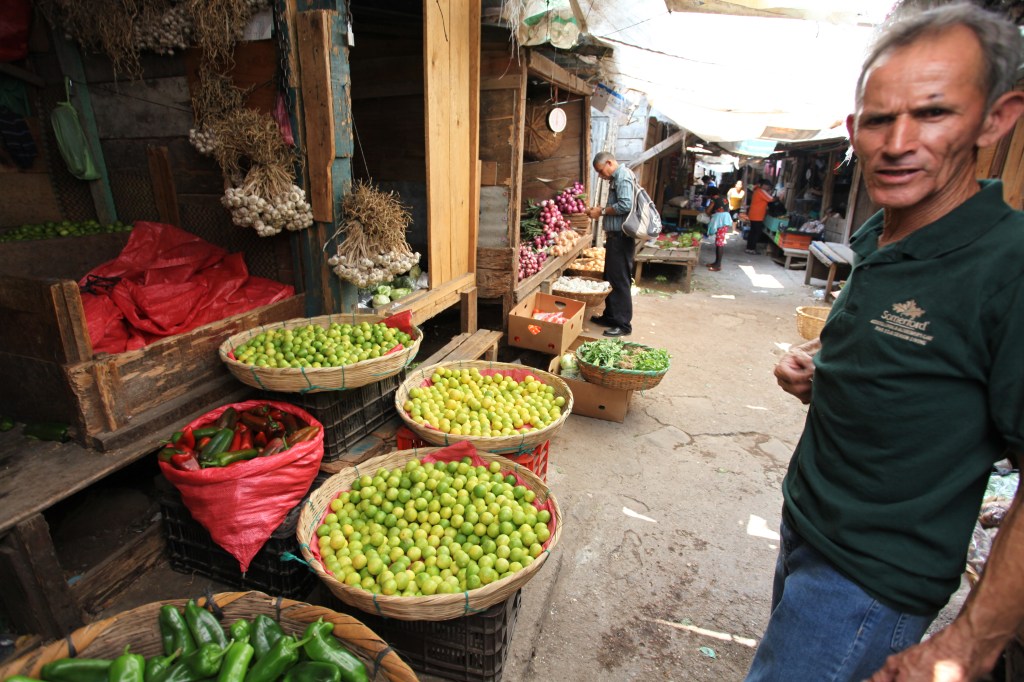
Freny at the market.

I learned from Freny’s insights and perspectives; his stories from decades ago about the spoils that Hurricane Mitch left behind, including the floating coffins that the turbulence unearthed from the cemetery (look for the photo with the above ground burials behind the graffiti-written on brick wall, “Pink Floyd,”) the wealth of the rich, much of it stolen from the government, as greed and corruption surfaced and expanded amongst the privileged mix of the oligarch society, military, and the political establishment, thereby fomenting an unprecedented new norm; and how the poor people survive in the most dire circumstances. Freny offers substantial explanations for an array of questions about the migrants that travel to the US, a topic that he knows from personal experience. But the view of the youth migrating to the United States is filtered through his own recollections of himself, making the journey north via the “Beast,” the dangerous train ride in México, that claimed the lives of many migrants that dared to risk it all. The overwhelming hardship he endured as an undocumented worker living in the shadows and under harsh and stressful circumstances in the United States for several years, eventually compelled him to return to his home country. He overgeneralizes the reasons why young Hondurans migrate to the United States today, criticizing their beliefs and naiveté in thinking that their lives will improve once they settle down as undocumented workers. The unfortunate life of a migrant in the U.S. was hard and unrewarding, he says, and he would not repeat the experience for himself nor recommend it to others. Freny doesn’t give credence to the “forced” migration notion used by policy experts to explain why thousands of families feel as though they have to leave their country in order to survive, and the only place to live is in the United States. He says, “aquí nadie le va dar el bocado en la boca sin trabajar; la gente está probre porque no tiene la materia gris para pensar y poner a trabajar el cerebro; la gente tiene que ser inteligente.” (“Here, no one will put food in your mouth without working; the people are poor because they don’t apply themselves and think well; people have to be intelligent.”) But, at the same time, he acknowledges the deterioration of society in his country that has grossly, unconsciously, and consistently neglected its governing responsibilities, causing an increasingly widened rift between a minority but immensely rich and wealthy, and the poor, struggling, oppressed masses. Although the stark social and economic inequalities are evident in the country’s capital city, even to the undiscerning eye, the modern façade in the downtown, “trendy” area, the playground for the wealthy, possesses a resounding similarity to major capital U.S. cities. The United States’ vast influence on Honduran life is clearly a stable indicator of the extent to which the Honduran rulers identify with the capitalistic ideals of societies that reward the rich and disparage the poor.  Interestingly but not surprising, Freny’s quick response was a clear negative to my question on whether he thought the Honduran government was a democracy.

“No se puede vivir en este paíz,” (“ no one can live in this country”) quipped Freny in a philosophical side remark to his description on how the poor are exploited; the powerful and wealthy have gradually pilfered the natural resources of the country by partnering with foreign entities to extract gold and other valuable metals, rendering the land useless to the people whose lives depend on living off the land. Instead of investing in the country, greed and corruption have driven politicians and the wealthy members of the oligarchy to enrich themselves, and completely turning a blind eye, even to the extreme poverty conditions of the poor. He particularly admonishes the familias “pícaras,” (the “rogue” family members of the oligarchy) that have accumulated their wealth by stealing from the less fortunate, and the corrupt politicians that have engaged in high profile narco trafficking and money laundering without fear of prosecution. “Todos son narcos,” (“they are all involved in narco-trafficking”), proclaims Freny. Because they have the power of control and suppression, the wealthy and powerful set the rules and establish laws that favor their agenda.  

Freny’s perspectives on the government’s responsibilities or lack thereof, is summarized in a brief video of life along the Choluteca River where poverty stricken residents rely on its water source for their essential needs.

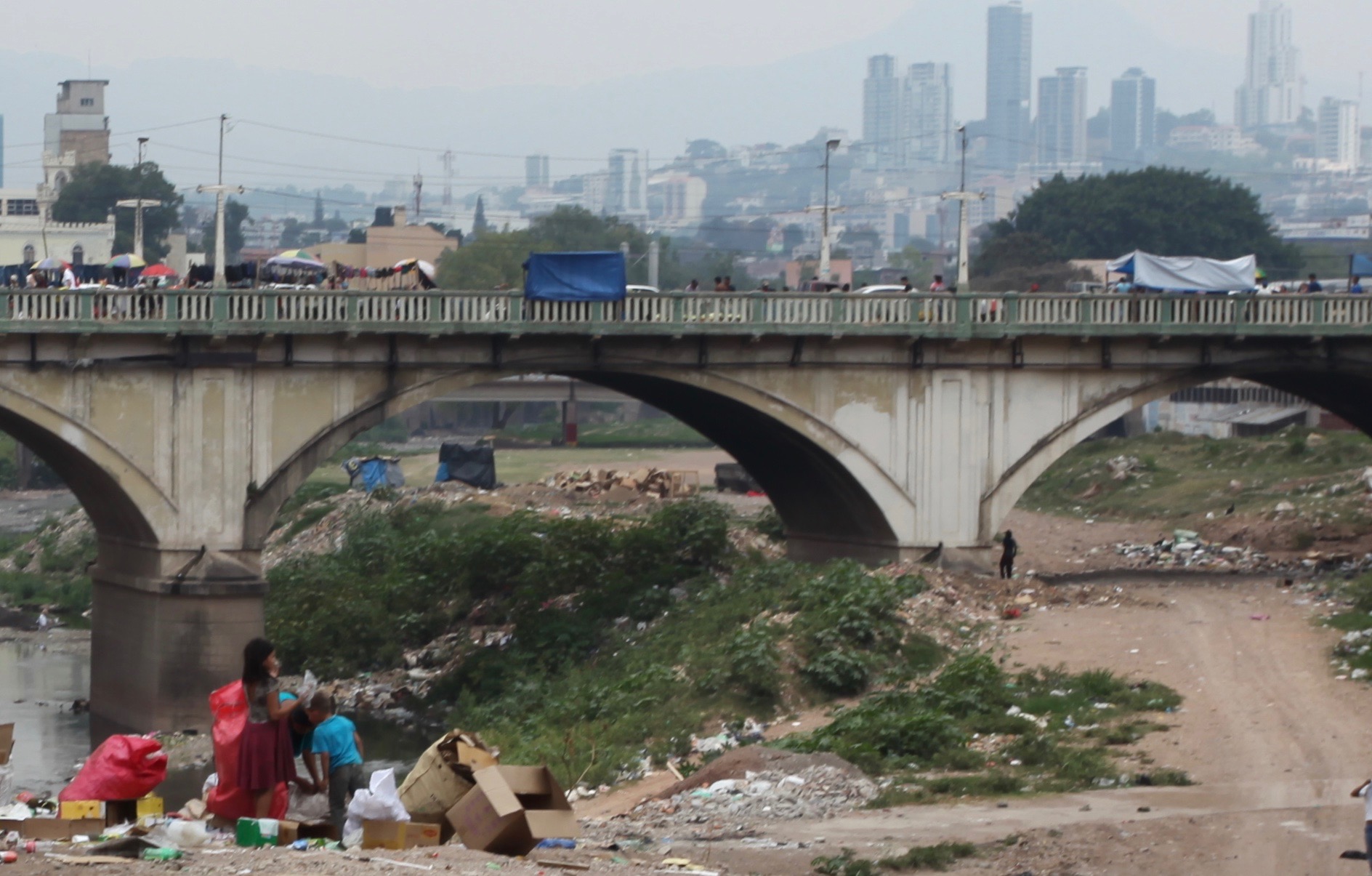
The photograph (see related video) of the bridge that divides the twin cities of Tegucigalpa and Comayaguela, poses in the foreground of the city’s formidable panorama, and in the background, the downtown high-rise buildings stand defiantly erect, bringing into focus the stark differences, indeed, the inequalities that exist between the extravagant wealthy and the extreme poor. When Hurricane Mitch, struck Tegucigalpa in 1998, the Río Choluteca, also known as the Río Grande, brought swollen river currents right up to the edge of the bridge, causing expansive devastation never seen before in loss of lives and property. Morilica, a community along the river’s edge, was completely destroyed and every resident was killed. As a result of the most deadliest hurricane in recorded history, 11,000 people perished (7,000 in Honduras), leaving behind an astronomical loss and destruction of property; some reports give estimates of four billion dollars. Clearly, the devastation couldn’t have been worst on a country’s most vulnerable population, especially among poor families that were already struggling with high poverty and unemployment rates. 

To my comment that Honduras is different from El Salvador and Guatemala in that the country has not lived under the specter of an armed conflict, Freny replied that “maybe that is the problem, we need a revolution.”

See related photo gallery: Lens: City Life in Tegucigalpa.

See next article: The Politics of Making Drinking Water Accessible.

Educational Policy Change in Guatemala: Conflict, Social Justice, and Power

Abstract*

            Despite the level of determination, Guatemalans have the lowest level of educational attainment in Central America, particularly significant when considering the fact that over half the country’s population is under 18 years of age.  Over half of Guatemalans lives within a measure of poverty, some very extreme, and a majority of the people live within territorial boundaries, in small, medium, and large-sized pueblos, some of these in remote mountain regions, characterized by specific culture, language, politics, and history, to name a few. The educational policy change initiated by the government is challenged because of its disregard to diversity, to the linguistic and cultural uniqueness in each of the 22 ethnic groups. The reform plan includes the elimination of the teacher institution (magisterio) and replaces it with costly, unaffordable university-based designs that remotely address the true nature of the educational problems.

In this research paper we used a contextual framework of social justice, inclusive of historical and political ramifications, to describe and analyze the following: a) the conflict(s) arising from the new government’s change agenda in education; b) the role of the United States in Guatemala’s decision making and policy development; and c) the consequences as the direct result of the government’s changes, especially amongst the diverse indigenous communities.

We framed our study within a comparative perspective and viewed Guatemala not only as part of Central America but also, as an integral member of all Latin America. As such, the scope of our research has broad implications for other countries, including Mexico.

The Time for Change in the Worst of Times

Guatemalans are living in the most challenging of times; some would argue that conditions are just as worst or more so then during the armed conflict between 1960 and 1996 (see Burrell, 2013). Undoubtedly, the country’s most principle need for reform is in the educational system. Even though great strides have been achieved through the sheer determination and persistence of the people, Guatemala has the lowest level of educational attainment in Central America. The government statistics point to 96 percent attendance level of children in primary grades, but this number excludes the 1.5 million children with excessive school absences, mostly due to economic hardships.1  Dropout rates are exceedingly high and only less than 10 percent of the student population attends the university. The crisis level is alarming when considering the fact that over half the country’s population is under 18 years of age.

Reform Efforts

At the heart of the current political struggle that pits community and students against the government is in the training of teachers. Many arguments point to the need for improvement and change in the preparation of teachers as the most important strategy that may positively impact educational achievement. Students pursuing their preparation in teacher training colleges, called Escuelas Normales, and the communities that support them, have embarked in an intense campaign to repudiate the proposal from the Minister of Education to eliminate the current gratuitous programs and replace them with costly university-based designs that don’t even address the true nature of the educational problems. The students attending Escuelas Normales, or Normalistas, object to the proposal for many reasons and they have been vocally opposing these measures for almost a year.  Still, to date, the Ministry of Education has refused to engage in substantive dialogue with the students and other stakeholders.

Research Method

In this research paper we used a contextual framework of social justice, inclusive of historical and political ramifications, to describe and analyze the conflict(s) arising from the new government’s change agenda in education; the role of the United States in Guatemala’s decision making and policy development and the motivating factors; and the consequences as the direct result of the government’s changes, especially amongst the indigenous communities. Most of our work was completed in the field, and was based on anthropological perspectives of maintaining objectivity while collecting data using qualitative modes of inquiry: Our fieldwork took place in a community in the city of  K’iché (in the highlands of Guatemala in the Department of Quiche) for six weeks in the Fall of 2012. The collection of data included photos, field notes, interviews with formal and informal protocols, transcripts and notes of the interviews conducted with various members of the community; archival data from internet sources, including official government web sites and other various sites such as the USAID and Ministry of Education; social media sources, including blogs, newsletters, and other news sources. Also included were interviews with community leaders, organizers; photos of community members in action, such as in school and in home and meetings; videos of community members in action; and published research studies. One member of our team served as a volunteer/participant observer for four weeks in a community school.

We used “documentation’ from all of the sources to focus on the lead questions. The “narrative” emerged to provide us with insights into contextual environment inclusive of various social, cultural, economic, and political factors, which then led to the development of  “discussion queries,” by which we drew analysis and eventually, conclusions. Triangulation of the data was used in every way possible to divert from a unilateral perspective or biasness.

What is the Ministry of Education’s Proposal?

Prerequisite to understanding the content and implications of the Ministry of Education’s (MINEDUC) proposal are some vital facts. In Guatemala’s educational system students first complete six years of their compulsory primary education, then continue to Ciclo Prevocacional or Middle School for three years.  Students that follow the carrera magisterial to become primary teachers continue to Secondary Education, Ciclo Diversificado or Diversified Secondary for two years. At Tertiary Education stage, students complete three years of study at a teacher training college or Escuela Normal, which allows them to teach at a primary school. To receive the title of “professor” students must complete an additional three-year program at a university. A four-year university program leads to a Baccalaureate in Arts and Science.2

The pathway to the formation of teachers is as important as the physical, geopolitical, economic, and demographic landscape of the country in understanding the tensions and conflicts behind the peaceful resistance and demands of the students and their supporters (see Arnove, 2005). Over half of the country lives within a measure of poverty, some very extreme, and a majority of the people live within territorial boundaries, in small and large-sized pueblos, some of these in remote mountain regions, characterized by specific culture, language, politics, and history, to name a few. Thus, diversity, with all its amplifications, is a major factor that underlies every aspect of the proposal and rebuttal.

The main points in the MINEDUC proposal are:

  •  Eliminate the “magisterio,” which essentially means to change radically the current system of preparing primary school teachers.
  • Replace the “magisterial” system of preparing teachers with a university program that requires students to complete a Bachillerato en Ciencias y Letras. So in essence, students must enroll and complete a three-year university program in order to qualify for the title of “professor.”
  • To implement a teacher training program for pre-primary teachers in the Escuelas Normales, public or private.  Technical assistance is programmed for this program and for the Bachillerato en Ciencas y Letras.
  •  To seek incentives to increase the salary of graduates from the proposed program wherever they are hired to teach.
  • To provide scholarships (in 2015) for graduates of the proposed program to continue their studies (as post-graduates) in private or public universities (the only public university is University of San Carlos).
  • To offer courses in conjunction with the Bachillerato in Ciencias y Letras that includes agroforestal (forestry), turismo (tourism), and textiles, among others.

Normalistas’ Response

Several key points in the Normlistas’ rebuttal are valid in the sense that they posit realistic concerns that challenge MINEDUC to provide a response accordingly:

  • The proposal does not address how the proposed changes will purportedly impact positively the quality of education on a short and long-term basis. There’s no information that addresses the improvement levels at the university-based programs, in fact, the Normalista’s rebuttal asks who will be in charge of their program at the university level where resources are scarces and irrelevant to the needs of the educational programs in the pueblos and rural communities.
  • Eliminating the magisterial and requiring students to complete university programs translates to an economic burden on behalf of the students and their families. The MINEDUC proposal includes the participation of the universities, however, the only public university that doesn’t charge tuition is University of San Carlos (USAC); the other eight or nine are private universities that require students to pay tuition. The Normalistas are concerned that USAC lacks sufficiently the capacity and resources so that most of the Normalistas will have to attend a costly university program. This point underscores their secondary concern that MINEDUC’s proposed changes are meant to enrich the private universities, or to put it in another way, it is a strategy to privatize teacher education.  Additionally, the proposal doesn’t address how the universities will effectively improve teacher training.
  • There is no guarantee that the proposed changes will lead to an increase in salaries for the graduates.
  • The scholarships proposed by MINEDU are not meant for the students beginning their training. These are proposed for graduates as post-graduate scholarships that are clearly meant for private universities. Again, this is a clear instance validating the Normalistas’ claim that the proposal is focused on the privatization of the professional training of teachers.
  • The proposed changes undoubtedly reduce the opportunities for students to pursue a teacher credential. Presently, less than 1 percent of the indigenous student population attends the university. But besides that, the proposed changes lack credibility in demonstrating how these changes will improve education, not only for the teachers-in-training, but for the school children as well, on a short and long-term basis.

Bilingual Intercultural Education

The loss of the magisterial will drastically change the Bilingual Intercultural Education programs. The Normalistas are proud of the fact that the 18 Escuelas Normales in the country train teachers to help students become bilingual in Spanish and one of the four language groups: K’iche, Kaqchikel, Q’eqchi, and Mam. Their concern is that a university-based program does not have the capacity or resources to carry out the programs in an effective manner. The community support garnered through these programs is immeasurable and closing the magisterial will inadvertently cause problems of maintaining the engagement by the communities. In this light, the Normalistas’s claim that their rights to their language and culture in an educational setting will be violated is a valid one. The Bilingual Intercultural Education Program is described in the MINEDU’s website.3

The Role of the United States in Guatemala’s Neoliberal Politics

In 2009, the United States Agency for International Development (USAID) distributed funds to Guatemala’s governmental agencies that totaled 32.1 million dollars.4 Funds earmarked for Education and Social Services were 5.9 million, for which 5.5 million were specifically for Basic Education and $400,000 for Higher Education.  Guatemala’s Ministry of Education has a website specifically dedicated to USAID’s educational program, Reforma Educativa en el Aula,5 that include broad educational goals for the time frame 2009-2013. While USAID and the Guatemala MINEDU’s educational goals are similar, a pronounced difference exists as listed below:

Similar Goals:

o   To strengthen the capacity of institutions.

o   To improve instruction in the classroom.

o   To promote access to quality education to underserved populations, women, and Mayan groups.

o   To provide strategies for parents, communities, and leaders to participate actively in education of students.

Difference in Goals:

o   MINEDUC – To increase effectiveness or improve teacher training (“prácticas docentes”).

USAID does not specify a goal toward teacher training improvement but does mention in the needs statement that the lack of educational attainment by students is due to “poor teacher training.” If MINEDUC subsumes this goal as an objective in conjunction with the goal, To strengthen the capacity of institutions, there is no mention of this in their related statements. Furthermore, it’s questionable whether eliminating the “magistrial” is keen to strengthening the capacity of institutions.

However, to understand the underlying motives for the goals and objectives stated by both the United States’ USAID agency and Guatemala’s MINEDUC it’s necessary to analyze the philosophical differences and historical facts that shed light on a broader perspective of the problematic issues.

USAID History and Politics

USAID was launched during President Kennedy’s administration in 1961.6  Since then, its evolution has resulted in the distribution of foreign aide to hundreds of countries and in the creation of partnerships with corporations and non-profit organizations. Currently, they have personnel in 100 countries including Guatemala and El Salvador in Central America. According to the agency, one of their most successful strategies is partnering with more corporations that have increased their funding levels. The overall goal of USAID has not changed in the 50 years of its existence.

USAID’s Goal: Furthering America’s foreign policy interests in expanding democracy and free markets while also extending a helping hand to people.

USAID’s Goal in conjunction with Guatemala: Guatemala has the potential to become Central America’s largest economy and United States leading partner.

The Results and Accomplishments stated by the USAID offer insight into their perceptions and expectations of Guatemala and can be interpreted as incentives or rewards for future funding.  According to their statements, Guatemala’s MINEDUC has achieved success in the following areas:7

  • The MINEDUC has the support of the educational communities for the K-9 national education content standards.
  • MINEDUC has implemented an innovative standardized test in Spanish and in nine Mayan languages to hire and place teachers.
  • MINEDUC has made strides in addressing transparency and efficiency in the Ministry of Education that resulted in an international certification system for management in 2007.
  • MINEDUC has developed a Municipal Education Progress Index, i.e., the use of data spreadsheets to analyze and compare school operations against student achievement levels, or what we know as accountability system.
  • MINEDUC has assessed and produced a list of basic competencies for secondary students (grades 9th to 12th) that are needed to be competitive in the labor markets.

Additionally, USAID and its corporate partnerships claim success with MINEDUC that has resulted in over 51,825 scholarships, outreach programs for at least 300 at-risk youths.  However, this information has not been verified with MINEDUC.

USAID’s funding level for Guatemala in education, health, and nutrition activities has totaled 10 million dollars according to their website’s information. This information lacks verification as well.

Analysis

Whether MINEDUC uses the leverage from USAID’s funding to substantiate their political strategies under the banner of Reform is open for interpretation.  However, by accepting USAID’s funds, MINEDUC has the responsibility to comply with the funding requirements. Clearly, USAID’s motive behind the funding distribution is to garner the support of the Guatemalan government to accelerate the country’s efforts toward economic recovery that would be beneficial and profitable to the United States. The educational practices noted in the Results and Accomplishments list are squarely aligned with the United States educational model that privileges a capitalistic approach or a market-led reform of education for economic gains. It’s well noted in Latin American history that the tension between capitalism and socialism is heightened during economically stressful periods (Arnove, 2005). If the United States and Guatemala work together in reforming the country’s educational system, then this collaboration can be viewed as an influential strategy by both countries to steer Guatemala away from socialistic reforms, even though capitalism is not a viable solution for a country with enormous, complex economic issues. A free market economy inherent in a market-led reform would best serve the interests of the wealthy in a country like Guatemala. Thus, what appears to be an educational reform model that purportedly will lift the country out of economic turmoil and succeed in improving the educational system is more like a roadmap toward disaster.

Historical and Political Background on the Minister of Education

When Guatemala’s president, Otto Pérez Molina took office on January 14, 2012, his vision of change for the education system in a country of over 11 million people, was firmly rooted in a far-reaching plan that embraced notions of economic globalism. He wanted a fearless Minister of Education that shared his passion for an “all or nothing” educational reform that would catapult the country into the international global arena, and he’d receive the accolades from world leaders for his efforts in transforming Guatemala. He found the person in Cynthia del Aguila, educated in the United States, a former professor at Guatemala’s private Universidad del Valle, and in her early career had held different positions at the Ministry of Education in Guatemala. At the time that del Aguila was appointed she was employed with the Research Triangle Institute (RTI) International based in North Carolina in the United States and had worked there for seven years as an educational manager. At RTI, her main responsibility was with a United States agency called Allianzas, which was devoted to forging partnerships with the private sectors in Guatemala. In del Aguila’s reform plan the solution was quite simple: eliminate the Magisterio, the current training college system consisting of Escuelas Normales, and the Normalistas will have to attend the private universities, thus creating governmental partnerships with private institutions of higher learning. But students, parents, community leaders, and supporters have steadfastly repudiated the reform agenda, and for almost 12 months after del Aguila unveiled the plan they have organized and participated in non-violent protests, sit-ins inside and outside facilities, marches, rallies, and used the social media to their advantage.  Police have used tear gas and arrested protesting students. The embattled del Aguila refuses to concede defeat for doing so may cost her the job as Minister of Education.

Acción de Amparo

On February 25, 2013, the latest legal action taken against the Ministry of Education, called the Acción de Amparo, was submitted by the Consejo Nacional Permanente de la Reforma Educativa, the social leadership organization representing the Magisterio. In this document, the Consejo asks the court for a legal proceeding that will order MINEDUC not to eliminate the Magisterio. 8 The document, Acción de Amparo9 makes reference to the key role of the Consejo Nacional in the decision-making process as stipulated in Article 12 of the Ley de Educación Nacional10, and that MINEDUC overstepped its authority, a violation of human rights, when it disregarded the required proceedings and approval of the reform plan by the Consejo. The Corte Suprema  de Justicia (Justice Supreme Court) must decide on the Acción, whether to halt or allow the reform to continue as initiated by the MINEDUC, although the MINEDUC can appeal the decision against it. This was the case the first time the Acción de Amparo was submitted against MINEDUC in November of 2012.

The Corte Suprema de Justicia granted approval for the first temporary Acción de Amparo but as reported on November 27th by Prensa Libre.11 Del Aguila announced that the Ministry would appeal the court’s decision. Del Aguila’s comments alluded to her conclusion that since the previous agreement on the magisterial teaching careers had expired in 2011, the MINEDUC had followed appropriate steps to include a process of feedback and input from the institutes and colleges on the new program for teacher training. Del Aguila emphasized that the MINEDUC has every authority to make decisions on how to train teachers as well dispense decisions regarding the careers of teachers. Furthermore, she added that it is the MINEDUC’s responsibility to renew programs that have expired under its authority.

But less than two weeks later, in response to an appeal filed by MINEDUC the Corte Suprema de Justicia reversed its decision, revoking the Amparo on the basis that it lacked sufficient substance. Speculation was raised on whether the MINEDUC’s move to enter a counter legal action in case it lost its appeal was influential in the Corte’s decision to overturn the Acción.12

The MINEDUC maintains its authority as the supreme entity that has the sole responsibility and right to make decisions on which reform plan to institute without regard to the democratic participation of stakeholders, even when such inclusion is stipulated in national proclamations. Pres. Pérez Molina has not publicly commented on del Aguila’s hard line posturing of MINEDUC’s authority. His silence may well be interpreted as an unequivocal approval of the actions of his appointed Minister of Education.

Charges of Racism and Discrimination

While MINEDUC maintains its course toward full implementation of the reform agenda, communities such as the Pueblo Xinka have charged the Ministry with racism and discrimination. 13 The Pueblo Xinka consists of 400,000 people from three departamentos (states) in southwestern region of Guatemala bordering El Salvador. The parliamentary board of Xinka has formally complained that their requests to the MINEDUC for teaching positions in their Xinka/Spanish Bilingual Intercultural Education program have been ignored. They have waited for a response since 2011, despite the fact that since its initial start four years ago, 60 bilingual students from the Escuelas Normales have successfully completed their training and 300 more Normalistas are enrolled in the program.  They claim that their educational rights as a Pueblo inherent in the national proclamations including the constitution protect their language and culture in the school curriculum.  The fact that MINEDUC has refused to support them is an affirmation of the agency’s deliberate negation of their rights. MINEDUC’s proposed reform agenda would eliminate the Escuelas Normales that have educated the students like those in the Pueblo Xinka, and accordingly, eliminate or reduce the quality of Bilingual Intercultural Education programs.

Decreased Funding Formula and Decentralization

If del Aguila’s plan for decentralization of educational funds is implemented as her announcement has declared, schools will be in total control of their spending for all of their educational needs.14 In light of the decreased funding formula for primary education, this strategy will cause friction amongst school communities, especially in small pueblos and rural areas that have scarce resources.  Both the decentralization in the funding formula and the MINEDUC’s reform agenda may result in a chaotic landscape of communities fending for their specific educational needs and while some may succeed, those with less funding and other resources will certainly lose.

Analysis

From the outset, Minister del Aguila was determined to accomplish a task for which she had been especially selected. Indeed, overhauling the country’s educational system is akin to rebuilding a county from the ground up. Whether she or President Pérez Molina knew what was at stake and that the complexity of the task would produce a Pandora’s box are difficult to analyze without firsthand knowledge. But, what is clear is that del Aguila didn’t launch a leadership agenda; her priority was and continues to be a task-fulfilling role rather than assuming a leadership in the Ministry of Education. A leader understands fundamentally the role of education in every aspect of society. Experience, perception, insight, and knowledge – all are essential in a leader, but the people of Guatemala want someone that understands them and can bring hope into their lives. Pérez Molina has to assess whether he has chosen the right kind of leader to take charge of probably the most important and challenging social issue of his presidency.

Discussion

The Normalistas are within their right to protest and demand change in all aspects of their teaching profession and in the educational system. They have the support of their constitution, and other official proclamations for their rights. Their community lends support to their demands. But, without the cooperation of MINEDUC, a meaningful, sustainable plan toward improving education that is in the best interest of the Guatemalan people will not be realized.

Historical analyses of educational reforms in contexts of post-war conflicts and economic and social instability have produced a collection of various recommendations and caveats. Consistent with a human rights approach is the common view that, for example, education should be inclusive, relevant, sustainable, and democratic. The community must be engage and have a clear voice in the “public debate” over what constitutes education for all children. Access to education is not sufficient; individuals must be able to overcome economic, social, and cultural barriers. What is clear in Guatemala’s educational reform process is that educational issues are inseparable from the expansive context that includes the legacy of colonialism and social and economic inequalities (Tikly, 2011).

The uphill battle for educational equality is well documented by researchers and noted in the responses by protesting students. The unequal and elitist schooling system in Guatemala’s history is the common story throughout Latin America, including Mexico. But Guatemalans have less access to education in the primary grades than other countries, particularly among the rural poor and girls. The inequality contrasts sharply with the privileged elite that have the resources, political clout, and social mobility that allows them entry into the most competitive sectors of the global society (Reimers, 2000).

Other related research has focused on Lifelong Learning ideals as a basis for an educational reform plan for countries such as Guatemala (Carneiro, 2013). Aligned with this model is that lifelong learning (LLL) both embraces and responds to change. Thus, the curriculum centers on respecting context, history, languages, cultures, and heritage while advocating for empowerment in the citizenry and promoting diverse modes of learning. The democratic citizenship, which is the basic structure founded on the common understanding of human rights, recognizes the value and dignity of all human life. The culture of peace, rejects violence as a controlling mechanism and advocates for democratic negotiations to advance solutions and ideas.

Guatemala’s educational reform process has evoked anger and frustration among teachers, students and families. However, the community responses have been characterized by democratic deals despite the heavy handedness of the country’s administration. Democracy is foremost the modus operandi by its people, clearly an example of the strength and determination of the Guatemalan citizens.

Concluding Remarks

In conclusion, I include an excerpt from the Diseño Reforma Educativa

Runuk’ik jun K’aka’a Tijonik, (the Educational Reform design) published in 1998. In these introductory paragraphs, the Reform is designated specifically for Guatemala. The main points, translated from the original Spanish text are the following (full text in Spanish found in Appendix A):

  • The commission has as its main charge to design an educational system that has the obligation to the Peace Accords, in particular the “Acuerdo sobre Identidad y Derechos de los Pueblos Indígenas,” that grants the rights to the indigenous population to their identity and culture;
  • The main goal is to reach common ground that serves as the basis for the national project;
  • The process includes the seeking and engaging in the transformation of attitudes that facilitates in a better understanding of others;
  • To respect and value the cultural diversity of the country; and
  • To attain mutual agreement, dialogue and harmony based on organizational principles of equity and equality.

The question remains: Which is the best road that will lead Guatemala to a better future?  No doubt, the teachers, students and their families carry this enormous responsibility.

Notes

  1. For many children in Guatemala, lessons have to be learned in the streets. Article by Jessica Shepherd for the Guardian. Accessed October 24, 2013, from http://www.theguardian.com/education/2011/mar/08/global-campaign-for-education-guatemala.
  2. Education system in Guatemala. Accessed October 24, 2013, from http://www.classbase.com/countries/Guatemala/Education-System.
  3. Ministry of Education website. Accessed October 24, 20`13, from http://www.mineduc.gob.gt/DIGEBI/.
  4. USAID Dollars to Results. Accessed October 24, 2013, from http://results.usaid.gov/guatemala.
  5. Reforma Educativa en el Aula. Accessed October 24, 2013 from http://www.reaula.org.
  6. USAID History. Accessed October 24, 2013, from http://www.usaid.gov/who-we-are/usaid-history.
  7. USAID Education. Accessed October 24, 2013, from http://www.usaid.gov/guatemala/education.
  8. Otro amparo por reformas a la Carrera magisterial. Article published in Prensa Libre by Hugo Alvarado y Alex Rojas on Feb. 26, 2013. Accessed October 24, 2013 from http://www.prensalibre.com/noticias/justicia/amparo-reformas_0_872912729.html.
  9. Accion de amparo. Accessed October 24, 2013, from https://skydrive.live.com/?cid=7bdfe400ca92465c&id=7BDFE400CA92465C%21113&authkey=!AKzUW4fT-pcz6OQ#!/view.aspx?cid=7BDFE400CA92465C&resid=7BDFE400CA92465C%21113&app=WordPdf&authkey=%21AKzUW4fT-pcz6OQ,
  1. Ley de Educación Nacional. Accessed October 24, 2013 from http://www.marn.gob.gt/aplicaciones/normas10g/pdf/307.pdf.
  2. CSJ suspende temporalmente bachillerato en educación. Article published by Prensa Libre on November 27, 2012. Accessed October 24, 2013 from http://www.prensalibre.com/noticias/politica/Dudas-rodean-magisterio_0_818318175.html?print=1.
  3. CC revoca acción contra cambio en Carrera de magisterio. Article by Byron Rolando Vasquez published in Prensa Libre on Dec. 12, 2012. Accessed on October 24, 2013, from http://www.prensalibre.com/noticias/justicia/Revoca-accion-cambio-magisterio_0_827317272.html.
  4. Pueblos Xinkas exige educación bilingüe. Article published by CPR-Urbana on Feb. 26, 2013. Accessed on Oct. 24, 2013, from http://cpr-urbana.blogspot.com/2013/02/pueblos-xinkas-exige-educacion-bilingue.html.
  5. Déficit de maestros en priprimaria y básicos es del 50%. Article by Prensa Libre published on Feb. 27, 2013. Accessed on Oct. 24, 2013, from http://www.prensalibre.com/noticias/politica/Deficit-maestros-preprimaria-basicos_0_873512856.html.

References

Arnove, R. (2005). Globalisation and public education policies in Latin America:

Challenges to and contributions of teachers and higher education institutions. In J.

Zajda,  International handbook on globalization, education and policy research:

            Global pedagogies and policies, (431-442). Springer: Dordrecht, the Netherlands.

Burrell, J.L. (2013). Maya after war; Conflict, power, and politics in Guatemala. Austin:

University of Texas Press.

Carneiro, R. (2013). Living by learning, learning by living: The quest for meaning.                    International Review of Education: Journal of Lifelong Learning, 59:3, 353-372.

Tikly, L. (2011). Towards a framework for researching the quality of education in low-income countries. Comparative Education, 47:1, 1-23.

Zajda, J. (Ed.). (2005). International handbook on globalization, education and policy

research: Global pedagogies and policies. Springer: Dordrecht, the Netherlands.

Appendix A

La Comisión Paritaria de Reforma Educativa

-COPARE fue constituida por Acuerdo Gubernativo

No. 262-97 de fecha 20 de marzo de 1997,

el cual establece como objetivo de la Comisión:

“diseñar una reforma del sistema educativo, en

la cual deberá considerarse lo que al respecto

contemplan los Acuerdos de Paz, particularmente

el Acuerdo sobre Identidad y Derechos

de los Pueblos Indígenas, numeral III, Derechos

Culturales; literal G, Reforma Educativa, numeral

2”.

La Comisión quedó formalmente instalada el

2 de abril de 1997 y se integró con diez personas:

cinco representantes del Gobierno de la

República y cinco representantes de Organizaciones

Indígenas. Al aceptar el mandato que

le fue confiado, la Comisión estableció como

principios internos de trabajo: la apertura, flexibilidad

y tolerancia, por parte de todos sus

integrantes, con el fin de alcanzar un objetivo

común: establecer las bases para construir un

proyecto educativo nacional propio. Con ese

objetivo, se buscaron transformaciones actitudinales

que implicarán conocer y comprender

mejor al otro y al mundo; respetar y valorar

la riqueza y diversidad cultural del país; y favorecer

el entendimiento mutuo, el diálogo y

la armonía; lo cual significó organizarse bajo

principios de igualdad y equidad.

*This paper was presented at the Annual Meeting of the World Education Research Association in Guanajuato, Mexico, November 18-22, 2013, and published in part in this blog and others. All Rights Reserved.


Human Rights Abuses Among C.A. Migrants on the Rise

A Review of Chapter 3, “Capitalism and Crisis in Central America” by Dawn Paley

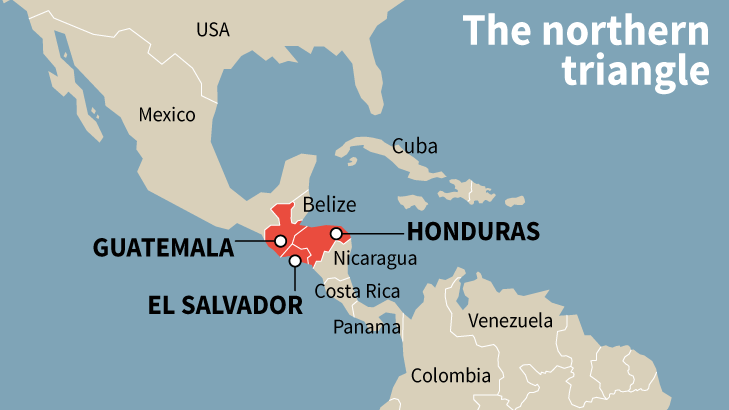
             The crisis in Central America, particularly in Guatemala, Honduras, and El Salvador, has created an international outcry as journalists and civil rights activists have gradually uncovered one of the worst kinds of human suffering. Presumably at peace, the people from these countries are faced with overwhelming injustices, human rights abuses, extreme levels of poverty, and an undignified quality of life. It’s no wonder that thousands have decided to leave their homes and risk everything, even their lives, to make a new home in the United States. Dawn Paley’s book chapter, “Capitalism and Crisis in Central America,” advances the thesis that at the heart of the problem is the historical basis for nation-building, that wars and armed conflicts have resulted in the powerful subjugating of the indigenous, native populations and transforming an entire political, economic, social landscape to their advantage.  The Spaniards’ conquest in the form of colonialism grew at such a fast pace, and as Paley writes, “From the first moments of independence, newly empowered criollo elites implemented political systems based on exclusionary racism and despotism.” (27)

But, the powerful elites from the three countries would not have advanced their racist and violent politics without the assistance of the United States. The strong arm of the military might of the United States was the perfect fit for the powerful, established ruling parties of the countries: they both embraced the common enemy, which was communism, particularly, in regard to the treatment of the indigenous population that were perceived as “communist,” when in fact, all they wanted was to preserve their way of life.  In previous articles of this blog, I described the various armed conflicts in each of the three Northern Triangle countries, some of which exercised the worst kind of human rights abuses as thousand were tortured and killed, including civilians. But, many of the efforts to seek justice against those responsible have been ignored, or weakened. The United States government has promoted a “hands-off” relationship with those seeking to reveal the truth and to hold the guilty accountable for their crimes against humanity. Paley describes the aftermath of the violent conflicts and the efforts to restructure in this way: “Under the close eye of Washington and the United Nations, war criminals were given amnesty, military officials lived large off of the profits of pillage, and to the day those responsible for enabling terror remain active in politics, public life, and economic affairs.” (31)  According to Paley, as neoliberal governance became a dominant force that protected and enabled the powerful elite, and globalized capitalism became the preferred mode of investment, the state shifted toward further denigrating and even, abolishing the freedom and rights of the people, especially the most vulnerable such as the poor and the indigenous population. The gap between the rich and the poor is so great that the two worlds are total strangers to each other.

Although the threat of a communist take-over is no longer valid, the new threat caused by the criminal element in narco-trafficking, is used to justify the U.S. backed militarization and the triggered violence and suppression. The U.S. funding, formerly known as the Merida Initiative and now titled, Central America Regional Security Initiative, or CARSI, has a 50% earmark for use in “policing, military, and counter narcotics.”(34). Paley asserts that although the U.S. government’s program (Alliance for Prosperity) and funding (CARSI) intend to stem the flow of illegal migration from Central America, the reality is that the efforts actually promote the same kinds of policies inherent in neoliberal economies that impose their rules on militarized security tactics, which “have pushed the region to experience the crisis like the unaccompanied minors in 2014.” (34)  The Alliance for Prosperity, which proposes economic expansion and integration, is based on the premises of the Central American-Dominican Republic-U.S. Free Trade Agreement. With a budget of 22 billion for a five-year period, the Alliance for Prosperity proposal is clearly directed as an investment plan for the United States and its investors.

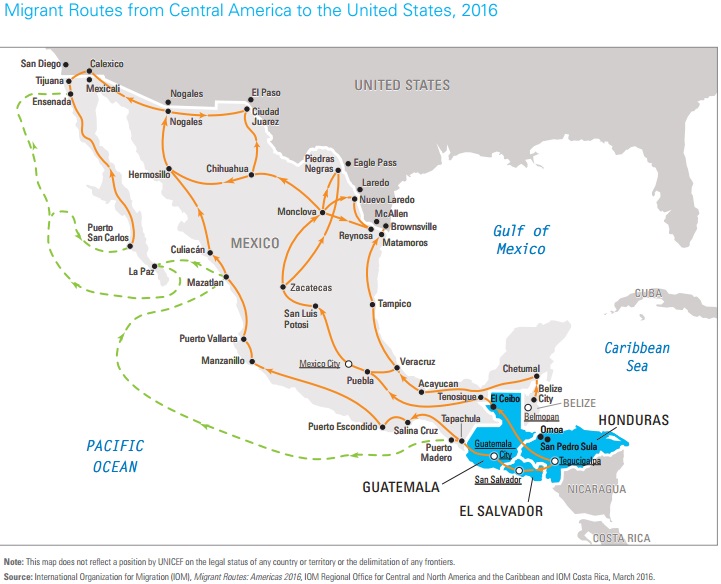
Paley elaborates on how neoliberal policies for purposes of capital gain can affect Central American migrants that desperately travel to the U.S. through Mexico. While the government’s border-free rules may apply for the exchanging of goods and services across the Northern Triangle countries, the opposite awaits the fleeing migrants. The border area between Mexico and Guatemala is destined to be a highly-militarized area, especially under the Plan Frontera Sur program. Already, there’s a high degree of involvement by the Mexican paramilitary organizations, such as Los Zetas, contracted by the Mexican government to control the northerly migrant flow. With the added militarization and policing, migrants face an even dangerous risk: if captured by the formal authorities they may be incarcerated and eventually, deported; but if captured by the paramilitary, migrants may be terrorized, extorted, kidnapped, and/or massacred. (35)

Migration From El Salvador to the US

Migration Largely Due to Street Gang Violence and Related Factors

             El Salvador’s gang members number around 60,000, mostly youth, which is staggering by any measure but an extremely serious problem for a country of 6.5 million people. El Salvador has more gang members, especially in MS-13, than do Honduras or Guatemala writes Danielle Mackey for World Politics Review. Most of the gangs’ criminal targets are workers in transportation companies, and the small business and working-class sector; indeed, the higher-class sector enjoys the protection of a strong security force, private and/or funded by the government, to shelter them from any of the gangs’ incursions. The Salvadoran government, with its backing of the powerful economic and social elite has opted for doing as little as possible in order to maintain the status quo, as long as the violent eruptions are contained within the working-class population and away from the elite. What are the options and why doesn’t the government take full control of the street gang violence? There are many questions surrounding the country’s decisions on gang control, starting with the Mano Duro Gang policy.

 The Mano Duro Gang Policy

According to Sonja Wolf in her 2017 book, Mano Duro: The Politics of Gang Control in El Salvador, in July 2003, then Salvadoran President Francisco Flores launched the highly lauded “Mano Duro” gang policy in response to the dominant elite alliances’ dependence on authoritarianism to maintain order and defend their elite privileges. The powerful elite and the dominant right-wing media cleverly portrayed the challenges to the status quo as a communist ploy that could destroy the institutions that has continuously contributed  to the country’s prosperity. It was the perfect social and political climate that created an overwhelming acceptance of the “iron-fist,” the Mano Duro approach that included the “anti-gang” law allowing officials to arrest anyone based on their pre-conceived profile of what a gang member looks like. The militarized police force, originally created as the PNC (Policia Nacional Civil), a professional, apolitical and respectful of human rights, was ordered to protect the powerful ruling class at the expense of the ordinary citizen. The PNC was installed as part of the 1992 Peace Accords, but as soon as the international monitoring strategies were lifted, the Salvadoran government reverted back to their familiar ways of “owning” the police force. As a result, human rights abuses are on the upswing and the homicide rates among gang members have increased, and to a much lesser extent, among police officers.

The Mano Duro policy was created to bolster the conservative forces united behind the ARENA party prior and leading to the 2004 presidential elections. The right-wing media, clearly aligned with the powerful elite, worked hand-in-hand with the ARENA party in spreading unsubstantiated fear over the gangs and their threat to Salvadoran society. According to Wolf, due to its ineffectiveness, the Mano Duro policy “may have contributed to a greater threat to society than the gangs themselves.”

Efforts to Address the Street Gang Problem

In her book, Sonja Wolf elaborates on her research that studied the work of non-governmental organizations (NGOs) and their efforts to eradicate the problems associated with gang activity. Her data revealed the inexorable links between the gangs and society, claiming that “NGOs’ efforts were inadequate given the magnitude of the problem.” Also, the political system itself “needs to become the object of reform.”  Even so, several key players have worked on alternative gang control strategies and comprehensive plans, although the results have yet to prove unequivocally the ones that have been successful and sustainable.

One of the NGO that worked intensively to create alternative forms of gang control was the Foundation for Applied Legal Studies (la Fundación de estudios para la aplicación del derecho), or FESPAD. Founded in 1988 for the purpose of defending human rights and the rule of law, FESPAD and to a great extent, the Center for Criminal Studies of El Salvador (Centro de estudios penales de El Salvador) or CEPES, worked toward an alternative gang control other than Mano Duro. Law students from the university studied the legal and constitutional rights that were applicable to gang control with Professor Alberto M. Binder, an Argentinean lawyer and expert in Criminal Procedural Law. In turn, the students worked with FESPAD to develop an alternative to gang control, train community leaders, and promote the access to justice by affected communities. The book on the Salvadoran constitution, “La constitución explicada,” sold over 50,000 copies. The NGO focused its work on providing legal aid to victims, investigating and documenting human rights violations, and in assessing relevant policies in regard to how they are administered within a legal and political perspective.

        The 2012 Gang Truce.  Under the FMNL government of President Mauricio Funes, and in response to escalation of gang violence and its effects on Salvadoran life and society, a truce was brokered between gangs, primarily MS-13 and Calle Dieciocho. The government called on the street gangs to reduce the murders, curtail violence against women, eliminate the school-based street gang activity, and stop targeting the youth for forced recruitment. The gangs also had their demands: an end to police abuse, the repeal of the anti-gang law (where anyone “looking” like a gang member can be arrested), improvements in prison life, and educational and job opportunities. But, after a couple of years, the truce demands were totally lost and it was considered a failure. In fact, it appears that the entire effort was fruitless, and worst, it produced even graver consequences. The murders declined from a daily average of 14 to five.  But in a closer scrutiny, the discovery of clandestine graves revealed that the gangs didn’t follow the demands, and neither had the police authorities. The gangs maintained their control over their “territories,” continuing their operations as usual with forced displacements, extortions, etc. Sonja Wolf’s research reveals that the truce served to highlight the political power in the hands of the gang leadership and that the government is unable to control gang violence. Other critics pointed out that the truce’s failure could have been avoided if factors of governmental support had been a part of it, such as sustainable social and economic opportunities.

Instead, the murder rate peaked in 2015, and manodurismo continued in full force. The government took action by transferring and isolating gang members to quash their social networks and in deploying army elite battalions to battle with gangs, and as expected, soldiers were directly engaged in extrajudicial killings of gang members.

        Alternative gang control proposals have been developed and presented but due to their lack of acceptance and support by the powerful elite, they have not gained the necessary popularity among the greater Salvadoran society. Current president, Salvador Sánchez Cerén, initiated an open dialog with different groups, and thus, certain organizations emerged, such as the National Council of Citizen Security and Coexistence (Consejo Nacional de seguridad ciudadano y convivencia). According to Sonja Wolf, the Plan El Salvador Seguro, (PESS), or the Plan for a Safe Salvador, proposes that the government make assertive efforts to do the following: to recover public spaces, to strengthen municipalities’ efforts to prevent crime and violence, create gun-free zones, promote youth employment, and expand community policing. Additionally, lawmakers passed a law that is meant to facilitate the integration of ex-gang members into mainstream society. The law called, Special Law of the Reinsertion of Gang Members and the Prevention of Individuals at Risk, offers scholarships, jobs, drug treatments, and housing credits. However, the presence of specific issues prevents the measures and strategies to become successful. In the case of the Plan for a Safe Salvador, the lack of funds restricts the implementation of what seem to be excellent ideas. And, for gang members to be recipients of the Special Law, they are required to leave their gang life, and risk being “pesetas,” or traitors, and being killed by the gang members.

The need for gang prevention and rehabilitation strategies have been considered, and programs such as Polígono, directed by Father Moratalla, a Spanish Salisian priest, are perceived as highly important for gang control. Sonja Wolf includes discussion about the residential, prevention and rehabilitation efforts by Polígono, based on the preventive system of Don Bosco whose premises include reason, religion, and loving-kindness. But, again, lack of support and funding have blocked the long-term success of these programs.

Law enforcement has been under fire to change their tactics from an authoritative and suppressive force bent on human rights abuses to a policing organization that uses intelligence such as relevant data that target security problems in a hierarchy from the most serious to less, and to emphasizing crime prevention.

A moderate approach to solving the gang control problem includes strategies that encompass aspects from the various possibilities: a policing strategy that respects the human rights of gang members and uses to a great extent intelligence in their investigations, prevention and rehabilitation programs, and community education and participation. But, there is also wide agreement over the need for the Salvadoran government to take a greater responsibility for the gang control, and along with that, transparency and accountability.

The fact that efforts to gang control by the government have resulted in mild to complete failure leads critics to consider the real reason why the problems persist, that the powerful elite and its pernicious right-wing media prefer the Mano Duro approach which they perceive as easier and less costly. In essence, there are sufficient proposals and plans to address the gang control problem, but Salvadorans in power lack the political will to make the needed changes.

        Operation Check. In a recent article (2018), “Killers on a Shoestring: Inside the Gangs of El Salvador” authors Oscar Martínez, Efren Lemus, Carlos Martínez, and Deborah Sontag (see El Faro,) write about the latest strategy of dealing with gang control. Their focus is on collecting information about the gangs’ dealings for the purpose of eventually capturing the “the big fish” of the gang organizations and then, publicizing their crimes, which they expect will reveal how they have enriched themselves while their “soldiers” recover only a pittance of what they bring back to their jefe. But, the gangs have rules and one of them is that the gang leaders will not overly enrich themselves, and they’re responsible to distribute their proceeds in dutiful ways such as to their family members and for special gifts to the “homies” in jail cells. So, needless to say their efforts have yielded little rewards, while the public learns about their embarrassing results as they report the small amount of illicit funds that they have recovered from their “Operation Check.” Their attempts to shed a negative light on gangs as if they are powerful narco-traffickers like the notorious Zetas, and then, win favor from the Mano Duro proponents were baseless from the outset.


Fears at Home and New Fears at the Border: Central American Families Face a Bleak Future

With the advent of new immigration policies, the agencies in charge of the implementation of the President’s Border Security Enforcement Improvement Plan have their orders in place. The new guidelines, which extend and expand their work at the US border subsequently increases their responsibilities that then, substantiate their claim for the hiring of more border agents. Vetting the incoming asylum seekers to a “greater” extent and making preliminary decisions about the authenticity and legitimacy of “credible fear” interview information, which had been the purview of asylum officials, places an immense burden on the agents. Furthermore, immigration courts have amassed a huge amount of cases that can’t be processed in a timely manner without hiring more immigration judges. Most asylum cases take anywhere from two to five years to finally reach their court proceedings.

In light of the substantial lack of resources, the Administration’s approach to conduct their policy changes is to take a hardline approach. The following paragraph succinctly refers to the Central American mothers and their children who have heretofore believed that they can find refuge in the United States, away from the dangerous and deadly environments in their home countries: (See Homeland Security document, page 7:

     Accordingly, the Director of ICE and the Commissioner of CBP shall ensure the proper enforcement of our immigration laws against any individual who-directly or indirectly- facilitates the illegal smuggling or trafficking of an alien child into the United States. In appropriate cases, taking into account the risk of harm to the child from the specific smuggling or trafficking activity that the individual facilitated and other factors relevant to the individual’s culpability and the child’s welfare, proper enforcement includes (but is not limited to) placing any such individual who is a removable alien into removal proceedings, or referring the individual for criminal prosecution.

Also, please see WOLA’s BEYOND THE WALL CAMPAIGN

Perhaps, some of the border crossers can be successful in their pursuit of claiming asylum.

    However, according to the new guidelines, even parents that accompany their young children can be arrested and charged with an illegal smuggling activity.

Displacement Due to Criminal Violence and Related Factors
     Millions of people around the globe are forced to leave their homes due to conflict and/or general violence which place them at great risk for their lives. In the Americas, countries which have been surveyed for the surge of displacement are the following: (approximate numbers)
Mexico – 281, 400

Guatemala – 248, 500

El Salvador – 288, 900

Honduras – 29, 400

Colombia – 6, 044, 200

Peru – 150, 000

The reasons for internal displacement varies according to each country, and although the affected populations were forced out of their homes, some people became “refugees” and “asylum seekers.” Some of the internally displaced people become “protracted”, that is, they would return but later had to again leave for fear of their lives. Internally displaced people from the Northern Triangle countries in Central America sought refuge in nearby countries such as Costa Rica and Nicaragua. But, most set out to find a new home in the United States, preferably with family members or close friends that had settled there. (See Global Overview 2015: PeopleInternally Displaced by Conflict and Violence, page 16)

From the Northern Triangle countries of Guatemala, El Salvador, and Honduras approximately 714,000 people have been displaced and although the data do not breakdown the numbers, there is considerable speculation that most displacements are due to criminal activity, and individuals that can find the means by which to migrate to the United States will do so.

Explaining the “why” and “how” of displaced people from Central America is difficult, filled with complexity that involves historical nuances as well as compulsively natured factors. (See “SnapShot”). Decisions to leave their homes to find a new beginning are unequivocally complex and extremely stressful, but in the broader context, given that the United States is a country where freedom abounds and the opportunities for a better quality of life is eminent, people make the decision accordingly.

Solving the Problems Include Very Difficult Changes


     The infrastructure of the Northern Triangle Countries has been transformed dramatically due to the gangs’ criminal behavior, which carry out crimes such as extortions, murders, and kidnappings in similar ways. The gangs from Honduras label their extortion moneys as “impuestos de guerra” as if to legitimize their crime within a context of war. Criminal gangs from El Salvador use the label “renta” which has an anglicized comparability to a similar linguistic transfer used in the US among Spanish speakers.

The funds extracted through criminal means have become a strong aspect of the countries’ economies. In El Salvador, approximately $390 million results from various extortions and related criminal activities; in Honduras, criminals exhort $200 million and in Guatemala, $61 million.  (See La Prensa). and WOLA, Advocacy for Human Rights in the Americas.)
Thus, a huge amount of “dirty” money circulates throughout each country’s economy and as in most economies where illegal funds become readily available, white collar crimes such as money laundering are often an integral part of the picture.
The US has committed to providing aid to the three countries, and in accordance to this kind of outreach, certain stipulations or provisions are attached to the funds. Approximately, $750 million was allocated in 2016 while $743.6 million is expected to be approved for 2017. The funds are earmarked for the design and implementation of projects and activities that are specifically related to the “root causes” of the problems.

The intentions to address the problems seem adequate and appropriate, such as 1) community-based programs for youth and to assist former gang members to become better integrated into the mainstream society and to help children that have suffered violence; 2) to support programs for the purpose of enhancing transparency and accountability so as to combat corruption and provide more access for citizens to participate in the democratic process; 3) a focus on strengthening civilian law and make appropriate institutions more accountable and transparent; 4) focus on job training and education efforts; and 5) ensure that community members are consulted and involved in the evaluation of the funded programs.

However, the context by which to incorporate the funded efforts may not be appropriately strong and stable enough to ensure that the efforts are not just mere gestures to show the US and the citizens that they are sincere and determined to make the right changes. Perhaps, the barriers to change are too integral and permanent to eliminate and replace with the kind of activities that will result in sustainable change. The implementation of the proposed projects and all related activities need the careful and precise focus on ensuring their intended success.

Please see article for related information: Trump’s Cruel Choice: Who Gets to Stay.

SNAP SHOT: Central American Migration – Guatemala, Honduras, El Salvador

According to the April, 2017 article, “Central American Immigrants in the United States by Gabriel Lesser and Jeanne Batalova,” in 2015, eight percent of the 43.3 million US immigrants lived in the U.S., and the majority (85 percent) were from the three of the seven Central American countries. Immigrants from the three countries of El Salvador, Guatemala, and Honduras, known as the Northern Triangle, made up the largest growth in U.S. population since 1980 (90 percent).

The following chart displays the population of Central Americans in the United States according to country as of 2015. (credit: Migration Policy Institute, April 5, 2017)

Region/Country Number Percent
Central American Total 3,385,000 100.0
El Salvador 1,352,000  40.0
Guatemala  928,000  27.4
Honduras  599,000  17.7
Nicaragua  256,000   7.6
Panama  104,000    3.1
Costa Rica    90,000    2.7
Belize    49,000    1.4
Other Central American     7,000     0.2

According to the authors of the report (Lesser and Batalova), the Central Americans who have acquired “legal residency” also known as “green card,” have done so via family reunification channels, i.e., the process of the immigrant request and granted location of residence in the U.S.  with a family member who resides in the U.S., that may or may not have the legal residence status.

Another way of migrating to the U.S. is through the Temporary Protected Status (see article by Madeline Messick and Claire Bergeron, July 2, 2014) or TPS, which nationals from El Salvador and Honduras have been beneficiaries. The TPS is granted by the U.S. government and allows individuals from designated countries to seek protection from deportation and to work, although it doesn’t include a “green card.” In fact, the specific provisions of this temporary status are that the beneficiaries are not eligible to receive permanent residency nor citizenship. Once, the TPS expires, if the U.S. does not renew it, the beneficiaries’ immigration status is back to the very beginning. At the time the article was written in 2015, there were 212,000 Salvadorans and 64,000 Hondurans that were in the U.S. with a TPS. The U.S. grants TPS designations to six countries besides El Salvador and Honduras: Haiti, Nicaragua, Syria, Somalia, Sudan, and South Sudan. A total of 340,310 reside in the U.S. with protection from the TPS (Guatemala is notably not on the list.)

Countries may be designated TPS based on one of three reasons: there is an ongoing, armed conflict that poses great danger if the migrant returns; as a result of a disaster such as an earthquake, flood, health epidemic, etc., a country may request a TPS designation until it is safe for its people to return; and, “extraordinary and temporary” conditions that prevent the people from returning safely.

Unauthorized Immigration

According to Rosenblum and Soto (2015: see report,  “An Analysis of Unauthorized Immigrants in the United States”) there are 436,000 Salvadorans residing in the United States. An additional 212,000 Salvadoran have been granted Temporary Protected Status. A great number of Salvadorans live in California and Texas, but also, in the East Coast: Maryland, Virginia, and Washington, D.C.

Approximately 704,000 Guatemalans live as “unauthorized” in 38 states and the District of Columbia. In California alone, there are 200,000 Guatemalans. However, Guatemalans are also dispersed throughout 12 states in the East Coast, and around 10,000 reside in the states of Tennessee, Illinois, and Alabama.

About 317,000 Hondurans live as unauthorized immigrants in “significant numbers” in 23 states, but they are concentrated in Texas and Florida. They also reside in California, the East Coast and Louisiana. The number excludes the 64,000 Hondurans that reside with a Temporary Protected Status.

U.S. Money to Stop the Migration

As a result of the surge of Central American unaccompanied children in the 2014, the U.S. State Department allocated 86 million dollars for Mexican authorities to “stop” the flow of migrants to the U.S. border. Although, Mexican laws address special protection measures, the implementation of these policies are uneven and flawed (see article, “Strengthening Mexico’s Protection of Central American Unaccompanied Minors in Transit”). Amongst the essential gaps in the implementation were “poor screening and inadequate housing,” and in 2016, less than 1 percent of the 17,500 unaccompanied children which were stopped by Mexican authorities applied for asylum, but no assurances were given that their requests would be granted. Critics noted that in most cases, children were not asked if they wanted to seek asylum in Mexico. Another serious angst among critics was that so many unaccompanied youth detained and deported would be returned to a very dangerous situation in their country. The women’s stories strongly suggest that there are substantial situations to warrant these fears and concerns.

According to an interview with National Public Radio (NPR), writer Sonia Nazario explains that the “catch and deport before they reach the border” has not deterred the Central American migration, and in fact, made the journey more dangerous. The migrants were kept from riding on top of the train that winds its way toward the north (called “la bestia or the beast”), thus, their journey through the Mexican routes became more perilous, and “open season on migrants,” by locals such as cartel or gang members, and even enforcement authorities. One of the women’s stories in this collection includes such a kidnapping and extortion incident (see “Jenni’s Story”). Additionally, the shelters, once a restive place for the weary migrant, are becoming like refugee camps where migrants must deal with the Mexican barrier that they must navigate and overcome.

The Case of the United States Funding Honduras

The collection, “In the Shadow of the Half Moon” includes, in each story, a breakdown on how the problem of police corruption played a major factor in the women’s tragic circumstances. The women were not able to seek protection from the police and other authorities, and to a lesser extent, justice for crimes committed against them. In the case of Honduras, not only are police and the military complicit in crimes described as human rights abuses, as well as murder, but in a twist of cruel injustice, and despite the track record of human rights abuses, the Honduran government receives aide from the United States in the form of $18 million plus a $60 million loan from the Inter-American development Bank, approved by United States (see article, “America’s Funding of Honduran Security Forces Puts Blood on Our Hands”). Critics of the aid consistently allude to the abuses of military police forces that have resulted in nine killings, 20 cases of torture, 30 illegal arrests between 2012 and 2014, and 24 soldiers are under investigation for the killings (see Human Rights Watch Report). Also, and very disconcerting, over a 100 activist whose farm lands were at risk of becoming exploited for corporate greed have been killed since 2009. The Honduran security forces are suspected of the murders but the lack of substantial results have unnerved Hondurans and lost their confidence in the justice system. Honduran President Hernández’ use of military might for domestic purposes is clearly in violation of the country’s constitution and many critics urge the United States to withhold funding until the human rights abuses have been resolved.

Reasons Why They Migrate Run Deep and Broad

Why do thousands make the decision to migrate to the United States, legally or illegally, risking their lives and forging a new life strife with unknowns and incredibly stressful? Understanding the reasons requires more than just a cursory knowledge of each country’s history, especially on how events shaped the aspects of social, infrastructure, economic, and political situations. Many writers and journalists offer critiques on the current affairs of the three countries by pointing to the United States past role or intervention such as in the civil wars in El Salvador and Guatemala. Valeria Luiselli is one such writer, adding that gang violence in the Northern Triangle region is largely due to the deportation of gang members from cities in the United States to the region in the 1980’s. However, Luiselli is most critical of Obama’s administration immigration policies during the 2014 peak migration of Central American unaccompanied youth. The juvenile cases were ordered to be processed as quickly as possible within a three-week window (see her article, “Why did you come to the United States?” Central American Children Try to Convince Courts They Need Protection”).  The “fast track” system didn’t allow the youth to develop defense against deportation, so the odds against them were stacked, especially without a legal counsel to represent them. To Luiselli, the government acted in the most cruel and irresponsible manner, leaving the asylum seekers with no other choice but to be deported to the dangerous places they tried to escape. As long as the United States government refuses to acknowledge their role in causing the roots of the problem, and by refusing to describe the children as “refugees,” the migrant children will not be treated fairly and justly.

Journalist Julia Preston writes about the legal problems of Central American parents and their children in the United States courts. She notes that out of the 100,000 cases that have addressed the immigration courts since 2014, only 32, 500 cases have been issued rulings, and a staggering 70 percent of those cases concluded with deportation orders “in absentia,” whereby the migrants did not show up for the hearing and yet received deportation orders. The immigration courts are problematic for many reasons, and needless to say, the migrant cases are clearly marked for deportation and an otherwise ruling would have to be based on the judges’ notions for the migrants seeking asylum. See article, “Fearful of Courts Asylum seekers are banished in absentia.”

The Northern Triangle Countries

El Salvador

 El Salvador’s historical accounts of war and violence includes the uprising or revolt of the 1930’s that culminated with a battle that resulted in the massacre of 30,000 indigenous peasants on the side of land reforms, and to end the wide inequality wrought by centuries of the dominance of the oligarchy (the “fourteen families”). The uprising was led by members of the so-called communist party, which was generated by Farabundo Martí and others, although Martí’s name remains as a central symbol in the political party, the Farabundo Marti Liberation Front, or as it was named in 1980, the FMLN. After the slaughter of innocent people known as “La Matanza” in 1932, Marti was executed by the same dictator, President Hernández Martínez, that ordered the killings of the indigenous peasant/farmers. (See article, “El Salvador 12 Years of Civil War,” the Center for Justice and Accountability’s Transitional Justice Project.)

Although the massacre highlighted the ending of a chapter in El Salvador’s history of war, the conflict continued. Throughout the 60’s and 70’s, right-wing paramilitary death squads and left-wing guerillas fought each other continuously, and in 1979, in an attempted coup, the dictator Carlos Romero, was ousted by “moderate” leaning officers, and a new government, the Revolutionary Government Junta, or the JRG was formed. But, in the following year, the JRG leaders resigned after an intense battle with the right-wing faction that used violent tactics to win their cause, such as bombings, kidnappings, and murder. Behind the ousting of the JRG as well as the murder of Archbishop and human rights defender, Oscar Romero, was a Salvadoran Army officer Roberto D’Aubuisson. He was briefly jailed but was freed due to the violent pressure imposed by his right-wing comrades. D’Aubuisson was a major force in the formation of the right-wing political party, the Nationalist Republican Alliance Party or, ARENA, and remained a leader of the death squads throughout the Civil War of 1980-1992.

The FMLN emerged as a military/guerilla organization after four other similar groups were integrated. After the FMLN attacked the government with all its force, the United States began to support the right-wing government with military aid and advisors. The US intervention has long been criticized for its role in supporting a government that was not formed via democratic means. The US ambassador during this time, Robert White, was very critical of the “atrocities” committed during the counter-insurgency, and even referred to D’Aubuisson as a “pathological killer.” But, the Reagan administration was adamant about supporting the government, and even removed Ambassador White.

Salvadorans experienced the extreme horrors of war, and the infliction upon its people was unbearable. Besides the assassination of Archbishop Romero, beloved and respected by the largely Catholic community, there was also the despicable and horrendous crime of rape and murder of four American churchwomen by military and paramilitary forces in December of 1980. Then US president, Jimmy Carter, cut off aid to El Salvador, but was deftly restored with the election of President Reagan in 1980. To end the insurgency, the US provided the Salvadoran government with substantial military support, which led to the formation of the “Rapid Deployment Infantry Battalions,” a military arm trained by the US to carry out unspeakable war crimes. One such atrocity was led by the brigade, the Atlacatl, when, in the Fall of 1989 they descended upon the University of Central America and murdered six prominent Jesuit priest, their housekeeper and her daughter. The Atlacatl was the same brigade that had led the now infamous El Mozote Massacre in 1981. In December of 1981, an entire village, El Mozote, was annihilated within three days, using a scorched-earth tactic by the Atlacatl Battalion, armed and trained by the United States. Reports indicate that up to 1,000 civilians, men, women and children were murdered, while many were tortured before their executions. The known lone survivor, Rufina Amaya, was able to give testimony to the horror she experienced, including the killings of her family.

The 12-year Civil War that engaged the government and the guerilla and paramilitary forces resulted in the deaths of 75,000 Salvadorans due to massacres, executions, landmines, and indiscriminate bombing. The human rights violations were extreme where civilians were tortured, mutilated, disappeared forcefully, murdered, and women were raped. And although the left-wing political party affiliates blame the “amnesty law” that was shaped by both the right-wing Nationalist Republican Alliance (ARENA) and the Farabundo Marti National Liberation Front (FMLN), in reality no one paid for the injustices. Thus, Salvadorans live with a void in their lives, having experienced the horrors of war as victims or survivors and knowing that the people responsible would never be charged, much less punished. (See “The Salvadoran Town that Can’t Forget” by Sarah Esther Maslin.)

Street Gangs of El Salvador

Perhaps, the most pressing problem in El Salvador is the organized gang, criminal activity that has permeated throughout Salvadoran society. The presence, indeed, the integration of gangs, notably MS-13 and Calle 18, have transformed the lives of so many, however, to many people that lived through the Civil War (1980-1992), the conflict between the two warring gangs and the military police and death squads is far worse than the Civil War (see “What We Have Now is a War,” by Maslin, Ramos, & Martinez, 2016) . According to the interviewees in the excellent documentary, “Gangs of El Salvador,” (published by Vice News on November, 2015; featuring correspondent Danny Gold) the Civil War is still on-going, but in comparison, the three-way conflict has far more complications.

El Salvador’s murder rate is destined to surpass Honduras that had been described as the murder capital of the world. El Salvador had almost 6,000 murders in 2015, as noted in the documentary synopsis, the highest number since the end of the Civil War in the 90’s. In a country of six million, the number of murders is too phenomenal to grasp in understanding its significance. The number of gang members vary according to the source, but some have stated as many 60,000 gang members live in El Salvador. Thousands live in prisons. The gangs actually originated in Los Angeles, in the 1980’s, which many point to the Civil War as the cause of the migration, spurring the exodus of thousands into the region. (Recall the United States’ role in supporting the right-wing factions in the Civil War during that time.) But, in the ensuing years, thousands of gang members were deported and became integrated into the Salvadoran gang life. The documentary features interviews with a variety of Salvadorans: mothers of young victims, families of gang members, ex-paramilitary and relative of victims of gang violence, a Calle 18 gang leader, gang members inside prisons, and others that would not speak on camera for fear of retaliation. Their testimony coincides with the women’s stories featured in the collection, “In the Shadow of the Half Moon,” and underscores the extent of the conflict throughout El Salvador: the fear of parents losing their children to the gangs, as recruits or victims; the extortions that take food from the table of one hard working, law abiding family to another family engaged in gang violence; the political climate that misses the mark in understanding how to deal with such a huge, multi-faceted problem, where politicians opt for the familiar “mano dura” or heavy-handedness approach, putting away gang members to languish in dangerous prisons or deploying death squads to kill them. The military force and the gangs accuse each other of being “terrorists.” Salvadorans see their country in ruins and worst, they believe that it can’t be re-constructed.

For more information on street gangs of El Salvador, go to “Migration From El Salvador to the United States Largely Due to Street Gang Violence and Related Factors,” in this blog.

Honduras

Honduras, a country of 9.1 million people, has the unfortunate distinction of being a country of violence, where one of its city, San Pedro Sula, is the most violent city in the world (or closely behind Caracas, Venezuela), with a rate of 173 homicides per 100,000 residents. Reportedly, in 2013, an average of 20 people was murdered every day. (See article, “Inside San Pedro Sula – the Most Violent City in the World,” by Sibylla Brodzinsky and published by the Guardian in 2013.) Honduras is also the third poorest country in the western hemisphere: 62.8% or 6 out of 10 households live in extreme poverty.

The re-election on March 2017 of Juan Orlando Hernández, a rightwing Nationalist, pro-business, pro-security manifesto was replete with allegations of electoral fraud and voter intimidation.  Critics of the president and his party cite the extreme human rights violations by the United States supported military and the private security forces hired by the corporations or wealthy owners that overpower the peasants and farmers who seek to protect their traditional lands from mining and oil corporations, exploiting the properties and displacing the residents, as well as corrupting the environment and tearing apart the economic and social well-being of the communities. The economic inequalities are deeply embedded in Honduran society since it is a straightforward oligarchy controlled by 10 wealthy families. The term given to describe Honduras, the “banana republic” (coined by author O. Henry) aptly describes the wealth distribution of the wealthy versus the working class.

At the turn of the century, Honduras’ banana companies (the United Fruit Company) became a huge cash crop for the owners and investors. However, the companies receded and bananas were gradually complemented with a diverse array of fruits such as pineapple, grapefruit, and coconut. In the 1980s the fertile Aguan region was the fruit basket of Honduras that provided jobs and edible products for its people. However, the recent development of the African palm plantations has replaced the edible products, up to 50%. African palm is harvested for the saturated oil which is used for processing foods, and as biofuel. The African palm industry has caused economic instability among the poor, working class, but has served as a lucrative investment for the wealthy.

As discussed in the abovementioned section, “The Case of the United States Funding Honduras,” the US influence and presence are evident in the military and funding support, plus there are several US military bases in the country.  Honduras is a major point of transit for cocaine; as much as 300 tons pass through Honduras from South America. But, community leaders have become increasingly vocal in their complaints about the military forces joining with police and security forces to combat the MUCA (Movimiento Unificado Campesino de Aguan) resistance by using their military might to violate human rights, including injuring and murdering innocent people, stealing lands belonging to the people, and raping women. Private security guards paid by the companies outnumber the police force: five guards for every police officer. A type of “police state” serves to further suppress the working-class people that are clearly powerless, economically and politically.

City life in Honduras has problems of its own. In 2000, the mayor (Roberto Silva) declared San Pedro Sula as a thriving center of industry, and commercial and financial development. The clothing maquillas were notably successful, and the city contributed two-thirds of the country’s GDP (gross domestic product). However, beset with one of the worst hurricanes in the country in 1998 (hurricane Mitch), and a military coup in 2009, unemployment increased exponentially, affecting everyone from the middle class to the most vulnerable social and economic groups.

San Pedro Sula, besides stricken with economic and social woes, has one of the worst gang or criminal organizations, perhaps, in all of Central America. The two dominant gangs, the Mara Salvatrucha (MS13) and Barrio 18, control three sectors of San Pedro Sula (see article, “A Snapshot of Honduras’ Most Powerful Street Gangs” by Kyra Gurney).  Over a thousand gang members from each gang work the streets of their territories, both making up 60 percent of the total gangs in Hondarus (see article, “Interactivo: Evolución de las maras en Honduras” for information on the areas controlled by either gang). The women in this blog’s collection consistently describe the gang’s internal conflicts, killing each other indiscriminately and causing havoc among the neighborhood, and many times innocent bystanders become victims of their battles. But beside the battles, which seem to erupt spontaneously and run a course of unpredictable duration, the gangs focus on maintaining their territories, either by seizing control or ensuring that they remain in their possession (see article, “Appraising Violence in Honduras: How Much is Gang-Related?” by M. Lohmuller & S. Dudley). Gang members use their “territories” to claim their physical space such as specific neighborhoods, and their “right” to invoke their power over the people via extortion, kidnappings, and even murder. But, gang members also reserve their power to seize control (and notoriety) for personal purposes. Reports from some sources point out the observable differences between the gang organizations: the MS13 shoot people whereas the Barrio 18 gang members use torturous tactics and then, mutilate the bodies and publically display them for the effect they seek (see article, “Life and Death in the Most Violent Country on Earth” by Flora Drury). The majority of the murders are unsolved, especially when the killings are deemed the work of gangs. There are instances when some sort of “superficial” actions for seeking truth and justice are practiced by the police, judges, and politicians, but for the most part very little to nothing is done to protect the people or punish the guilty for their crimes. It is no wonder that gang members feel empowered to run rampant their terror and deadly assaults on others with impunity.

Due to the economic, repressive, and violent gang activities and other related realities that Hondurans live each day, their inclinations to leave are understandable, but for many the choice to leave or stay is not an option since their lives or those of their loved ones, are in grave danger.

Guatemala

 “Guatemala,” a “place of trees” was the name told to the Spanish conquistador Pedro de Alvarado used to describe the country by Nahuatl-speaking, Tlacaltecan soldiers, whom were among the entourage that Hernán Cortes had given permission to conquer in 1519. Indeed, Guatemala is known for its natural beauty with its abundance of such unique ecosystems whose biodiversity is renown all over the world. But Guatemala has experienced so many misfortunates, and today, it is a country with very low poverty levels: half the population of 15.8 million lives below the poverty line and according to the United Nations, 17 percent are categorized as extremely poor. Additionally, Guatemala, the most populated Central American country, has the lowest literacy rate with 25 percent of individuals over the age of 15 listed as illiterate. Even though the majority of Guatemalans are fluent or semi-fluent in Spanish, among them are 42 percent mestizo, and approximately 41 percent are described as an indigenous people; they are speakers of one of the 21 Mayan languages, including K’iché; Kaqchikel, Mam; Q’eqchi’: or two non-Mayan languages: Garifuna or Xenca. The indigenous people suffer disproportionately due to the rampant racism at institutional and social levels, and women and children seem to be the most vulnerable victims. The woman’s story in the abovementioned collection highlights the problems often shared by other women in similar situations.

1950’s and Early 60’s

Guatemala’s history is replete with political and civil unrest.  A few highlights are discussed here.

In 1957, General Miguel Ydgoras Fuentes assumed power, under alleged rigged elections, after the then President Carlos Castillo Armas was assassinated. Ydogoras who authorized the training of 5,000 anti-Castro Cubans in Guatemala, provided airstrips in the region of Peten (later became the US-sponsored failed Bay of Pigs Invasion in 1961). But in 1963, Ydogoras was ousted in a coup led by Colonel Enrique Peralta Asudia. The junta of 1963 (which wanted Arévalo to return from exile) was forcefully stalled by a coup backed by the Kennedy administration and the New Regime dominated the terror against the guerrillas that had begun under Ydgoras.

In 1963, Julio César Méndez Montenegro was elected president of Guatemala and during his right-wing paramilitary, organizations were formed like the “White Hand” and the Anti-communist Secret Army, which were the forerunners of the “Death Squads” that caused havoc on civilians during the Civil War (1960-1996). Military advisors from the US Special Forces (Green Berets) were deployed to Guatemala to train troops in these organizations into an army, a modern counter-insurgency elite force, which became the most sophisticated killing machine in Central America.

1970’s, 80’s and 90’s

In the 1970’s, two new guerilla organizations, the Guerilla Army of the Poor (EGP) and the Organization of the People in Arms (ORPA) began attacks against the military and some civilian supporters of the army. The paramilitary forces responded with a counter-insurgency attack that resulted in tens of thousands of civilian deaths. Due to the widespread and systematic abuses against civilians, the US ordered a ban on the support for aide toward the government forces. It should be noted that although then President Carter was behind the ban, American aide continued albeit through undisclosed means.

On January, 1980, a group of K’iche’ activists attempted to take over the Spanish Embassy to protest the massacres in the indigenous areas of the country but were overcome by Guatemalan forces that resulted in the deaths of every K’iche’ activist and the embassy was burned to the ground. However, a lone survivor of the assault and ensuring fire laid claim to the fact that the Guatemalan military killed the intruders and set the embassy on fire to erase the killings, thus, disputing the testimony of the Guatemalan soldiers who had claimed that the activist had set themselves and the embassy on fire.

General Efrain Ríos Montt became president of the military junta in 1982, whom President Reagan described as “a man of great personal integrity.” Ríos Montt continued the warfare known as “scorched earth,” responsible for the genocidal massacres of thousands of indigenous people, especially the Ixil, which were targeted for supporting the “resistance.” He was later found guilty of crimes against humanity. The court proceedings were broadcasted internationally in the Spring of 2013, and many indigenous women testified to the atrocities perpetrated toward men, women, children, and even infants. The women were perceived as courageous for their fortitude to stand up against Ríos Montt and others responsible for the torture and killing of their families and other innocent people.

But the 36-year Civil War had far more consequences than initially concluded. Although the government military forces carried out 93 percent of the human rights violations, which constituted war crimes, the US government via the CIA was complicit in these crimes because they trained the paramilitaries. (See “Guatemala Memory of Silence” by the Commission for Historical Clarification.) Over 450 Mayan villages were destroyed, a million people were displaced and approximately 200,000 people died. Most of the victims (83 percent) were Maya. Whether the war crimes constituted genocide was addressed in several reports and the conclusion was clearly stated that indeed, the military government’s actions constituted genocide. Although Ríos Montt was held largely responsible for the crimes against humanity, and was found guilty, the verdict was nullified due to legal proceedings.  A retrial had been scheduled but was later suspended (see “Genocide Trial for Guatemala Ex-dictator Rios Montt Suspended”).

The United States Involvement

The US involvement in Guatemala’s history can be described as interventionist. President Truman’s interests in Guatemala were political, which at the time even the appearance of a communist government in the Americas was perceived as a threat. But, it was also perceived as an investment since the United Fruit Company had experienced lucrative success. But Guatemala’s incoming president, Jacobo Arbenz, brought forth agrarian reform, granting uncultivated land to peasants, and infuriating investment holders of the United Fruit Company. In 1952, President Truman ordered an overthrow of Arbenz but was unsuccessful. Soon afterward, President Eisenhower was elected and took up the plan to oust Arbenz by ordering the CIA to arm and train 480 Guatemalan soldiers, and in 1954 carried out a military invasion in Guatemala. Even though the military created a psychological warfare instead, its deployment was successful because it led to Arbenz’s resignation.

In 1963, the Kennedy administration supported a military coup that derailed the election of Juan José Arévalo, a politician who had the vision of Franklin Roosevelt’s social agenda and had been in exile since 1950. At that time, a strong campaign of terror to kill off the guerrillas was accelerated. The Civil War began in 1966, during the presidency of Julio Méndez who allowed the CIA to broadly and freely carry out their military agenda with the Guatemalan government.

The Civil War ended in 1996 when a Peace Accord was brokered by the United Nations between the guerillas and the government.

The Development of Gangs in the 1980’s

In her 2013 book, Adiós Niño: The Gangs of Guatemala City and the Politics of Death (see Review), Deborah Levenson makes the connection between the historical events in Guatemala and the social, political, and economic realities that have impacted gang members in the urban settings. The displaced Maya peasants, fleeing their countryside communities settled in loosely planned neighborhoods that seemed to grow exponentially overnight. But, it followed a pattern within a 20-year time span, and thousands of weary peasants started their new lives in unknown areas. The ex-military and paramilitary men became unemployed and added to an already huge unemployment problem. Or, they became security guards in legitimate and illegitimate businesses. Free trade capitalistic systems denigrated the working-class echelons, and those that chose to fight via unions were defeated. Thus, Levenson concludes that the structures of MS-13 and MS-18 were borne from this kind of environment. Even the gang members with their empowered status and weapons feel powerless.  See Homicides in Guatemala.