Bilingualism encompasses an examination of both language and culture. To fully appreciate the remarkable strides made in the fields of linguistics and anthropology over the past century, it is helpful to review some key milestones. In the 1920s, the prevailing view of how children acquired language centered primarily on imitation and repetition, with only limited attention given to the role of context and social interaction. Language learning was often equated with broader patterns of behavioral development, and it was generally assumed that children would naturally acquire their first language under normal circumstances. However, the introduction of Noam Chomsky’s revolutionary linguistic theories in the 1950s marked a paradigm shift that transformed the study of linguistics. This shift, often referred to as a linguistic revolution, dramatically expanded the scope and depth of inquiry into language acquisition.
At the core of this new perspective was the idea that understanding how language develops requires examining not only contextual and social interactions but also the interplay between language production, cognitive processes, and verbal expression. In essence, language was no longer seen solely as a learned behavior but as a profoundly integrated aspect of human thought and cultural existence. Since this groundbreaking shift, researchers and practitioners have produced a wealth of scholarly work, thus, deepening our understanding of language learning, and shaping approaches to support children’s linguistic and academic development in both school and at home. This ongoing exploration continues to influence how we nurture language acquisition in young learners, highlighting the dynamic interplay between culture, cognition, and communication.
Cultural anthropology was similarly transformed by the groundbreaking work of trailblazing scholars who developed broad, conceptual frameworks for understanding culture. One of the most significant shifts in the field was the evolution of the perceptual lens through which cultures were studied. Early anthropological approaches often relied on ethnocentric assumptions, i.e., framing non-Western societies through a lens of superiority and inferiority. This reductionist perspective not only perpetuated biases but also yielded a narrow and distorted understanding of cultural diversity.
In contrast, contemporary anthropology has embraced a more open-ended, relativistic approach that prioritizes understanding cultures on their own terms. This perspective values the complexities and unique contexts of cultural practices, fostering a deeper and more nuanced comprehension. Recent anthropological studies have drawn from diverse viewpoints—incorporating elements of globalization, intersectionality, and post-colonial theory—to adapt and expand the concept of culture as a dynamic, fluid, and ever-evolving process.
These advancements hold profound implications for educators and practitioners, particularly in multicultural and linguistically diverse classrooms. By recognizing culture as both adaptive and relational, teachers can adopt more inclusive and culturally responsive approaches to education. This allows for the integration of students’ unique cultural backgrounds into pedagogy, creating learning environments where diversity is seen as an asset rather than a challenge. A modern anthropological lens, therefore, equips educators to not only educate but also celebrate the multiplicity of cultural perspectives, ultimately fostering equity and understanding in their interactions with students.
The contributions of numerous scholars, including Jim Cummins (as detailed in my article), have profoundly shaped the field of bilingual education, influencing both its theoretical foundations and practical applications. Over time, debates surrounding bilingual education became deeply intertwined with political and social discourses, often reflecting broader tensions around issues like identity, assimilation, and equity. Despite these contentious debates, a growing body of research and the experiences of practitioners—particularly bilingual educators working in diverse classrooms—have reinforced the value of bilingualism in academic development.
One of the most compelling insights to emerge from this body of work is that children learning English as their second language (ELLs) do not need to abandon their primary language or cultural identity to achieve academic success. On the contrary, research indicates that the development of a child’s primary language plays a critical role in facilitating the acquisition of English as a second language. This “additive bilingualism” approach underscores the importance of nurturing a student’s first language, not only as a means of linguistic transfer but also to honor their cultural heritage and bolster their overall cognitive development. In practice, this has led to a richer understanding of how bilingual education can serve as a bridge between home and school, fostering both academic achievement and cultural affirmation.
Our current understanding of how to effectively educate English Language Learners has been shaped by multidisciplinary research across linguistics—particularly in bilingualism—and the social sciences, especially cultural anthropology. One of the most transformative insights has been the recognition of bilingualism not as a hindrance, but as a significant cognitive advantage. This marks a complete reversal from outdated, prejudiced perceptions that linked bilingualism to learning disabilities or academic struggles. Many older generations in our communities still carry painful memories from an era when speaking a native language, such as Spanish, was met with punishment in schools. In my own Catholic school classroom, children were subjected to physical punishment—slapped on the palm of the hand with a ruler by nuns—if a single Spanish word accidentally slipped from our lips. This constant fear of reprisal fostered feelings of shame around our native language and identity.
Thankfully, one of the most significant shifts in recent years—alongside the growing acceptance of native languages—has been the integration and celebration of students’ native cultures in educational settings. Teachers are now encouraged to incorporate authentic cultural elements, such as traditional stories, songs, music, and other language-based activities, into their lessons. This cultural embrace fosters a sense of pride in students rather than alienation, creating a more inclusive and empowering learning environment. By affirming both their linguistic and cultural heritage, we enable students to thrive academically, socially, and emotionally.
In closing, I would like to add that having acquired two languages from a very early age has had an on-going effect on my life in ways which I’m still processing. My cognitive and language learning faculties have allowed me to access both the Spanish and English language worlds. Metaphorically speaking, it’s like living in two worlds, which from a global perspective is not an uncommon occurrence. The ability to speak fluently two, three, even four (or more) languages exists in our country, although to a greater extent in other parts of the world. The bilingual perspective has an added advantage of appreciating and understanding the enriched lived experiences of a bilingual world. It’s difficult to imagine a world without the spectrum of a richly imbued kaleidoscope that one is accustomed.
Most of us have a pretty good understanding of segregation and how it differs from integration. Among the most significant events in our history of public education is the landmark SCOTUS, 1954 decision of Brown v. Board of Education, filed under the plaintiff’s name, Linda Brown, an African American student in Topeka, Kansas. The case, brilliantly argued by Thurgood Marshall and others, puts to rest the 1874 “separate but equal legislation,” citing its unconstitutionality and transforming our country’s public education system. Nine years prior, in 1947, Mendez v. Westminster in California, the court ruled against the segregation of Mexican American students, advancing the cause against school segregation. However, these and other related cases did not totally disallow segregation in neighborhoods, schools, and workplaces, that according to social scientists, have far-fetched consequences that most Americans are unaware. In a recent article, sociologists Miljs and Usmani,* used an innovative computational simulation model to predict that the present-day social worlds will become increasingly segregated, exacerbating the divisions amongst people, and creating a greater inequality equilibrium. In this post I discuss the implications drawn by the authors, and how these are relevant in our efforts toward improvement, especially in schools and other key democratic institutions.
Some of you may recall the adage, “if you want to make it in this world, you’ve got to pull yourself up by your bootstraps,” or other caveats, such as “everyone has a fair chance at doing well in school, getting a good job, and getting ahead.” Or, in the case of persons of color, citing skin color as a rationale for failure is only an excuse. According to Miljs and Usmani’s model, these and other similar perceptions behind the beliefs imply erroneously what dozens of sociologists have concluded in their research, that we live in a stratified society where social worlds have established networks of institutions patterned by class and race. One of the central theses of this model shows that as members of their social worlds, individuals in segregated networks are led to believe that inequality plays a minor role, and in fact, believe that success in life is overwhelmingly and largely attributed to individual talent and effort. According to the author’s statistical analyses, by virtue of their segregated network membership, people overestimate the value of talent and effort in achieving success while underestimating the following, they: underestimate the extent of economic inequality between racial and ethnic groups; underestimate the extent of the importance of social class and race in becoming successful; underestimate the extent of the importance of race-based discrimination on a historical basis; and on how inherited racial factors have disadvantaged people of color.
In addressing the basis for such undervaluing of economic inequality and belittling the importance of social class and race, the authors point to distorted perceptions behind these beliefs, which lead to inaccurate inferences. Members of segregated networks base their perceptions about race and class differences on a reality for which they lack the ability to correctly understand beyond what they experience. When focused on the formative institutions, which the authors have described as neighborhoods, schools, and market, referring to wage earnings, the computer model follows an undisturbed pathway that clearly demonstrates how segregation negatively affects how individuals perceive the extent of inequality. Essentially, segregation limits the kind and variety of persons that make up the social world networks, thus shaping the formation of distorted perceptions. In their model simulations, the authors found that the rich have minimal information about the lives of the poor, and vice versa. Individuals make inferences about inequality based on what they can and cannot see. An insulated environment that segregation yields, creates an invisible world that could otherwise inform the individuals of the causal factors inherent in inequality.
The authors are emphatic that empirical research of the last several decades underscores that segregation in our country is extremely high and growing. The segregated environments include neighborhoods, schools, and wage earnings, or simply, the life course. Gary Orfield, a prolific researcher specializing in school segregation, quotes in his book the following:
“Racial inequality, racial discrimination, racial segregation, and racial stereotypes are basic structures of our society, though many Americans do not see them or even accept their existence.” (46) **
The simulation model created by Miljs and Usmani not only confirms generational research but provides a broader view of how inequality spans and develops in breadth and depth throughout the lifetimes of families of color. The author’s principal message embedded in the article centers on a credible yet alarming message: their predictions signal a crisis of widespread proportion on how debilitating segregation can affect our democratic society.
What researchers suggest is that segregation (inequality) is a self-perpetuating process. A stratified society such as ours produces segregated worlds and filters out the possibilities for individuals to become cognizant of the multidimensional effects of inequality in society. In an educational context, the students of color are more likely to experience prejudicial conditions and less likely to receive the needed support for academic success. It’s an unbroken chain as described by Hermann Hesse: … “an eternal chain, linked together by cause and effect.” Contrary to tacit assumptions, students of color systematically face unfair chances, and their racial or ethnic identity is often a reason for discrimination.
Miljs and Usmani’s simulated model is a powerful tool that serves to inform and establish relevant logical conclusions. It provides elaborate explanations on how segregation ruins descriptive and causal inferences, and how this impacts decision and policymaking with dire consequences. When high-stakes decisions are made by members of social worlds whose inferences about extent and nature of inequality are deformed (another term they use to describe distorted perceptions), their level of ability is impeded. How can our society place trust on decision-makers in charge of directing or managing vital tasks and operations when their views or ideological beliefs are false or distorted?
*Miljs, J., & Usmani, A. (2024). “How Segregation Ruins Inference: A Sociological Simulation of the Inequality Equilibrium.” Social Forces, 103, 43-65.
**Orfield, G. (2022). The walls around opportunity: The failure of colorblind policy for higher education. Princeton, NJ: Princeton University Press.
It’s crucial to understand why and how the Texas Education Agency makes available bilingual education programs for students whose primary language is not English. Although many different languages are represented among students, especially in highly populated urban and metro areas, most students in this subgroup, well over 80 percent, speak Spanish as their primary language. In this article I address some of the most relevant Questions and Answers regarding the Bilingual Education program models and their effectiveness as well as disadvantages in addressing the language and academic needs of the English Language Learner (ELs).
Which Laws Protect Bilingual Education?
The Bilingual Education Act of 1968. Persistent school failure among Spanish-speakers throughout the U.S. Southwest, including Texas, and facilitated by the civil rights movement, prompted a succession of debates among congress members. Despite intense, acrimonious battles, Congress passed the Bilingual Education Act of 1968, also known as Title VII of the Elementary and Secondary Education Act. The law had as its core objective to transition Spanish-speaking students to an all-English curriculum. Thus, the term transitional bilingual education, which, even after almost six decades, remains the descriptive label for the program model in use today.
The Bilingual Education and Training Act of 1973. In Texas, the Bilingual Education and Training Act of 1973, signed by Governor Dolph Briscoe, ushered in an era of significant change in the curriculum for English Language Learners. Prior to the promulgation of the state law, schools expected ELs to succeed on their own in an English-only curriculum as required in a 1918 law.
Which program models are approved by the state?
There are essentially four bilingual education program models offered by the state agency, according to the information on TEA’s website: the Transitional Bilingual Program, which includes the Early-Exit and Late-Exit models; and the Dual Language Immersion Program, which includes the One-Way and Two-Way models. School districts have options in selecting the bilingual education model(s) and/or the English as a Second Language Program Models (ESL), based on which are deemed the best choice(s) by school officials. These may appear quite distinct from one another, even so, there are more similarities than differences between these programs.
The Transitional Early-Exit program is known as the “traditional” or rather, the “original” model. Admission to enroll in this program is the same as in the other three models whereby students qualify as participants if their home language is Spanish, and they have their parents’ approval. The students are also given a brief assessment that verifies that their dominant language is Spanish. According to the state agency website, in this program model, students are “served in both English and another language and are prepared to meet reclassification criteria to be successful in English-only instruction not earlier than two or later than five years after the student enrolls in school.”
The Transitional Late-Exit program is described the same as the Early-Exit model, except in the following: “… the students are served in both English and another language and are prepared to meet reclassification criteria to be successful in English-only instruction not earlier than six or later than seven years after the student enrolls in school.” Students in this program have an additional year (six years, no later than seven) as opposed to “two years, no later than five” in the Early-Exit model. The Late-Exit model, then, provides for more time for students to use their primary language as a “resource.” But the Late-Exit model may also allow students to continue their primary language development, allowing them to capitalize on the cognitive benefits provided by the interconnectedness between Spanish and English. In other words, the more opportunity to strengthen their primary language skills, the more developed are the language and cognitive skills that facilitate the learning of English.
The Dual Language Immersion Program consists of two models: the One-Way and Two-Way. Both share the same description, except that the Two-Way model includes the participation of “students proficient in English,” which requires a change in the curriculum to allow these students to acquire Spanish as their second language. English Language Learners are expected to progress along a timeframe that includes the acquisition of Spanish language literacy skills (primary language) as well as the wide range of academic English language skills. The percentage of English-proficient students in a Two-Way model generally makeup 30 to 50 percent of the classroom enrollment.
The description of the Two-Way model found on TEA’s website is as following:
A bilingual/biliteracy program model in which students identified as emergent bilingual students, are integrated with students proficient in English and are served in both English and another language and are prepared to meet reclassification criteria to be successful in English-only instruction not earlier than six or later than seven years after the student enrolls in school.
How does the state establish policy statements?
The most important distinction between the Transitional and the Dual Language Models lies in the instructional focus of language and literacy development. Students in the Dual Language Model programs are expected to develop their literacy skills in both languages throughout the program, usually from kindergarten to 5th grade. The Transitional Models are not designed to provide students with literacy instruction in the students’ primary language beyond the third grade, after which the instruction is shifted toward an English-only emphasis.
The Transitional Early-Exit program model makes clear in its description that the Spanish language literacy instruction for ELs is part of the curriculum for “two years, no later than five.” This statement contradicts the current research that strongly suggests that students require beyond the time frame of five to seven years to reach an optimal level that yields sufficient or grade-level, cognitive results.
How does a state policy based on inaccurate data affect the outcomes?
In published documents we find that the Texas Education Agency uses research data incorrectly thereby creating a false narrative. This misinformation is incorporated into the policy and its extensions, establishing invalid measures by which to determine the overall achievement performance of ELs. Additionally, the policy establishes incorrectly a procedure for measuring the English language development performance progress and for determining how ELs are exited from the language-based program, either bilingual education or ESL.
“All Texas ELs are expected to exit the EL program after four or five years, which is challenging but achievable timeframe for second language acquisition based on currently available second language acquisition research.”
The currently available second language acquisition research from which the TEA information was extracted was from an article by K. Hakuta, Y.G. Butler, and D. Witt, titled, How long does it take English learners to attain proficiency? The article, published in 2000, reports on data from four school districts with specific demographics, each one with distinct characteristics: two of the schools were from the San Francisco Bay area in California, and two others from Canada. The authors make the following conclusion, stated in the abstract:
The clear conclusion emerging from these data sets is that even in two California districts that are considered the most successful in teaching English to LEP students, oral proficiency takes 3 to 5 years to develop, and academic English proficiency can take 4 to 7 years.
Since the publication of the article almost 25 years ago, many other research articles have surfaced, adding substantial knowledge and understanding about how ELs best achieve achievement results. The first author of the article, Kenji Hakuta provides further details on the study’s conclusions in an updated 2011 article and explains how research should continue to provide better information. An excerpt from Hakuta’s article, Educating Language minority Students and Affirming Their Equal Rights: Research and Practical Perspectives is the following:
I do have to admit that the evidence in 1998 was quite thin with respect to time expectations for second language acquisition. In 2000, I threw together some existing evidence with the cooperation of a small school district with good data and a strong record of academic progress with ELLs, and I drew the conclusion that it could take 4 to 7 years for most students (80%) to attain proficiency in English, depending on whether it was oral proficiency or included academic criteria (Hakuta, Butler, Witt, 2000). And now, as school district and state data systems become more sophisticated in tracking English language proficiency development, to be discussed later, we can expect much more robust estimates of expected time frames for development. (167)
Although Hakuta and his colleagues are respected researchers, it’s unlikely that their intentions were to influence school district policy that can have consequential outcomes. Indeed, school policies are carefully vetted for their accuracy and the inclusion of high academic standards.
What does the current research strongly suggests?
The most current research attests to the difficulty in determining the length of time students should participate in bilingual education programs. Research strongly suggests that a standardized time for acquiring academic English language should be replaced with a comprehensive model that includes several areas of learning and development. Certainly, the quality of the program largely matters: the optimal development of literacy in the student’s primary language, capitalizing on their ability to use both Spanish and English to enhance their learning yield the best achievement scores according to experts. The Dual Language Immersion Programs, which have been well-researched, are highly regarded as the best and most effective models for the instruction of ELs, mostly because students are expected to continue their primary language literacy and their academic English development throughout the duration of the program.
How are ELs exited out of Bilingual Education and ESL?
Reclassification. According to the state’s policy ELs are expected to exit the bilingual or the ESL program called reclassification within the established timeframe of four or five years. Every year, school officials document student progress based on an established criterion. A special committee called the Language Proficiency Assessment Committee (LPAC) consisting of teachers, administrators, and parents, oversee the exiting procedures of each student. They rely on achievement and assessment data, including results on the STAAR. The LPAC also considers the data from a language survey-assessment instrument called the TELPAS, that includes skills and abilities in listening, speaking, reading and writing. The TELPAS (Texas English Language Proficiency Assessment System) is used to monitor the ELs’ progress along a 4-point scale. The main objective of the committee is to use available information to determine whether the ELs should remain in the language-base program or exit, which automatically allows them to be placed in an English-only instructional program with the parents’ permissions. Parents may want their students to enroll in all-English classroom or prefer that their students remain in the language-based programs.
What are the expectations for ELs according to the state’s accountability system?
The state’s accountability system expects English Learners to progress annually along TELPAS’ 4-point scale. However, once the student acquires “oral proficiency” English, their progress may be hampered due the difficulty in acquiring the advanced levels of academic English. Their progress may continue but not at the same rate as the oral proficiency skills. Research studies have repeatedly confirmed that while oral or social English skills are initially acquired in a steady and gradual rate, the academic skills are more intensely and rigorously attained and require more time. The long-term, Bilingual Education models such as the Dual Language programs are best equipped to offer students the most effective resources.
What if parents want their children to continue in Bilingual Education?
Even if parents want their children to continue participating in a language-based program, their schools may not offer these programs. Decisions concerning the distribution of funds for programmatic and instructional use are often made by administrators without sufficient parental and community input. Thus, exiting ELs from the language-based programs using the reclassification process may indicate progress on limited measurements, however, there’s a lack of procedural information that addresses the fact that students continue to perform at lower levels academically after they exit the language-based programs.
If Dual Language Program models are the most effective, why don’t more schools offer these?
Promoting Bilingualism. Dual Language programs were implemented because of the newly extended Bilingual Education Act passed by Congress in 1994. The law specified bilingual development as part of a rigorous academic standards curriculum, which countered the concern that successful programs should replace student’s primary language with English. Thus, Two-Way Dual Language programs were designed to serve English-proficient as well as language-minority students. The programs were revamped in the wake of significant policy change based on research findings that proved how language diversity was not a problem, but instead, was a potential asset to be valued for reasons beyond its cognitive benefits. It appears that policymakers recognized the value of promoting bilingualism as part of innovation and change in a global economy, quite a turn-around from the 1960’s era when English was perceived as the principal world language. The model design, which originally included approximately 50 percent of non-bilingual, English-proficient children, per classroom, had an added effect of satisfying English-proficient parents who recognized that childhood bilingualism is essential in acquiring fluency in Spanish.
Thirty years later, the dream of educational programs that produce academic bilingualism among all children, which include those that possess Spanish as their primary language, along with their English-proficient, non-bilingual peers, remains just that – a dream. Although, the Texas state agency adheres to a policy of allowing schools to develop Dual Language programs and offer these as choices for parents and their children, there are several issues of concern that particularly affect English Language Learners.
How does the Two-Way Dual Language Program work?
The quality of Two-Way Dual Language (DL) programs is crucial. In these classrooms, English-proficient and Spanish-proficient students share a curriculum that expects both groups to acquire language and content-area skills in both languages. For the ELs, this task requires learning literacy in their primary language, and gradually and precisely transferring the skills in the process of acquiring literacy in English. The English-proficient students learn Spanish orally but focus on literacy development in English. Essentially, a dual curriculum exists, and a teacher has an immense challenge in organizing instructional tasks. The teacher or teachers in a paired situation, must ensure that the ELs learn to read and write in their primary language as well as in English as their second language. The teacher must also address the academic needs of the English-proficient student in English and in Spanish as their second language. These classrooms require multi-tasking and efficiency to meet the exigencies of the dual curriculum. However, the language priorities are clearly pre-determined. Both groups of students, the English-proficient and the ELs are expected to achieve a passing score on the state-mandated (English) STAAR exam starting in third grade and continuing to the eighth grade. Although a Spanish version of the STAAR is available, schools generally choose the English version for the ELs.
What are some of the advantages and disadvantages of Dual Language Programs (DL)?
Thus, the curricula of the DL programs are often altered or adjusted so that English language proficiency becomes a major goal. English-proficient students maintain a high level of achievement in English but may not acquire Spanish beyond a basic level. They are not required to test in Spanish, whereas the ELs have a greater challenge in passing the STAAR in English, a (second) language they’re in the process of learning. Additionally, although both groups may have a common homeroom, they are re-grouped for instructional purposes, separating the two groups by language, subject matter, and sometimes by two different teachers. The ELs continue to underperform in state-mandated STAAR exam. The only group of students that gain an “advantage” are the English-proficient students who acquire some basic Spanish oral and literacy skills, but perhaps, as much as they would have in a Spanish language enrichment class.
The Dual Language Models are more closely aligned with the research on the most effective curriculum for English Language Learners than the Transitional Model. The most effective for ELs is the One-Way Dual Language Model. An important question to raise is why schools opt for the Transitional Models over the Dual Language designs when there is a clear choice between the two in terms of effectiveness.
In my line of work as a teacher educator at a local university I often find the need to create a new spin on decades-long, doggedly-persistent problems that address school failure among minority students. My students will soon become part of the next generation of teachers, and old, tired theoretical explanations lack the power of persuasion. As the election cycle finally draws to an end, certain repetitive rhetoric remain consistently annoying and even problematic. There’s a way in which we can recreate spaces of productive dialogue for the new gen teachers. In this essay, I discuss two issues that shape the framework for addressing theory and practice in teacher education.
The persistent, negative verbosity against immigrants is increasingly concerning. I recognize the political ploys used by politicians to win favor among groups with same ideologically-minded ideas. But the spill-over effect is particularly troublesome since the deep level and immense scope of hatred that such discourse engenders seems unprecedented. The hateful, fear-inducing political speeches are considerably intensified in social media, and like clockwork, a single kernel of a spiteful idea turns into a deluge of racist, unimaginable hatred toward anyone or any group that even has a slight resemblance of having immigrant roots. We don’t need a laboratory to determine the hypothetical conditions of a theory of race relations in our society when we can experience the outcomes in real time. Instead, I lead my students to recognize how the macro-interactions in racial contexts can be and are reflected in schools where students of color are perceived as failures and labeled as such due to deceptive racial biases and practices.
On the other hand, I can turn attention to the uniqueness of their power as teachers in their efforts to address issues of race and identity in our society. Of course, young students of color, especially minority students learning English as their second language, are incapable of fully grasping the complex social, economic, political circumstances of their daily lives, but they’re well aware of their assigned societal positions of power. They listen to the hateful, racist disparagements in political speeches. These politicians are a powerful force that represent the worst fears and insecurities of children in our schools. But teachers have a greater influence then anyone else in power. This is how I frame a counter solution to a complex and alarming problem. As teachers, they (will) have the most powerful and influential voice in their students’ lives. What matters the most is that students understand that their teachers genuinely care about their general well-being, and expect them to know their strengths and needs, and understand that they can reach their ultimate educational goals and become successful much more than they will ever imagine.
The messaging is clear: By believing in your students, they will succeed. It is crucial for teachers to understand the power they hold and use it to create a classroom, a microcosm of a greater society that is positive and inclusive for all students.
This article provides a summary of recent newspaper reports regarding a lawsuit filed by school districts against the state of Texas, with Education Commissioner Mike Morath named as the defendant. The lawsuit, initiated by various school districts in the Fall of 2023, calls for a halt to the release of the A-F accountability ratings, citing various reasons for their disapproval.
The plaintiffs’ arguments point to three main reasons that address why they want to prevent the Commissioner from releasing the A-F ratings, as stated in the court document, dated September 16, 2024, Amended Petition for Declaratory Judgment and Application for Temporary Injunctive Relief.
(Cause No. D-1-GN-24-005018):
(1) the Commissioner failed to ensure the new, redesigned STAAR test is valid and reliable before administering the test;
(2) the Commissioner failed to provide fair notice of the measures, methods, and procedures he would use to calculate the A–F ratings; and
(3) the Commissioner failed to ensure that it is mathematically possible for every school district and school campus to achieve an A rating.
In the concluding remarks, I raise specific questions concerning the validity, reliability, and fairness of the STAAR (State of Texas Assessment of Academic Readiness) test in regard to students learning English as their second language. When we examine the various accountability issues, it’s critical to consider important related matters that affect all students.
Ten Article Reviews
The article summaries are briefly described as follows: Title, Author, News Fount, Publication Date. A link to the publication is included.
In this letter to families and staff at the Del Valle ISD, Superintendent Annette Tielle explains her dismay over the TEA’s decision to use a different accountability system “to paint a picture that public schools, including Del Valle ISD, are failing.” The superintendent lists the three reasons that underscore the problems with the accountability system: 1) the new rating system incorrectly and unfairly increases the score points on the College and Career Readiness (CCMR) standard by 28 points (from 60 percent to 88 percent); 2) the test was fully redesigned; and 3) in years past, students had an annual paper/pencil test but the new test was administered completely online.
In this article, Becky Fogel quotes Nick Maddox, one of the lawyers representing the plaintiffs. Maddox mentions that school districts receiving the “lower grades” will experience a negative impact on student enrollment and thus reduce their funding, adversely impact property values in the districts, and may be subject to an intervention by the Texas Education Agency if one of their campuses receives a “failing grade for five consecutive years.” Included in this publication is the full text of the court’s Original Petition for Declaratory Judgment and Application for Temporary Injunctive Relief.
In his insightful analysis, Brian Lopez points to a crucial aspect of the lawsuit, highlighting the recurring issue of inequity faced by lower-rated school districts with D’s or F’s. These districts, which serve a high number of students from economically disadvantaged backgrounds, often struggle with challenges such as lack of housing and food insecurity, which can significantly impact academic achievement. Lopez also references Jonathan Feinstein, Director of the Education Trust in Texas, who emphasizes the importance of accountability systems in identifying areas for improvement and advocating for tailored programs and resources to support the most vulnerable students.
In this report, Keri Heath reiterates the declarations by the court authority, District Judge Catherine Mauzy, that the state’s A-F accountability system for the “2022-2023 school year is unlawful and violates Texas law.” Accordingly, the report includes the statement that alleges Commissioner Morath of acting beyond his authority by using data from past years. It would cause “irreparable harm to the districts,” Mauzy is quoted as saying. Heath mentioned that failing districts could face a takeover by the agency, “such as happened in Houston this year.” A statement from the state agency points to their belief that the “ratings are meant to be helpful in supporting improved outcomes.”
Brian Lopez’ report includes arguments from both the plaintiff and defendant sides. On the plaintiff argument, Superintendent Cissy Reynolds-Perez states that her school district, Kingsville ISD “would have been close to getting an “A” for its performance in 2022”, however, the new TEA rules would result in a score of “C”. While the Superintendent Reynolds-Perez criticizes the A-F accountability system, she is not proposing to throw out an accountability system altogether. Lopez includes her quote: “We believe that we need to be held accountable. We just believe that the accountability system needs reform, and it needs to be done lawfully and fairly.” Reynolds-Perez also quoted, “You’re measuring a child’s ability on one test.”
In presenting the defendant’s arguments, Lopez quotes the Texas Education Agency statements: 1) “the state says it needs detailed data and higher benchmarks to measure schools’ performance to better prepare students for life after high school; and 2) that according to the George W. Bush Institute and Texas 2036, “70 per cent of jobs in Texas will require a post-secondary degree by 2036, but when cohorts of Texas eighth-graders were tracked, only 22% acquire such credentials within six years of high school graduation.” Additionally, Lopez quotes Mary Lynn Pruneda, a senior policy advisor for Texas 2036: “The harsh reality of this situation is that when Texas schools don’t have accountability ratings, the group that suffers the most are students.
In this article, Camile Phillips quotes Nick Maddox, one of the plaintiff lawyers from the law firm of O’Hanlon, Demerath & Castillo. Maddox focuses on the argument that the STAAR test lacks proper oversight by qualified professional psychometricians. She includes this quote by Maddox: “There’s some major and critical errors that we believe exist in the STAAR test that all the students took, and we would like to get the entire STAAR test thrown out for all students in all school districts across the State of Texas.” Two other quotes by Maddox are included: 1) “the use of artificial intelligence to grade written responses on the STAAR test invalidates their results”; and 2) “the new rules narrowing access to alternative STAAR tests for special education students was problematic.”
In explaining the defendant’s arguments Phillips includes this quote by the agency: “It is disappointing that a small group of school boards and superintendents opposed to fair accountability and transparency have once again filed a lawsuit aimed at preventing A-F ratings from being issued and keeping families in the dark about how their schools are doing.”
Nicholas Osborn points out in his article that according to the plaintiff’s attorneys, “the lawsuit was directed to the systems used to grade the STAAR tests, including the written responses, and seeks to invalidate the testing results. The accountability ratings are primarily based on the standardized testing results of the district, and the scoring system used to grade responses utilized artificial intelligence (AI).” He added that the plaintiff lawyers believe “there were major and critical errors which occurred.” Nick Maddox provides additional information in his statement, according to Osborn: “This change was made without ensuring that this radical change would not impact the new STAAR test’s validity and reliability. In fact it appears that AI grading has resulted in a test that is not valid and reliable and cannot lawfully be used to assign A-F ratings for school districts and campuses.”
In his article, Zachary-Taylor Wright focuses on the argument that the A-F grading system is an important tool for parents, specifically for gauging school success at the campus level. But according to Texas Representative Diego Bernal (D-San Antonio), “the system is intrinsically flawed and damaging for students.” The detailed list of the “challenges in question” include the following statements by a Northside ISD spokesperson: 1) “the redesigning of multiple-choice test questions into short-form and extended responses; 2) “ the introduction of new rubrics which determine how items are assessed; 3) “to maintain cut points on a more extensive test format; 4) “mandating STAAR tests be taken online;” and 5) “the introduction of an automated scoring software to gauge quality of short- and long-form answers.
Wright includes Rep. Bernal’s following statements, which reveal a political divide that magnifies the controversy behind the state’s A-F accountability system:
“Bernal said he and other legislators across the aisle are always willing to sit down and negotiate with the TEA on how to best move forward with their accountability system. However, he said the TEA is only down with Abbott. So, it raises the question: Are the TEA accountability ranking changes really intended to hold public and charter schools accountable? Or are the benchmarks bumps, which school district say are unfair a tool to bolster the argument in favor of vouchers?“
Edward McKinley’s report brings out the latest news on the decision made by Judge Daniella Deseta Lyttle on the school districts’ (plaintiffs) lawsuit v. Mike Morath as Commissioner of Education. Essentially, the Order prohibits the Commissioner from distributing the A-F performance ratings for the 2023-24 school year. The trial has been scheduled for February, 2025.McKinley included in his report the following comment made by Mike Morath during a Senate Education Committee: “He (Morath) told lawmakers they may need to pass a bill in the next Legislative session that would allow TEA to release the ratings if they are still tied up in legal proceedings.”
Although this article is not specifically about the lawsuit, it contains relevant information that addresses the role of poverty in the ranking or grading of school districts, particularly in the use of the TEA’s A-F accountability system.
In their article, Brian Lopez and Eric Lau delve into the complex issue of the relationship between poverty and academic achievement, specifically examining whether schools with a high percentage of economically disadvantaged students can still excel in state accountability ratings. They highlight the example used by the Texas Education Agency (TEA) to challenge the notion that schools in poverty-stricken areas are destined to underperform. Their analysis of the Rio Grande Valley in the Region One Education Service Center area reveals that an impressive 95 percent of school districts and charter systems received an A or B rating, surpassing the statewide average of 87 percent.
This success raises questions about the factors contributing to the high scores and overall rankings of these districts, presenting a compelling mystery for further investigation.
Lopez’ and Lau summarize their analysis in the following statement:
“But there is a consensus that higher student achievement comes from a mix of high-quality teaching, emotional connections and the consistent battle to remove outside factors that affect students – such as not having a meal. One metric of note: School districts in the Rio Grande Valley rank among the best for getting meals to low-income students and families.”
However, the article does not mention any evidence that would substantiate “high-quality teaching.” This appears to be speculative. The statements from their interviews with qualified professionals point to social and cultural factors underlying effectiveness in the curriculum, as well other well-known effective practices such teachers and administrators holding high student expectations, and the hiring of an ethnically or racially balanced teaching force that strongly represents the culture and language of the students. Nevertheless, the authors are on-target in emphasizing the importance of creating a supportive learning school environment and making assurances that students don’t experience food insecurity, at least while they’re in school attendance.
Concluding Remarks
Recall the three major issues that court documents hold as the basis for the lawsuit. In my concluding remarks, I would like to address the first statement:
1) the Commissioner failed to ensure the new, redesigned STAAR test is valid and reliable before administering the test;
(2) the Commissioner failed to provide fair notice of the measures, methods, and procedures he would use to calculate the A–F ratings; and
(3) the Commissioner failed to ensure that it is mathematically possible for every school district and school campus to achieve an A rating.
The issues surrounding the validity and reliability of the STAAR test for English language learners (ELLs) or Emergent Bilinguals (EBs) is a pressing concern that needs to be addressed. The students, primarily Hispanic, enter the school system speaking Spanish as their first language and are in the process of learning English as a second language. With parent approval, the ELLs are appropriately placed in bilingual or ESL programs. When they take the English language STAAR test, beginning in third grade, the ELLs consistently score lower on the assessment compared to their English language dominant peers, creating a widening achievement gap that limits their educational opportunities.
Texas has a significant population of ELLs, with over 5.5 million students identified as such, or 24 percent of the total school enrollment. Almost all Texas school districts serve identified ELLs. Research has shown that well-developed, quality bilingual education programs that focus on first and second language development in the content areas can lead to successful educational outcomes for ELLs. However, the current TEA accountability system fails to accurately assess the progress of ELLs, leading to misconceptions about their academic abilities and the effectiveness of their programs.
One key question regarding the validity and reliability of the STAAR test for ELLs is the extent to which language (or linguistic) complexity contributes to measurement error. Research* has indicated that language proficiency significantly impacts assessment outcomes for ELLs, overshadowing other factors such as family income and parental education levels. When language proficiency is a major factor in assessment outcomes, student achievement is not accurately measured, as results are influenced more by language skills than actual knowledge. In this regard, the STAAR can be criticized with additional issues that threaten both validity and reliability.
In order to address the validity and reliability issues of the STAAR test for ELLs, it is crucial to consider the linguistic demands of the STAAR assessment and how they may impact student performance. By acknowledging the unique challenges faced by ELLs and implementing more effective assessment strategies that account for language proficiency, we can ensure that these students are accurately evaluated and provided with the support they need to succeed academically. The fact that these students experience school failure as often as they do while school officials remain unwilling to make any significant progress toward improvement is an indicator of how our educational system has normalized the condition of failure among language minority students.
*Abedi, J. (2002). The impact of students’ language background on the outcome of achievement tests. Educational Assessment, 8(3), 231-257.
The history of the Women’s Movement in Guatemala traces a multifaceted trajectory encompassing a diverse range of ideologies and agendas that mirror the varied lived experiences of women across social, cultural, and economic spheres. Throughout the 36-year Internal Armed Conflict (1960-1996), numerous women played pivotal roles in the war, akin to their counterparts in the armed conflicts of El Salvador (1980-92) and Nicaragua (1979-90), albeit to a lesser extent as frontline combatants. However, the Guatemalan women’s movement played a significant role in their struggles for equality during a historic, ten-year period (1944-54) governed by democratically-elected presidents, Juan José Arévalo (1944-50) and then, Jacobo Arbenz (1951-54). The scholarship of feminist writers such as Ana Silvia Monzón tout the October ‘44 Revolution (la revolución de octubre 1944) as the event of historical significance in the advancement of Guatemalan women.1 Even so, it should be noted that as a whole, the Maya women were excluded in the historical narrative of activism since their perilous situation in the Armed Conflict far exceeded a vision of themselves as part of a women’s movement. The Guatemalan Women’s Movement had its beginnings amongst a particular segment of women, mostly in the middle-classes, who lived in the capital city (lascapitalinas), and that could raise their voices and clamor for democracy. In time, however, women from various sectors joined in the organized struggle for freedoms and justice, ushering in an unprecedented period of activism among Guatemalan women. By the 1990s, women had achieved phenomenal advancements, as described by Monzón: “the élites acquired their demands for quality educational opportunities, especially in higher education, the right to vote, and to participate in the political arena; the women in the workforce, teachers, and unionists made inroads in the fight for dignified labor rights; and the field laborers gained advances in accessing land for growing their own crops.” Although women’s lack of reproductive rights remains relatively unchanged, a growing trend toward a feminist agenda in this regard is evident, if not in substance, certainly in sentiment. The Maya women, who comprise the indigenous demographics that approximate almost half of the total Guatemalan population, have remained steadfast in their demands for collective autonomy.2 Clearly, their advances underscore the multitudes of women’s visions, no less a formidable attempt to seize upon the need to address issues of the discrimination and racism that have plagued Guatemalan society for centuries. The leadership in the popular women’s movement continues to convey the message of unity, emphasizing that the thrust of their work has consistently engaged in struggles for the just cause, and against oppressive conditions experienced by every Guatemalan. What remains uncontested among socially conscious voices is the importance of contextualizing history to aid in a comprehensive understanding of how the past continues to impact the present and how current challenges shape the future.
This essay delves into the experiences of Maya women, many of whose lives were shattered by the atrocities of war. Despite facing immense challenges, they embarked on a courageous journey to reclaim their dignity and resilience. Along the path of healing, they offered support to others, showcasing remarkable perseverance that served as a testament to their spiritual strength and ancestral wisdom. Their journey through a bleak and tragic period, marked by profound consequences and the perpetrators’ display of unimaginable cruelty, underscores the importance of transcultural knowledge. This historical narrative challenges us to examine distinct cultural and ideological perceptions and to analyze these for understanding and connectivity. It also prompts us to consider how storytelling can shape our understanding of the world. As Alberto Manguel aptly puts it, “The telling of stories creates the real world. Is it possible for stories to change us and the world we live in?”3
A Personal Connection
The research project that underpins this paper emerged from the connections I cultivated with individuals from Mayan communities in central and northern Guatemala. Their openness in sharing their extraordinary narratives and deep insights proved indispensable to my research. The ensuing account serves as a testament to the poignant stories that the women graciously imparted to me.
Doña Teresa, a Maya K’iché woman, relaxed and pensive on a mountain slope in Zacualpa, reflects upon her life-changes and transformations from the last three decades.4 She shares with me the story about how she and her family survived the Internal Armed Conflict. She was a teenager when the state military forces’ violent confrontations of terror and chaos shocked her community and thousands of others, causing death and destruction at a unprecedented scale. Historians compare the 36-year catastrophic Armed Conflict in Guatemala with the near-total devastation during and after the conquest of 1524 by the Spanish conquistadors.5 Doña Teresa and her family grew up subsisting in the mountainous part of Zacualpa, an area deemed excessively impacted by the military forces as reported by the United Nations report, Comisión para el Esclarecimiento Histórico (CEH).6 Zacualpa, where Doña Teresa grew up, and two other, K’iche’-speaking pueblos, Joyabaj, and Chiché, constituted one of the four geographical areas in Guatemala that were identified by the state military as the “internal enemies,” a term used to define civilians as insurrectionists. It was a false tactical assessment that served to justify their use of indiscriminate military power, killing and injuring thousands of innocent people.7
Doña Teresa’s healing practices are rooted in the Mayan spirituality and cosmovision, which together, encompass every aspect of her life. She learned the Mayan way of life through the cultural transmission process within her extended family and community. But when the Internal Armed Conflict erupted violently, the cultural and social foundations of life became fragmented and weakened.8 As a result of the tragic devastation of so many lives, as well as the loss of physical property and personal possessions, Doña Teresa turned her attention toward mere survival, for herself and her family.
Several decades later, her long, arduous journey of self-healing has closed a circle, and Doña Teresa’s vibrant and positive outlook on life is a testament of her determination to regain her spiritual strength, and to help others realize their journey of self-healing as foretold by their ancestors. The effects are far beyond the rewards of basic health and well-being. At the core of the principles that she espouses is the belief that a cultural reconstruction of the Mayan culture as an ancestral gift is the best antidote for the affliction that many people continue to suffer, especially the survivors of the war and their loved ones. As a member of a woman’s organization devoted to using native plants for alternative medicine, Doña Teresa is a change agent in the cultural reconstruction process.
WOMEN AS VICTIMS AND PROTAGONISTS
Women were violently targeted, specifically during the genocidal events between 1981 and 1983. The Comisión para el Esclarecimiento Histórico (CEH), the United Nations report on the Guatemalan 36-year Armed Conflict, concluded that at least 25 percent of the human rights violations and acts of violence were directedly attributed to women. However, children were also impacted as a result of the violence that women experienced. The CEH reported that a “large number” of children were also victimized, citing atrocious acts of torture, rape, and forced disappearances. Another document detailing the Armed Conflict, the REMHI investigative report, supported by the Archdiocese Office of Human Rights in Guatemala, includes first-hand accounts of several massacres in which the state military forces, in direct knowledge of villages whose male members had left for work in distant labor jobs, descended upon pueblos of innocent families, mostly women and children, and proceeded to torture, rape the women and young girls, murder, and destroy their entire farms, their homes, crops and farm animals.9 Several hundreds were killed instantly, or died from prolonged illnesses, while many more fled to the mountains for refuge. Disturbing images of graphic violence perpetrated against women and children are included in the internet version of the REMHI document.10 But these massacres were not isolated instances of violence, nor were the brutal massive sexual assaults on the women. The conclusions in the CEH report make reference to the systemic genocidal operations as deliberate actions inherent in a policy that could only have been executed with the specific mandate(s) of the highest governmental bodies. Indeed, the CEH includes statements regarding their investigation’s conclusions that the State of Guatemala is undeniably responsible for “human rights violations and infringements of international humanitarian law.”11 The violations perpetrated against women are underscored in the CEH report, and argues the case of genocidal killings committed by the state, i.e., that the official military plan, “Victory 82”, was part of the overall state’s National Security Doctrine. The report emphasized that the mission was to “annihilate the guerrillas and parallel organizations,” of which the “internal enemy” had been identified as the inhabitants or civilians of the specified locations.12 The State acted to intentionally destroy as many groups of Mayans as it could, and to cause damage to women as a whole and specifically targeting their reproductive capabilities. The data reveal that 89 percent of sexual assaults were committed against the Maya women, and mostly in the massive sexual violence during the massacres or invasions.13
Documenting Women’s Experiences
The documentation of the horrendous acts of crimes against women in violation of their human rights impels investigators to use extensive research methods and analytical lenses by which to study these actions.
Two recent reports, one published by Luz Méndez Gutiérrez and Amanda Carrera Guerra, Mujeres indígenas: clamor por la justicia;14 and another, Tejidos que lleva el alma by Amandine Fulchirone,15 highlight the women’s traumatic events as well as their recovery from their personal perspectives.
Luz Méndez Gutiérrez and Amanda Carrera Guerra’s study includes two groups of women: the survivors of the Sepur Zarco invasion during the Armed Conflict which occurred between 1982 and 1988; and the survivors of the massive sexual assaults that occurred in Lote Ocho in 2007 during an invasion by the Policía Nacional Civil and Military (government) forces and security units employed by the HudBay transnational mining company, a subsidiary of Compañía Guatemalteca del Niquel (CGN). Both groups of women reside in Q’eqchi’ communities of el Valle del Polochic (El Estor, Izabal, bordering Alta Verapaz) in the towns of Sepur Zarco and el Lote Ocho, respectively. The authors interviewed almost 60 women all together, individually and/or in focus groups. Their pre-established premise forms the basis of their study, i.e., in Guatemala’s institutions the indigenous populations are systematically discriminated against, and that racism against the indigenous people is at the root cause of inequality. Through their narratives, numerous women subjects gradually developed a deeper comprehension of the gender-based injustices they endure. Thus, the patriarchal system that dominated their lives was integral to their understanding of how they were (and continue to be) systematically and socially excluded, and discriminated against. The investigation sought to document the human rights violations perpetrated against the women, and how the women pursued justice for the crimes committed against them.
The Lote Ocho Case:Justice in the Court of Law as a Form of ‘Healing’
The Peace Accords document was signed in 1996, purportedly ending the devastating 36-year Armed Conflict. Yet, eleven years later, in January of 2007, the war had not ended, at least not according to the inhabitants in the remote community of Lote Ocho. An incendiary land dispute between the Q’eqchi’ community members and owners of the HudBay Minerals and HMI/Skye mining company in charge of the Fenix mining project, came to a halt when the corporation ordered the eviction of the residents they claimed were blocking the construction of their mining project. The Fenix project security guards (the Campañía Guatemalteca del Níquel or CGN), the police, and army took charge of the violence and destruction on January 7th and 8th, according to the lawsuit summary filed by the legal counsel representing the affected Q’eqchi’ women.16 A week later, the same kind of callous force was repeated by the three enforcement units, however, the soldiers’ uses of violence became increasingly brutal and extreme. In the January 17th eviction, the uniformed soldiers attacked viciously, and the terror and destruction tactics they employed were strikingly similar to those used by the state military units during the Armed Conflict. According to the survivors’ description of the events on that day, the armed guards and soldiers surrounded the homes, and everyone took cover, paralyzed with fear. After the soldiers broke down the front doors, they asked the women, many with their children, the whereabouts of their husbands. The women bravely stood steadfast against the armed soldiers that had surrounded the entire community. They believed that since their husbands were all gone to work in the distant fields, the soldiers would not harm them. But, the commanding officers knew that the men were absent, and strategically targeted the community in their absence. As they ordered the inhabitants to leave their homes, they were doused with tear gas; soldiers with powerful guns sprayed bullets everywhere, barely sparing the lives of family members as they frantically escaped their homes. Before their homes were completely torched, the soldiers destroyed their essential belongings such as the grinding stones, dried corn in storage bins, their beds, clothing, tables and chairs. Then, they destroyed their crops and killed their domestic animals. They stole food and any materials they found of value. After they had terrorized the families and destroyed their possessions, the uniformed soldiers proceeded to torture the women and girls. The sexual assaults were massive. The women suffered long-term consequences; pregnant women miscarried; internally injuries caused infertility; and psychosocial, emotional trauma left permanent scars.17 An intriguing documentary titled, Defensora, includes an explanation behind the three lawsuits brought against the Canadian mining company. In the first case is plaintiff Angelica Choc, whose husband, Adolfo Ich Chaman, was murdered in 2009 by a security guard with the mining company. Second, the case of Rosa Elbira Coc Ich, representing herself and the women that were sexually assaulted during the unlawful eviction of 2007, and lastly, the case of German Chub Choc, who was shot and paralyzed by a security guard in 2009.18 The fact that the cases are litigated in the Canadian court of law sets a precedence, and the long-held belief that foreign investors cannot be held accountable for their crimes is in jeopardy. Even if the cases don’t reach an absolute resolve, it’s clear that for the families and community of Lote Ocho, their long journey toward justice has finally reached the pinnacle.
The Sepur Zarco Case, 1982-1988
The women in this study, known as the Sepur Zarco abuelas (grandmothers) from the aldea (the town) of the same name, endured a six-year, torturous imprisonment during the Armed Conflict.19 The state military and paramilitary forces had established a number of army bases near their community on the fincas (large plantations) of owners (finqueros) who welcomed the military. The women’s husbands were “disappeared,” a term commonly used to indicate that they were murdered and buried in a clandestine grave. The military officials told the women that as widows they were obligated by law to work as servants for the soldiers. They were threatened with death or injury to their children if they didn’t comply. The women endured an inexplicable emotional, physical, debilitating pain while the men physically abused and sexually assaulted them. The women were forced to labor as domestic workers, cooking and cleaning for the men while their own children were left unattended. Not only had the military assassinated their husbands, but had also kidnapped their teenage sons, and burned their homes to the ground. Everything they owned had been destroyed. The women had to build simple, makeshift shelters near the military base for themselves and their children. They worked twelve-hour shifts without pay and all of the women were sexually assaulted at gunpoint. The six-year reign of terror and imprisonment ended when the military bases were finally shuttered in 1988.
Many of the women believed that the reason they were targeted was because their husbands (the campesino leaders who were “disappeared”) had filed formal complaints with government officials about their land claims and titles. The large landowners (called “finqueros”) were eager to collaborate with the government on any strategy to quash the campesinos’ efforts to pursue their rights to their ancestral lands. The finqueros became apprehensive as their land titles were based on fraudulent or illegal means. Additionally, the military forced the women into subservience using the “widow’s law,” coercing them to comply with the soldiers’ criminal activities. The military base in Sepur Zarco where the women were enslaved bore the United States trademark in most of everything that was used: weapons, ammunition, vehicles, communication devices, etc. Even the well-equipped army personnel had received training that originated from the United States. The army was well-prepared for combat of any scale. But, the military base was used as a transitional station for their soldiers, and faced a minimum amount of threat, if any, from counterinsurgency attacks. The military’s explanation for using extreme military tactics was to keep the guerrillas from infiltrating and contaminating the indigenous population. The state relied on the rhetoric that best suited the interests of the United States, i.e., to keep the communist from taking over, and keeping Guatemala “safe and secure.”
From Victims to Change Agents
Although the 1996 Peace Accords opened up a space for advancing women’s rights, the government lacked the resources or the will (or both) to initiate mechanisms by which to appropriate justice for human rights violations committed against the women.20 However, autonomous feminist organizations began to propose actions that addressed the critical needs of women whose human rights had been violated during the Armed Conflict. In 2003, feminists Yolanda Aguilar and Amandine Fulchirone sought the collaboration of four organizations to launch a project of support, development, and investigation related to the human rights violations committed against the indigenous women.21 These associations were Mamá Maquín; Mujeres Petén Ixqik; Union Nacional de Mujeres Guatemaltecas (UNAMG); and Equipo de Estudios Comunitarios y Atención Psicosocial (ECAP).22 The key goals and objectives of the collaborative called el Consorcio, revolved around breaking the silence (“romper el silencio”) and recovering the history (of human rights violations), and in guiding and supporting women in transcending the complex psychological and social obstacles in order to develop self-validation, self-affirmation, and self-esteem. These were extraordinary goals considering that the women initially felt unable to share their utmost intimate and private tragic experiences. Additionally, they refused to subject themselves to social backlashes like the types they had experienced in the wake of the violations when they felt stigmatized, of no fault of their own, for having been sexually assaulted. The women had lost their place of dignity and respect in the social realm of their communities and as widows, they were left without the prospects of land ownership. But as members of el Consorcio, the women courageously seized the moments of challenge and opportunity and reached out to other women that sought their help, sharing their journeys of self-healing.
The Formation Stage of El Consorcio, 2004-2008
El Consorcio involved sixty-two women from four different Mayan pueblos: Chuj, Mam, Kaqchikel and Q’eqchi’. The group leaders consisted of Guatemalan feminists who served as facilitators, supporters, and confidantes, and their first and foremost task was to build trust between and amongst each other. From the outset of the formation period, the women shared their stories and gradually, they began to feel confident enough to talk about the worst parts of their experiences, i.e., the sexual assaults. Clearly, the women’s successful participation was largely due to the group’s dynamics that eventually engaged everyone to support each other and learn from one another, creating a consensus-building spirit with intentions of overcoming the individual tragedies and developing solidarity and sisterhood. As a part of their investigation, the Consorcio (also known as Colectivo) helped the women develop biographical profiles and personal narratives, and then, published them on their website.23 The women’s understanding of their role in helping other women who had similarly suffered during the Armed Conflict influenced the way they shaped their responses. Their voices exude with powerful resonance, not only because they speak from the heart, but for the message of re-birth and self-validation specifically directed toward the women for whom they sense an obligation to support and comfort, and let them know that they are not alone.
THE WOMEN’S VOICES
In this section, the previously published narratives of three women are featured, translated from Spanish and summarized: Doña Julia, Doña Dorotea, and Doña Carolina.
Doña Julia
Doña Julia resisted the move to a refugee camp in México, but it was the only option she had in order to stay clear from the violence triggered by the Armed Conflict during the 1970s and 80s. Once she and her family fled from her home, the Maya Chuj aldea of Subajasum, near Nentón Huehuetenango, they were unable to return until after the violent skirmishes subsided, but by then, their home had been completely destroyed.
Doña Julia’s childhood and adolescence were “normal and typical” of females in her pueblo. At birth, she was disdained by her father who preferred a male child, and the extreme poverty that they experienced caused the usual predicaments of hunger, malnutrition, and lack of education. But in her community, her father had the option of “selling” his daughter, as was the custom, to a man that would eventually carry her off as soon as possible. The young Julia refused this arrangement and left home to live with relatives.
Doña Julia discovered that fleeing a “problem” was the best solution. She suffered serious physical, emotional, and psychological abuses, but the worst one was the sexual assault by a guerrilla soldier. Although she wasn’t killed in the attack, the resulting psychological and emotional scars were deep and long-lasting.
At the Mexican refugee camp, Doña Julia became involved with the women’s organization, Mamá Maquín. This experience proved to be life-changing. She believes that by participating in the organization she became a very different person. She acquired literacy skills in Spanish; she learned about human rights, and her legal right to own land, and how the justice system operates. She thought she didn’t have any rights because of her gender. She continued to participate with the organization for six years. She’s proud of her accomplishments and feels confident that she can overcome the obstacles to achieving her goals. She explains her awakening in this quote:
“Yo era una persona dormida, inconsciente, pero gracias a Mamá Maquín aprendí cosas buenas y a dejar atrás todos esos obstáculos que no nos permiten hacer muchas cosas.” (I used to be an uneducated, passive person, but thanks to Mamá Maquín I learned so many good things and I left behind the obstacles that impede our efforts to accomplish so many good deeds).24
At first, Doña Julia was afraid to talk about her sexual assault experience. But then, she realized that many of the women in her group had had similar experiences. The women had remained “silent” for so many years and Doña Julia understood their pain and sadness. Gradually, she convinced the women of their rights to denounce the crimes committed against them, and to seek justice. She explained that the men that raped them have always escaped punishment, while the women victimized by them are left with the social repercussions and psychological scars.
In expanding her role from student to teacher in the Mamá Maquín organization, Doña Julia acquired a kind of re-birth that she had not expected: a genuine sense of self-validation, confidence, and self-esteem. Her empathy toward women who have been sexually assaulted or physically abused was sincere; in every case she felt as though she was the victim. But, she’s not running away from the problem anymore because she has learned how to cope and resolve.
Her spirituality is at the base of her strength. She describes how she practices her faith in this quote:
“Me pongo a rezar con candelas, veladoras y pom, pido por el corazón del agua, de la tierra, del aire y de la naturaleza, enciendo mis velas por todo lo que existe en la naturaleza, yo misma voy a buscar el copal y lo enciendo, cuando hago eso, me alegra mucho el corazón.”
(I pray with candles and incense; I ask for strength from the heart of water, the earth, the air, and nature; I burn my candles for everything that exists….. when I do this, my heart feels so happy).25
Doña Julia’s simple but powerful words capture the women’s sentiments: “Estoy aquí, sobreviví, estoy viva.” (I am here, I survived, I am alive).26
Doña Dorotea’s Inner Strength
After Doña Dorotea lost her possessions of value, she was taken by force, and during a six-year period in the early 1980s, she and numerous other women in their Q’eqchi’ pueblo were sexually assaulted by the soldiers. Apart from her home, her possessions, and of course, her beloved family members, Doña Dorotea felt empty and lost without the spiritual practices that she had known since childhood.27
The Maya Q’eqchi’ attribute their existence to a special relationship with the land and the mountains. They believe that the mountains are alive, and each one is a sacred dwelling for a spirit akin to a personhood which is central to the relationship between the mountain and the people. They are known as Tzuultaq’a, spirits in the form of human beings that are imagined as members of their community. Caves are spiritual spaces for the traditional Q’eqchi’ that perform rituals of sacrifice, giving thanks and offering food in return for what the spirits have given them. The bond between the Tzuultaq’a and people must be maintained for good health and prosperity. For the Q’eqchi’, using the land to plant and harvest is considered a religious event as they perform their rituals; in their prayers they ask the Tzuultaqa’a for permission and offer their undying gratitude.
Anthropologist Richard Wilson explains that “so long as the Mayans are alive in the mountains, each community claim to be the rightful owner of the land remains alive too.”28
Doña Dorotea survived the Armed Conflict, but after her community was demolished she joined the thousands of people as refugees in search of a new life.29 Without her community, the respected elders and the collective traditions and customs of spiritual manifestations, Doña Dorotea relied on her own strength and beliefs as part of the healing process. She alone summoned the Tzuultaq’a in her dreams and interpreted their words for guidance. She found her inner strength in the ancient traditions of her culture to resolve the painful lingering problems that impeded her ability to live her life to the fullest. As an integral member of the Colectiva, Doña Dorotea is known for spiritual devotion, believing that everything in our natural world has life, and the need to show our appreciation by offering our positive energies. Her inner strength and self-respect is well-noted in her leadership abilities, and as a dutiful, passionate advocate against domestic violence.30
Doña Carolina
Doña Carolina’s story begins when she embarked on journey of grief, searching in clandestine graves for the eight members of her family killed violently during the Armed Conflict, Her story is exemplary of how women transform their lives to become beacons of light in a journey of hope.31
Doña Carolina, a Maya Kaqchikel “war widow” from Chimaltenango, spent many years after the 1996 Peace Accords demanding to know where her loved ones were buried. But the government would not lend assistance to any of the war widows’ demands, and Doña Carolina had no other choice but to assume the responsibility on her own. She had lost her husband, tortured and then murdered; her father and two-year-old son were killed in front of her; her sister and her brother-in-law; her mother-in-law; her sister-in-law; and her husband’s brother. She and her mother survived, miraculously. During the entire search process she was stricken with grief, sadness, and a broken heart. She was among the organizers in the exhumation of 35 corpses, where she recalled she almost died, then, and in numerous other occasions.
Doña Carolina’s indefatigable determination to find the graves of her disappeared family became her life’s work. She began to work with Rosalina Tuyuc, the founder of the human rights organization, CONAVIGUA (The National Association of Guatemalan Widows), and was asked to share her inspirational story of grief and service with others. Her work evolved into a mutually-supported effort focused on the recovery of collective memory and in seeking the truth and justice. She was also involved in organizing the war widows of San José Poaquil and helped them denounce the sexual assaults committed by the army, and demanded that the government remove the military base from their municipality.
The processes of self-validation and self-affirmation are evident in Doña Carolina’s overcoming the immense pain that she managed to control, and in becoming a strong, passionate supporter and advocate on behalf of women and others that clamor for justice and reparations. She is an intrepid leader, and quotes in her narrative that “even if I go to jail I will still keep going forward.” (Soy fuerte no tengo miedo. Aunque me vaya en la cárcel puedo salir adelante).32
In their long journey of hope, the women relied on their collective strength to attain unity as well as self-reflection. They engaged in a process of accompaniment (“el proceso de acompañamiento”), as integral to the collaboration between the women and the feminists, blending their support and guidance throughout the stages of the women’s development.
SEEKING JUSTICE THROUGH THE HEALING PROCESS
The road toward recovery for the eleven Maya Q’eqchi’ women survivors of the Sepur Zarco sexual assault case was excruciatingly painful, explains Luz Méndez Gutiérrez, moderator in a documentary film about the Sepur Zarco case.33The women felt shame and guilt; they kept this “dark” secret to themselves which further exacerbated their emotional, psychological, and physical injuries. Twenty-five years later, between 2004-2011, the women began to share their heart-wrenching stories publicly, eventually marking the end of a difficult “metamorphosis” transformation, enabling them to acknowledge their life as victims in the past, and their newfound freedom as change agents (“actoras de cambio”) in the present. The women’s decision to demand justice for the crimes committed against them was a remarkable achievement. Once they had taken this important first step, the national and international human rights and feminists organizations provided assistance and support. A support network was organized in 2010, called the Alliance to End Silence and Impunity, specifically to address the human rights and gender inequality (UN Women) and Mujeres Transformando el Mundo (MTM); to lend psychological and social support to the women by el Equipo de Estudios Comunitarios y Atención Psicosocial (ECAP); and to establish political precedence at the national and international levels, i.e., la Unión Nacional de Mujeres Guatemaltecas (UNAMG). The fifteen women asked the court to charge those responsible for the crimes, to reveal the truth of the events and the consequences, and to apply the necessary jurisprudence so that the crimes would be punished and not be repeated. The women insisted that no other woman or girl should be subjected to such violence as they personally experienced.34 The Court of Conscience was formed to serve as a symbolic form of justice, called “el tribunal de consciencia contra la violencia sexual hacia las mujeres durante el conflict armado de Guatemala,” (the tribunal court of conscience against the sexual violence of women during Guatemala’s armed conflict).35 The Court of Law that normally processes these types of crimes was yet to be formed by the Guatemalan legal system, nevertheless, the Tribunal Court served the purpose of allowing the case to go forward. A three-year investigation yielded substantial evidence to charge two former military officers: Lt. Col. Estelmer Reyes Girón and military commissioner Heriberto Valdéz Asij. Both men also faced additional charges of murder. Then, on February 26, 2016, presiding judge, Yassmin (also spelled Yasmin) Barrios Aguilar, the president of the High-Risk Court of Guatemala, handed over the verdict of guilty for both men, including a prison sentence of 120 years for Reyes Girón and 240 years for Valdez Asij. Reparations that address the health and education needs of the community were also included.36 The Sepur Zarco case brought to justice those responsible for the crimes of sexual slavery committed against the women during the course of an armed conflict. It was the first of its kind in Guatemala and the world.37 For many women that experienced sexual assault during the Armed Conflict, the Sepur Zarco case advances their pursuit for justice. Although the State of Guatemala has formerly agreed upon certain declarations that function as laws to protect women and prevent crimes of violence against them, many human rights advocates are dismayed over the lack of adequate enforcement that render these protection measures as meaningless. Resolution 1325, adopted by the United Nations Security Council on October 31, 2000, declares that the government has the responsibility to end impunity and prosecute those responsible for “genocide, crimes against humanity, and war crimes including those relating to sexual and other violence against women and girls.” In a communiqué by Immunity Watch, a statement of support is mentioned concerning the Sepur Zarco case, however, it also reiterates the need to specify reparation measures for the victims, to “overcome the structural conditions that allowed the public security forces to perpetrate sexual violence against women.”38 On February 21, 2018, two years after the decisive verdict, the Ministerio Público de Guatemala and the United Nations Women (UNO) awarded the 14 surviving abuelas (grandmothers) a special recognition, including a Medal “Naxjolomi,” signifying their courageous leadership, “aquella que lidera,” in Q’eqchi’.39 The (remaining) survivors are: Matilde Sub, María Ba Caal, Felisa Cuc, Margarita Chub, Cecilia Xo, Catarina Caal, Manuela Bá, Candelaria Maaz, Rosario Xo, Carmen Xol, Antonia Choc, and Demesia Yat. María Ba Caal’s main concern is that because of her advanced age, she may not see the reparations that were included in the verdict.40
IN DEFENSE OF THE INDIGENOUS WOMEN’S RIGHTS
The work of women who served as human rights defenders played a key role in facilitating the indigenous communities in their struggle to bring justice against their perpetrators, many of whom believed that their crimes would never be exposed. Among these was Luz Méndez Gutiérrez.
Luz Méndez Gutiérrez’ prior experiences in the counterinsurgency movement during the Armed Conflict and in the post-conflict, the 1996 Peace Accords process were instrumental in the development of key aspects of the investigative report, Mujeres indígenas: clamor por la justicia: violencia sexual, conflict armado y despojo violento de tierras. In the 1970s, Méndez was an activist with the Guatemalan Labor Party (el Partido Guatemalteco del Trabajo or PGT), which became part of the Guatemalan National Revolutionary Unity (Unidad Revolucionaria Nacional Guatemalteca or URNG) in the 1980s. In 1991, she was appointed Political Diplomat by the URNG as a representative in the Peace Accords process. As the only female in the committee, she began to understand her vital role in representing women, and in particular, the indigenous women, for whom she had deep regards for the suffering they had endured during the 36-year Armed Conflict. However, understanding that her depth of knowledge about their experiences was insufficient, she became a dedicated researcher, collecting data from multiple sources, including first-hand information from the affected women, and the organizations that supported the women. As part of the peace negotiators, Luz Méndez played a crucial role in the inclusion of an “Office for the Defense of Indigenous’ Women’s Rights” in the Peace Accords’ official document.41 Included in her research were feminist organizations, such as the National Union of Guatemalan Women (Union Nacional Asociación de Mujeres Guatemaltecas or UNAMG) and human rights authorities such as the United Nations Women (UN Women). Her leadership, along with others, was instrumental in assuring that the Peace Accords include the substantial advances on the rights of indigenous women, especially their rights to demand justice against all forms of violence against women.42
Mamá Maquín: A Community Leader that Inspired Thousands of Women
In the report that Luz Méndez co-authors with Amanda Carrera Guerra, Méndez highlights a quote from one of the women that she interviewed. The women’s message, clear and concise, seems to echo Mendez’ compassionate but profound perspective in her role as a researcher/writer and activist: “Que todos sepan lo que sufrimos las mujeres. Sufrimos destrucción de nuestras cosas, violación, nos dejaron sin tierra,” (Everyone should know what we went through… we suffered the destruction of our personal belongings, sexual assault, and we were left without land.)43
At the time that Mamá Maquín joined the march of Maya Q’eqchi’ protesters in the heart of Panzós, Alta Verapaz on May 29, 1978, she was known as a respected leader and spokesperson for the campesinos (farmworkers) fighting for their rights to procure land titles that they had inherited from their ancestors over a century ago. What was unknown to her and the rest of the large group of unarmed, peaceful protestors of men, women and children, was that the army awaited at the end of the street. In a surprise attack, the soldiers opened fire on the crowd, and although, everyone scurried to safety, there were hundreds killed or injured. Some of them, including women and children, jumped into the nearby Río Polochic seeking relief, but instead, drowned. This was later known as the “Panzós Massacre.”
María Maquín, granddaughter of Mamá Maquín, recounts her experience on the day of the march. She was twelve-years old at time, alongside her grandmother when they were fired upon; her grandmother was shot and killed but she managed to dodge the bullets, and pretended to lay dead until she was able to escape with the others to the mountain.
The soldiers ordered to quash the rebellion were trained as assassins at the Zacapa military base, headed by a former military president, Carlos Arana Osorio (1970-74), known as the “butcher of Zacapa.”44 Approximately, 140 to 150 unarmed, peaceful protesters were killed and later, buried in clandestine graves by the soldiers.47
Mamá Maquín, whose real name was Adelina Caal, earned the title Mamá, which denotes respect and admiration, and was so honored because of her leadership in the fight for the campesinos’ rights to land titles that had been revoked or stolen by the government. The May 29th March was part of a series of protestations enacted by campesinos (farmers, activists, community leaders, etc.) from various Mayan pueblos, all of whom shared similar grievances, e.g., lack of land, discrimination, forced conscription, and low wages. The land that the campesinos used for their livelihood had been illegally transferred to wealthy landowners who claimed to have bought the titles. These titles were issued under the auspices of the government agency, the Guatemalan Agrarian Transformation Institute, administered by Hans Laugerud, the brother of the Guatemalan president, Kjell E. Laugerud García (1974-78). The fraudulent titles were given to wealthy landholders on a regular basis, many of whom had high-ranking positions in the military and/or the government. The area for which they had personal interests, called the “zone of the generals,” had extensive oil and nickel deposits and was amenable to raising cattle.48 The small number of wealthy landholders (2 percent) laid claim to more than 57 percent of arable land, which the Mayan pueblos considered extremely unfair and unjust. They were unable to sustain a living under the circumstances without resorting to migratory work as field hands.49
Campesino leaders and activists began to build a support base in 1974, after the fraudulent presidential election of the military-supported Kjell Laugerud García. However, the spectacular success of the 150,000-strong, nine-day Ixtahuacán Miners March in November of 1977 compelled the Committee for Campesino Unity (CUC) to take the affirmative steps in becoming an organized, liberally-oriented, organization dedicated to the struggles of the rural Maya pueblo campesinos.46 It was against this background of peaceful protests that the Panzós May 29th March was organized by the community leaders, including Mamá Maquín.
In a historical panorama, the “Panzós Massacre” was a crucial event that provoked and accelerated forward the 36-year Armed Conflict. Two years later, in January of 1980, a group of K’iche’ and Ixil men peacefully occupied the Spanish embassy in the hope of garnering international attention of the killings of civilians, especially in the north Quiché pueblo communities.47 The government, presided by President Fernando Lucas García (1978-82), acted with brutality and burned down the embassy, killing everyone inside, including the protesters. Just a few weeks later, the Committee for Campesino Unity (CUC) organized a leadership conference that introduced a document known as the “declaración de Iximché,” or as author Arturo Arias asserts, was actually a declaration of war against the state forces.50
As an organization, Mamá Maquín originated in México where hundreds of Mayan families were refuged after fleeing the violence in Guatemala. Amongst these groups were the inhabitants of Santa María Tzejá, a K’iche’ community that had been devastated by the violence. In her book, Beatriz Manz describes their journey through the horrendous years of the Armed Conflict. Although hardships and tragedy dominated their lives, Manz makes the concerted effort to focus on the strengths and accomplishments of a people that lost everything but fortuitously embraced the opportunity to apply fresh ideas to a new start in life.51 Mamá Maquín organization promoters offered post-conflict workshops to help women learn a broad and deep perspective of the chaotic and complex Armed Conflict, and to understand, protect, and defend their rights. Rosalía Hernández was a founding member of Mamá Maquín in México and took great lengths to help women in all aspects of self-help, including the use of birth control methods. Of course, some of the women were in opposition to what Hernández proposed, but many others benefitted from the organization, such as Doña Julia.52
CONCLUDING REMARKS
The inspirational success stories of women who participated in the Colectiva and whose narratives are presented herein, are imbued with a unique significance when analyzed from the historical and social perspective of a survivor. Guatemala’s 500 year-old history of conquest, colonialism, and Armed Conflict is replete with countless stories of struggle for justice, which often seemed untenable for the majority of Guatemalans against a backdrop of institutionalized racism and discrimination. The narratives of the women in the Colectiva serve as poignant reflections of their journeys towards hope, resonating not only through their individual triumphs but also in the powerful messages they convey to the global audience. While their collective tale is woven with threads of profound sadness, tragedy, pain, anguish, and frustration, it also illuminates their remarkable resilience in overcoming numerous brushes with death and defying the potential for enduring psychological and emotional trauma. Instead of succumbing to despair, they exude a profound appreciation for life and the beauty of the natural world that surrounds them, embodying a profound sense of hope that transcends boundaries.
END NOTES
1. Ana Silvia Monzón, “Entre Líneas: Participación Política de las Mujeres en la Década 1944-54,”(Tesina del Diplomado en Especialización en Estudios de Género, Fundación Guatemala/Universidad Rafael Landívar, Guatemala, 1998).
3. Alberto Manguel, The City of Words. (Toronto, ON: House of Anansi Press Inc., 2007), 3.
4. Zacualpa is in the department of El Quiché, Guatemala, about 100 kilometers northwest of Guatemala City. This excerpt is based on an interview and is accessible in YouTube, Doña Teresa, at https://youtu.be/0cax5MMvBBg.
5. The official investigative reports concurred that during the Armed Conflict, from 1960 to 1996, at least 440 rural massacres (some reports estimate 669 massacres) took the lives of 200,000 people; 83.3 percent were Mayans; the department of Quiché had 45.5 percent of the total violence and had the most casualties; the perpetrators consisted of 93 percent state forces (Army, Civil Patrols, Commissioners). Additionally, 45,000 people, mostly civilians, have been reported “disappeared” and over a million inhabitants, mostly Maya, were forced to flee their homes. See CEH: Report for Historical Clarification, 1999, the English language summary version, accessible at https://www.aaas.org/sites/default/files/s3fs-public/mos_en.pdf?adobe_mc=MCMID%3D31219200981284036790026633326666170976%7CMCORGID%3D242B6472541199F70A4C98A6%2540AdobeOrg%7CTS%3D1640551966.
6. The Comisión para el Esclarecimiento Histórico (CEH) is a comprehensive report that chronicles the Armed Conflict from its beginnings in 1960s to the 1996 Peace Accords; the investigations yielded detailed information regarding human rights violations, deaths, massacres, forced disappearances, physical destruction, etc. A trove of evidence was acquired from direct testimonies of survivors and witnesses. See the CEH, the English language summary, 39.
9. See Main Page of REMHI, Elinforme del proyecto interdiocesano de recuperación de la memoria histórico Guatemala: nunca más (a summary, un resumen), (Oficina de Derechos Humanos del Arzobispado de Guatemala, 1998), 113-114. This document is accessible at http://www.odhag.org.gt/publicaciones/remhi-guatemala-nunca-mas/.
13. Luz Méndez Gutiérrez and Amanda Carrera Guerra, Mujeres indígenas: clamor por la justicia: violencia sexual, conflicto armado y despojo violento de tierras. (Guatemala: ECAP and UNAMG, 2014), 78.
14. Luz Méndez Gutiérrez and Amanda Carrera Guerra, Mujeres indígenas: clamor por la justicia: violencia sexual, conflicto armado y despojo violento de tierras. (Guatemala: ECAP and UNAMG, 2014).
15. Amandine Fulchirone, (and her team: Olga Alicia Paz, Angélica Lopez, María José Pérez, Patricia Castañeda, & Luisa Cabrera), Tejidos que lleva el alma: memoria de las mujeres mayas sobrevivientes de violación sexual durante el conflicto armado, (Guatemala: ECAP and UNAMG, 2011), accessible at https://unam.academia.edu/AmandineFulchiron.
17. Similar violent evictions that occurred in the Lote Ocho, Q’eqchi’ community had been repeated throughout the Armed Conflict. The military committed hundreds of massacres and killed and injured thousands of innocent people, mostly among the indigenous population, and thousands of women were sexually assaulted. In the Izabal/Alta Verapaz region, 9 percent of the 1980-1983 genocide victims were Maya, or at least 18,000. This information is recorded in both the CEH and the REMHI reports.
18. The film, Defensora, is produced by 6Kidsproduction, Girl Edge Films and the Right Actions Organization. Included are interviews with the three plaintiffs. The film is accessible at https://youtu.be/G-1qQoUEeO8.
19. Luz Méndez Gutiérrez and Amanda Carrera Guerra, Mujeres indígenas: clamor por la justicia.
20. In the 2017, the CEDAW report includes the following statement that underscores the government’s lack of attention to this matter: “(22.) The Committee is concerned, however, about the significant delay in the implementation of the Agreement on a firm and lasting peace, especially with regard to reparations for the crimes perpetrated against women during the internal conflict and the pledges relating to the advancement of women.” See Guatemala’s response in the document, “List of issues and questions in relation to the combined eighth and ninth periodic reports of Guatemala,” accessible at https://documents-dds-ny.un.org/doc/UNDOC/GEN/N17/204/19/PDF/N1720419.pdf?OpenElement.
21. See Actoras de Cambio website, “Actores de cambio o la historia de un sueño hecho realidad,” (Agents of change or the history of a dream made real), accessible at https://www.actorasdecambio.org.gt.
23. The publications listed as “Publicaciones propias” include nine women narratives and a collection of documents that serve as guides and manuals on the development of the Consorcio project. See Actoras de Cambio. For specific information about their methodology see “Metodología de formación sanación con mujeres sobrevivientes de violencia sexual y de la guerra en Guatemala” on their website: https://www.actorasdecambio.org.gt.
28. Richard Wilson. Maya resurgence in Guatemala.: Q’eqchi’ experiences. (Norman, OK: University of Oklahoma,1995), 85.
29. Over a million people and mostly from indigenous communities, were displaced due to the Armed Conflict; the process of return or relocation took place between 1993-95. See the CEH for additional information.
32. Amandine Fulchirone, Tejidos que lleva el alma, accessible at https://unam.academia.edu/AmandineFulchiron, 327-329. See CONAVIGUA, the National Association of Guatemalan Widows, accessible at https://memoriavirtualguatemala.org/?page_id=2011. See also “Los huesos son buenos testigos, aunque hablan en voz baja, nunca mienten y nunca olvidan,” accessible in FAFG: Fundacion de Antropología Forense de Guatemala website, https://fafg.org. Over 3500 human remains have been identified from the Armed Conflict; over 8200 have been recovered but not identified. See also, Centro de Analisis Forense y Ciencias Aplicadas, investigación antropológica forense, accessible at http://www.cafca.gt. See interview article with Rosalina Tuyuc Velásquez, “From Where I Stand: ‘Forgiveness is still very far from our reality,’ (UN Women, October 19, 2020), https://www.unwomen.org/en/news/stories/2020/10/from-where-i-stand-rosalina-tuyuc-velasquez.
33. “Reparación Transformadora: El Caso Sepur Zarco,” documentary film is accessible at https://youtu.be/wtjnUfvUDXE.
37. For information about the trial filed by the Maya Achi women, see Jo-Marie Burt and Paulo Estrada, “In Guatemala, Ex-Paramilitaries Face Trial for Wartime Rape of Indigenous Women.” (North American Congress on Latin America (NACLA), January 11, 2020, https://nacla.org/news/2022/01/11/guatemala-maya-achi-rape
39. See “El caso Sepur Zarco: las mujeres guatemaltecas que exigieron justicia en una nación destrozada por la guerra,” (The Sepur Zarco Case: the Guatemalan women that demanded justice in a country destroyed by the war), accessible at ONU Mujeres, https://www.unwomen.org/es/news/stories/2018/10/feature-sepur-zarco-case.
43. Luz Méndez Gutiérrez and Amanda Carrera Guerra, Mujeres indígenas: clamor por la justicia,
65.
44. David Stoll, Between Two Armies in the Ixil Towns of Guatemala. (NY: Columbia University Press, 1993), 108.
45. See the Walls of Hope, an international art and human rights project: “TZUULTAQ’A Earth and Valley, High and Low, Woman and Man Good and Evil, the opposites that hold the Universe,” accessible at http://www.wallsofhope.org/en/tag/polochic/.
47. Luz Méndez Gutiérrez and Amanda Carrera Guerra, Mujeres indígenas: clamor por la justicia, 28. Eighty-four percent of land is owned by men; 16 percent by women; nickel increased 164.4 percent annually between 2002 and 2012.
48. Arturo Arias, “Changing Indian identity: Guatemala’s violent transition to modernity.” In C. Smith (Ed)., Guatemalan Indians and the state, 1540 to 1988. (Austin: University of Texas Press, 1990), 230-257. The Committee for Campesino Unity (CUC) led the preparations for the May 1, 1978 demonstrations, which were hugely successful, and large, unexpected numbers of protestors participated.
49. In 1972, the guerrilla organization, Ejército Guerrilla de los Pobres – the Guerrilla Army of the Poor (EGP) settled in the northern part of Quiché, close to the Maya pueblo Ixil (Nebaj, Chajul, and Cotzal) and the Christian base communities. In the Spring of 1976, the military began its repressive operations upon the request of Sebastian Guzman, a ladino landowner who had the names of men “presumably” collaborating with the guerrilla (the “blacklist”). Three thousand army troops were stationed in the region. The repression resulted in the deaths and injuries of thousands of civilians, later deemed as a genocidal event.
50. Arturo Arias, “Changing Indian identity,” 230-257.
51. Beatriz Manz, Paradise in ashes: A Guatemalan journey of courage, terror, and hope. (Berkeley, CA: University of California Press, 2005).
52. Beatriz Manz, Paradise in ashes, 200-203. Rosalía Hernández succumbed to cancer and died at the age of 36.
Grateful for the opportunity to celebrate our Hispanic and Latinx Heritage, and discuss the bittersweet question of what there is to celebrate in Central America. This question resonates deeply throughout the Americas, as we are well-aware of, that the region has a long, complex history of struggle and resilience. In Central America, the celebration of independence is marked by two separate occasions: the freedom from Spain’s stronghold after 230 years and the independence as separate countries in the mid-1800s. Despite these milestones, Central America continues to be plagued by structural inequality, poverty, unemployment, and income disparity. The word “celebrate” is oftentimes inadvertently used to obscure the actions of conscientious freedom fighters. However, their pro-democracy grito is heard loud and clear, notwithstanding the relentless barrage of assaults that consistently curtail the fragile liberties.
A Truth-seeking Journey
To shed light particularly on the realities faced by Central American women, I embarked on a transformative journey that resulted in the publication of my book, To Change the Impossible World: Central American Women in Struggle and Resistance. This journey consisted of two juxtaposed periods: first, the state of my being – before the book project, and then, the transformative consequence of the truth-seeking process as a result of the book.
Twenty years ago, while working as a professor at UH, I discovered that some of my Latino students were not originally from Mexico, as I had assumed. These students hailed from Central American countries such as El Salvador, Guatemala, and Honduras. Initially, I didn’t pay much attention to the cultural and linguistic differences among them. However, my perspective changed when I worked at a detention center for asylum-seeking mothers from Central America and witnessed first-hand their painful stories and the reasons behind their decisions to flee their countries.
Realizing how limited my understanding was of their situation, I made a decisive turning point and committed myself to a truth-seeking journey. My motivation was driven by a sense of activism that I had never felt before. I wanted to understand why these women decided to leave their homes and what circumstances led to their life-changing and dangerous decisions.
The truth-seeking journey encompassed two aspects of importance: historical significance and personal significance. In terms of historical significance, I delved into numerous multi-modal archives to select well-established facts, figures, and other notable information that would contribute to a comprehensive, concise understanding of the truth. It was crucial to write about a holistic truth that would illuminate the complex realities faced by Central American women.
On a personal level, I made a commitment to select specific stories of women and their families that resonated with common sense and understanding, and included the painful and chaotic consequences they endured. This required an emotional investment on my part, as I immersed myself within their world, empathizing with their thoughts, anguish, and tragedies to the best of my ability.
Positioning the women as protagonists in a story of struggle and resistance was not a difficult task for me. The armed conflicts in El Salvador, Guatemala, and Nicaragua forced these women to experience unrelenting fear, profound tragedies, as well as bravery and courage in ways they never imagined. I understood their agony, frustration, and anger, even if I could never fully comprehend their excruciating pain. Their stories became a testament to their resilience and determination.
Although the armed conflicts may have ended, the women today know that the war continues – albeit in different forms. They expect to adapt and face new challenges, becoming front-line resistance fighters, this time in the battle for democracy, justice, equality, and in defending human rights.
What are the present-day challenges?
The erosion of democracy in Central America has been a growing concern in recent years.
One of the most significant factors contributing to the erosion of democracy in Central America is corruption.
In all three countries, corruption has been a persistent problem that has undermined the rule of law and eroded public trust in government institutions. This has led to a lack of accountability and transparency, which has allowed those in power to act with impunity.
Another common factor is the legacy of civil war and political violence. These armed conflicts have left deep scars on society and created a culture of violence that persists to this day. However, it’s important to note that in the current state of affairs, no one in Central America considers any kind of armed rebellion as an answer to the problems. Even so, these legacies have made it difficult for these countries to build strong democratic institutions and establish a culture of respect for human rights.
Despite these challenges, all three countries have maintained a democratic electoral process. However, this alone is not enough to ensure a functioning democracy. In Guatemala’s past, for example, the electoral process has been marred by numerous allegations of fraud and manipulation. In El Salvador, the current president has declared his candidacy for a re-election bid, which is unconstitutional. In Nicaragua, the government has used its control over the electoral process to suppress opposition voices and maintain its grip on power. Interesting to note how social media platforms have become powerful communication tools. However, in El Salvador, an army of net center trolls feed an abundance of misinformation and half-truths to their audience, while in Guatemala, as of recent development, a unique model of social media has emerged, where the focus is on setting the record straight and making sure that the truth is in the public eye. These tasks are mostly operationalized by a growing number of citizens doing their civic duty.
The erosion of democracy in Central America is a complicated issue with no easy solutions. However, there are steps that can be taken to address the underlying factors contributing to the problem. I believe we have an understanding of what is important.
We know that this includes strengthening institutions to promote accountability and transparency, addressing corruption, and promoting respect for human rights. It also requires a commitment to building a culture of democracy that values the participation of all citizens and promotes the peaceful resolution of conflicts.
Of the three countries, Guatemala stands a chance in strengthening democratic institutions with the recent election of Bernardo Arévalo, the son of Juan José Arévalo, the democratically elected president in 1944, and Karin Herrera as president and vice-president elect, respectively. However, their reform-minded agenda is viewed as an uphill battle considering how the three branches of the Guatemalan government are determined to block their inaugural ascendency in January of next year.
Finally, the transformative consequence of the truth-seeking process.
As a result:
1. My eyes and ears are wide open. I stand in solidarity with the women whose causes for human rights, equality, and justice are mine as well. I consider self-education as essential, necessary, and a responsibility of each of us as citizens of this earth. Auto-didacticism is alive and well;
2. I have a WILLINGNESS to speak up, take action; and
3. Knowing the truth and speaking the truth is front and center in my life.
Through my truth-seeking journey, I aimed to bring attention to the experiences of Central American women and beyond, and their unwavering resilience. Their stories serve as a call to action, urging us to work towards a future where all individuals can celebrate true freedom and equality. What happens in one part of our world affects us all.
—Special thanks to Liladhar Pendse for an invitation to speak at UC Berkeley Library’s Hispanic American Heritage Month on September 18, 2023.
The stories in this section were collected from group and individual interviews (15 in total) at one of the colonia’s Community Center located in the southern part of Hidalgo County (known as CC to maintain privacy rights).
La Charla
The primary focus of the interviews was on education in the post-pandemic era. According to the NY Times, Hidalgo County, with a population of 868, 707 within 1,571square miles, experienced 266,450 COVID cases and 4,032 deaths (1 out of 216 residents). The U.S. reportedly counted a total of 1.1 million deaths. Although we don’t have Hidalgo County’s demographic breakdown on COVID, we can assume that the colonia residents were impacted in disproportionate numbers. Our questions centered around the role of the CC in addressing the needs of the residents, particularly in light of the consequences in having survived COVID. Additionally, we asked the individual interviewees, who were all women with school-age children, their perceptions of their children’s education at home and school.
Focus Group Interview
Several members of the CC’s organizing committees were present at this session, including the CC’s President and also, the Coordinator of the Education Committee. The role and function of the CC is summarized in the statement by an interviewee: “Somos [el comité de educación] un puente entre las escuelas y los padres de familias.” Thus, an important goal is to collectively identify the needs of the colonia families in relation to the school’s role and function.
The Coordinator of the Education Committee (Ed.Cord.) had served as a committee member for eight years before assuming the leadership, an experience which undoubtedly contributed to honing her well-developed, managerial skills. During the pandemic era, the Ed.Cord. led her team of 15 members in assuring that families received the necessary resources that school districts provided. But, families relied extensively on the CC’s resources that are unavailable anywhere else, as one of the stories in this section, “Carmen,” illustrates. The education committee is charged with identifying and acquiring resources on a year-round, continuous timeframe, and the pandemic era was particularly challenging, but they persisted. Every year, the education team is tasked with visiting nearby school districts, identifying their resources and other pertinent information, and then, passing on this information to CC parents, using digital platforms as well as face-to-face meetings. Their training and informational workshops target the specific needs of the colonia(s), and their speakers, many of whom are district personnel, are well-positioned to answer their audience’s questions accurately and adequately. One of the interviewees explained the reason behind the sessions in this quote: “[Las juntas] son para que sus niños logren el éxito académico y puedan llegar a la universidad y no solamente llegar, sino terminar y que tengan todas las herramientas en la mano para que tengan ese éxito desde chiquitos.” [The meetings] are so that children, from a very young age, can achieve academic success and not only enroll at the university but be able to graduate and have the abilities to attain success in life.”
The impact of school and business closures due to the pandemic strongly affected the colonia families. Although most schools issued computer tablets to students, approximately 50 percent of the families could not use them because they didn’t have internet hook-ups. Some of the parents used their cell phones in an effort to help their children, but this only added to their frustration since the phones were inadequate, causing some to completely break down. Some parents reported that the district’s technology equipment did not function well. Parents were off-limits to any school visitations, so they completely relied on the CC for critical information about their children’s education. After the pandemic period, parents were required to return the tablets and the internet connections. These and other experiences led many CC parents and leadership to re-assess the relationship between the families and the school staff. Many CC participants, including the staff, were reluctant to offer critical observations concerning children’s schools, nevertheless their comments pointed to certain issues that had serious consequences. One of the most glaringly pronounced criticism against the school was that school staff was woefully unprepared to help their children. This was corroborated by many of the parents in the individual interviews. One in particular commented that it appeared that teachers were unwilling to help them when they were highly preoccupied in helping their own children. Others mentioned how they were mistreated or flatly refused in favor of helping other parents, seemingly insinuating that they felt discriminated against because of their low income situation. Parents who relied on their jobs for economic survival were particularly impacted since their absence from home (and school meetings) caused a great deal of stress that affected every member of the family, especially the children. Needless to say, many parents felt helpless as they watched their children fall behind academically. Importantly, the CC has taken extra measures to ensure that their collaborative-style of cooperation with the schools were improved and sustainable. Staying in close contact with key members of the school district is a strategy that allows the CC staff to acquire pertinent information and resources, and immediately make them available to the colonia residents.
The Role of the CC in Helping Families During Critical Times
When the interviewees were asked to describe how the CC has been particularly helpful during the pandemic period, one woman shared her poignant story that, as sad and tragic as it may be, the ending is inspirational. The interviewee’s name is Carmen, used as a pseudonym in the narrative to protect her privacy.
Carmen is a grandmother in her late fifties, a mother of five grown sons and recently divorced. She had started full-time work when in 2016, one of her sons suffered a brain hemorrhage and was hospitalized. He and his wife had three young daughters and three other children from his wife’s previous marriage. He survived, much to the relief of Carmen, however, he was in a coma and according to the doctor, only a miracle could bring him back. After several weeks, the miracle did occur, but the stroke had caused extreme damage to his brain that he would require a lengthy time to regain his most basic functional abilities. His wife and Carmen provided him with 24-hour care, even though Carmen continued to work full-time. Then, his wife decided to return to her home in México with the six children. After a two-year period, she notified Carmen that she could no longer care for their three daughters, and asked her if she would become their guardian. Carmen was barely holding on to her job and as the full-time attendant to her son who had still depended on her care. But, she could not refuse her granddaughters. She sold her most prized possession, her wedding rings, and bought a one-way bus ticket for each of her granddaughters.
Carmen immediately enrolled her granddaughters in public school. They had not attended school in México, and she wanted a quality education for them, something she was unable to attain for herself. When the pandemic struck, the school closure forced her girls to stay home, and she had to cut back on her working hours. She felt overwhelmed and struggled to pay her rent and utility bills. She asked the CC, the only organization that she felt could possibly help her, and they provided Carmen with the much-needed assistance. Carmen expressed a profound gratefulness for the CC. Without the CC’s help, Carmen would have relied on the school district for assistance, which from all verifiable sources does not have the quality and extensive resources that her family needed.
Since their return to school, her granddaughters cherish their school experiences and gladly share them with their grandmother: two of them are in the Dual Language education program, and the third granddaughter is receiving Special Education services. Carmen, who once felt was too old to start a “new” life has found her role of “mother” to her granddaughters as rewarding and enriching. And, she has been able to continue her care for her son who is now beyond the basic care phase.
Bilingualism and the Dual Language Program
The questions over the value and benefits of Dual Language Education for the CC parents’ children yielded an overwhelming and enthusiastic response in favor of these programs by every single interviewee. Their shared stories highlight the importance of schools’ offering curricular programs in both English and Spanish, which are particularly appealing for the parents and the extended family members that speak predominantly in Spanish. The fact that the border labor market relies on bilingual speakers adds to parents’ insistence that their children retain their native language in the process of learning English. Numerically and overall, residents in border colonias have a higher percentage, approximately 42 percent, that speak English “less than very well,” compared to a similar cohort amongst “Texas residents,” that reportedly have 15 percent in the “less than very well” category (Source: Census Bureau, 2011 American Survey 5-year Estimates). Their vision of a quality bilingual education for their children is admirable and practical.
Parents at the CC are strong advocates for Dual Language Education (DL). In cases where parents are reluctant to enroll their children in DL, the CC parents are on the frontline in explaining why they should choose the DL over a “regular” program. The interviewees glowingly shared their prized memories of how their children’s bilingual abilities were exceptional. One interviewee, a Spanish-dominant speaking mother, stated that placing her children in dual language was the right decision because “this way they help me and I help them to help each other.” Another interviewee related her experience at a doctor’s office where she was seeking a medical treatment and her seven year-old son served as the translator between herself and the medical staff. The non-Spanish speaking doctor offered to provide the clinic’s translator, but the mother insisted that her son could be just as effective. Her young son impressed the clinic staff members who were in awe at the child’s bilingual (translating) abilities. She proudly added that her son knew both languages very well because he is a student in the dual language program at his school.
The Promise and Challenges of Dual Language Education
As long as the colonia families have access to crucial resources that may sustain them economically and socially throughout unforeseen devastating situations like the pandemic, they may not need to rely exclusively on the school district’s resources but rather strategically manage collaborative efforts with the CC and other community partners. However, the dual language education programs for their children are invaluable and can’t be replicated under any circumstances except in the schools. Thus, the quality and the success of the dual language programs are of utmost importance to families, but taking action to remedy or address any problems associated with the program’s (in)effectiveness is not readily accessible to most parents. Thus, a specific kind of an oversight plan must include a “task force” specifically focused on data collection and analysis and with the ability to develop and communicate the summary findings with the CC families. A “promotora” model for education (in addition to health), for example, ensures that colonia residents are intricately involved in the deep understanding of dual language programs on topics such as school performance areas of achievement, the quality of the curriculum and its use in each of the grade levels, the extent to which the goals and objectives of DL are upheld and promoted in each school and by whom, and the degree(s) of qualifications and competences among key staff members at the school and central administration levels. Reporting the results to the CC families must include not only key facts and information, which reflect accomplishments as well as needs of improvement, but also recommendations on how parents can voice their concerns in specific and action-oriented terms.
In a post-pandemic era, many school districts are razor-focused on increasing the STARR scores that had plummeted to the lowest levels that have ever been documented. A reactionary response amongst district administrators was to halt instruction in Spanish and concentrate on English-language tasks, known as the “language of assessment.”
In a separate and recent interview with a high-level administrator of DL education at a school district where many of the CC parents’ children attend, we posed this question: What is the status of the DL program almost three years after the pandemic? He/She responded with this direct quote:
I mean, in all honesty, in all transparency, I have a concern with most of the campuses. (okay), because, you know, coming back from COVID, everybody is now concerned about accountability, and unfortunately, that’s their focus, accountability. And so coming back I’ve seen the implementation decline. Again, because we’re focusing on STARR.
The administrator was asked about how the English-language instruction was delivered to the students:
I think it was a lot of drill-kill. Those that were tested in Spanish were because they just weren’t doing well in English. So that was, that’s pretty much the focus, because for some reason, across the board, I think it was pre-pandemic, they had this push that, why are we testing kids in Spanish, right? ‘Why are we testing kids in Spanish?’ And so because it was coming from the School Board you know, these principals relate, and you think the Executive Officers were like – it’s a Board thing – English.
The School Board trustees play a vital role in establishing policy which dictates the kind of curriculum used district-wide. We asked the interviewee to elaborate on the School Board discussion concerning DL. He/she responded (in two statements):
Their concern was, you know, why are we testing so many students in Spanish. We need to be focusing our efforts in English. That is the trickle down…
I don’t know if you remember a trustee Palacios? Okay, she’s one of the ones. She was one of the ones that would voice that, and as one goes, like the other ones pretty much have to follow too, right? So. There were other Board members who were in agreement with that as well.
Many questions remain unanswered. CC parents should be cognizant of the decisions made at every level of school district governance. For instance, we learned from this interview that principals make decisions on which curriculum teachers should follow, and not all are using the DL curriculum. Indeed, a district policy in favor of implementing a DL program is important, but the question remains, “to what extent is this policy followed, and how are administrators held accountable for their decisions?’
Advocacy on the part of the CC staff and parents is essential but the need for an informed-based platform is critical if an effective DL program is to thrive and genuinely meet the needs of the students and their families.
Acknowledgements: The author and team members of the Kennedy Consulting and Assessment, LLC, are grateful for the time allotted by the Community Center to complete this important project. Of course, we are so appreciative of the parents that participated in the charlas.
Special thanks to our team director, Dr. Sofia Kennedy.
Communities and Schools in the Lower Rio Grande Valley: Continuities and Discontinuities
South Texas, particularly the Lower Rio Grande Valley, also known as the Rio Grande Delta, has one of the fastest-growing population areas in the state. The fact that the region is the “border” with México draws national attention but concomitantly, this area is one of the least known in the state, at least in terms of the people, their language and culture. In this section, we focus on communities and the families’ efforts toward improving their quality of life, particularly in the education of their children. Two sub-sections frame our report on “La Frontera Chica,” the alternative title to the Lower Rio Grande Valley: “Estamos Aquí – We are here: Voices from Colonias Along the US-México Border” and “When They Speak, We Listen: The Voices from a Community Center in the Heart of a Colonia.” The overriding themes in both sub-sections underscore the relentless pursuit of justice and equality amongst the featured communities, namely that the residents are continuously challenged but will never give up their fight.
‘Estamos Aquí – We are here:’ Voices from Colonias Along the US-México Border
A panoramic view, overlooking the southern part of Pharr, Texas, towards the U.S/Mexico border, reveals a magnificent landscape of milpas, stretched out in rows of planted crops and open skies. Some of these fields are tended by small groups of people, perhaps families, intensely laboring over their produce. These fields were in abundance decades ago, but urban encroachment has steadily diminished a great deal of what used to exist in both lifestyle and livelihood. The Rio Grande River (also known as el Río Bravo), which serves as the two-country boundary, provides the water that sustains the fertile banks and irrigation canals. Water channeled from the river was a true godsend during the peak growing seasons of the 20th century, but in recent years its depletion has become problematic for both the Mexican and U.S. farmers and ranchers. This area known as the Lower Rio Grande Valley (LRGV) is rich with antiquity from as early as the 18th century that includes historical milestones such as México’s 1910 revolution and the 1845 annexation of Texas as the 28th state of our country.
‘When They Speak, We Listen’ – The Voices from a Community Center in the Heart of a Colonia
The stories in this section were collected from group and individual interviews at one of the colonia Community Center located in the southern part of Hidalgo County (known as CC to maintain privacy rights).
A panoramic view, overlooking the southern part of Pharr, Texas, towards the U.S/Mexico border, reveals a magnificent landscape of milpas, stretched out in rows of planted crops and open skies. Some of these fields are tended by small groups of people, perhaps families, intensely laboring over the harvested produce. These fields were in abundance decades ago, but urban encroachment has steadily diminished a great deal of what used to exist in both lifestyle and livelihood. The Rio Grande River (also known as el Río Bravo), which serves as the two-country boundary, provides the water that sustains the fertile banks and irrigation canals.
Water channeled from the river was a true godsend during the peak growing seasons of the 20th century, but in recent years its depletion has become problematic for both the Mexican and U.S. farmers and ranchers. This area known as the Lower Rio Grande Valley (LRGV) is rich with antiquity from as early as the 18th century that includes historical milestones such as México’s 1910 revolution and the 1845 annexation of Texas as the 28th state of our country.
Adjacent to the milpas are residential areas known as colonias, or unincorporated, low-income neighborhoods and home to hundreds of working Hispanic families.Unlike unincorporated communities, colonias were first defined by the state (Office of the Attorney General) as residential areas along the Texas-México border, within 150 miles of the border, although “colonia” translates to “neighborhood” in English. Although both kinds of communities, the unincorporated and the colonias, are governed by their prospective counties, they are not associated with a municipal authority.
But colonias are distinctively described as “economically depressed” border communities, associated with high unemployment and low per capita income. Importantly, there are colonias located in Native American lands. According to the state, over 2,400 colonias are spread along the 1,951-mile U.S./México border that includes California, Arizona, New Mexico and Texas.
This map indicates the location of the highest concentration of colonias in Texas.
According to this map, the red-shaded areas show the localized communities labeled as “investment areas,” or sections where colonia residents predominantly own their homes. An estimated 2.5 million people live in these designated areas.
In 2013 the Texas Commission on Environmental Quality issued a report (summarized in this document) that describes the progress in the infrastructure development of colonias. A tracking system that conformed to particular colonia characteristics was designed to not only describe the deficiencies but to study the investment into the improvements. Therefore, a Texas colonia classification system was created to define three levels of infrastructure improvement, using the color codes of green, designated as the most improved, then, yellow and red. The following table illustrates the classification system. The report includes a commentary on a notable achievement in the investment of the 84th Legislative session’s report, “Tracking the Progress of State-Funded Projects that Benefit Colonias,” that resulted in the on-going increase of red to green-coded colonias.
Drinkable water, wastewater disposal, legal plats, and in progress, but not yet completed: paved roads, adequate drainage, solid waste disposal
Red
In progress, not yet completed: Drinkable water, wastewater disposal, legal plats, paved roads, adequate drainage, solid waste disposal
Source: Senate Bill 99: “Tracking the Progress of State Funded Programs that Benefit Colonias.” Presented by the Colonia Initiatives Program, Office of the Secretary of State, 2010.
See also, “Colonias on the border struggle with decades-old water issues,” Texas tribune 2017
Colonias in Pharr, Texas that approximate “green-coded” infrastructure.
Poverty as the Main Source of Health Problems
Families in colonias may run the risk of developing serious health problems. Parents that stretch their meager income to provide enough food for the family usually rely on the food-stamp program. Even so, their diet is reduced to cheap, processed foods that may stave off their hunger, but increases the risk of health problems such as obesity and diabetes. It is estimated that more than 40 percent of the colonia residents live below the poverty line, as determined by the federal government guidelines. Another 20 percent of the residents closely approximate the poverty line. Living in poverty exacerbates health issues, especially amongst children, many of whom develop obesity early in life. And, healthcare expenses are beyond what the families can afford.
The following summarizes the basic demographics, based on sampling of available colonia census data and includes the counties of Cameron, El Paso, Hidalgo, Maverick, Starr, and Webb.
Hispanics/Latinos comprise more than three-quarters of the population in Colonias Investment Areas, which is considerably higher than their 47 percent share of the population for the remainder of the U.S.-Mexico border region.
Median age of Colonia dwellers is 27, while a similar overall age of Texas is 33.6.
Citizenship status: the citizenship rate of children under the age of 18 is 94.1 percent; while the citizenship rate of people over 18 years of age is 60.8 percent; the citizenship rate in Texas is 95.6 percent for children ages 18 and younger, and 86.6 percent for ages 18 and older.
Educational attainment: those receiving a high school diploma is at 23.4 percent; receiving less than a HS diploma is 54.8 percent.
Employment status: the employment-to-population ratio is 50.4 percent and the unemployment rate is 10.8 percent. Comparatively, Texas has an employment rate of 60.2 percent and an unemployment rate of 7.3 percent.
Median household in dollars: for colonia residents – 28,900, and for Texas, not including colonia residents – 50,900.
Poverty status: the poverty rate for colonia residents is 42 percent while for Texas – 17 percent; near-poverty rates are as following: colonia residents – 19.4 percent; for Texas – 11 percent.
Exposure of toxic pesticides is a frequent occurrence amongst colonia residents.
Government assistance (food stamps): colonia residents receive 40.3 percent; while Texas receives 11.6 percent.
Organizing: The Crucial Role of the Non-Profit Organizations
Colonias began as non-platted subdivisions in the 1950s by developers seeking to profit from the selling of land by wealthy landowners. Particularly, colonias attracted diverse families ranging from recent arrivals to the LRGV to long-term area residents, and despite their limited resources, the idea of purchasing land and building their first home was nothing short of a lifetime of dreams. But without a local government to help them navigate through steep and unintended and complicated problems, community members realized the necessity in participating in local organizing and civic responsibilities. Developers were not bound by law then as they are now, so providing basic infrastructure is currently required in the development of colonias. Nor were developers required to include contractual disclosures concerning flood zones and other similar hazards as they are now. However, colonia community members realized that they were highly responsible for ensuring that their specific demands were officiated and delivered. Three non-profit organizations developed in the late 1980s sought to address the needs of colonia residents: LUPE, ARISE, and TxLIHIS. The organizations are located in the LRGV region, which has experienced dramatic urbanization since the 1960s. For example, Hidalgo County’s population in 1970 was 181,535, which more than quadrupled to 865,939 by 2018.
LUPE, La Unión del Pueblo Entero was originally created by the United Farm Workers leaders, César Chávez and Dolores Huerta in the late 80s, and was further developed in South Texas with Juanita Valdez-Cox at the helm in 2003. LUPE has integrated thousands of participants in their membership roles throughout South Texas’ Lower Rio Grande Valley. In 2016, the LUPE organization facilitated the installment of public lighting in Hidalgo county’s eight colonias.
ARISE – A Resource in Serving Equality was the missionary construction of Sister Gerry Naughton in the late 1980s, and has since grown to include a total of four centers that serve colonia residents throughout the LRGV’s Pharr-San Juan-Alamo-Donna area. ARISE has sponsorships that includes Sisters of Charity of the Incarnate Word in Houston, TX, and the Sisters of Mercy of the Americas.
The Texas Low Income Housing Information Service (TxLIHIS) is a community outreach and advocacy organization that supports Texas residents in their efforts to acquire “affordable housing in a quality neighborhood.” Exclusive resources such as the Community Development Block Grants approved by the 1990 National Affordable Housing Act were invaluable. But the organizing and campaigning efforts at the grassroots levels by these and other similar organizations resulted in the participation of residents that heretofore had never been politically involved, especially in raising their voices on matters that affected them as a community residents.
Involvement in activism has since become a standard practice, if not obligatory, for the majority of residents. Priorities for reducing high-risk health factors were established and communities set out to achieve what was initially perceived as an impossibility within a reasonable timeframe. Families in these colonias were able to acquire drinkable water, wastewater and solid waste disposal, paved roads, and drainage systems. But other problems were persistent enough to create even more priorities, such as the high-risk of developing diabetes, the presence of mosquito-borne diseases in flood zones, exposure to toxic pesticides used in agriculture, the absence of healthy foods from the daily diet, and the distressing likelihood that children will become obese.
Although the colonia residents face many challenges, particularly problems associated with poverty, their resilience is evident in their active involvement. They work together as a collective, identifying and prioritizing their needs and utilizing resources effectively and creatively.





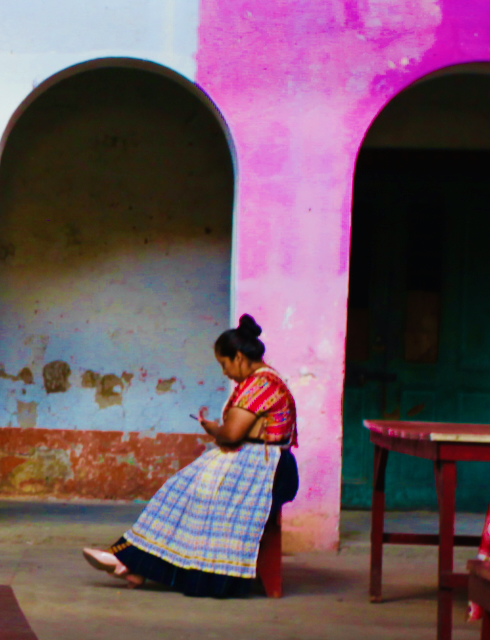



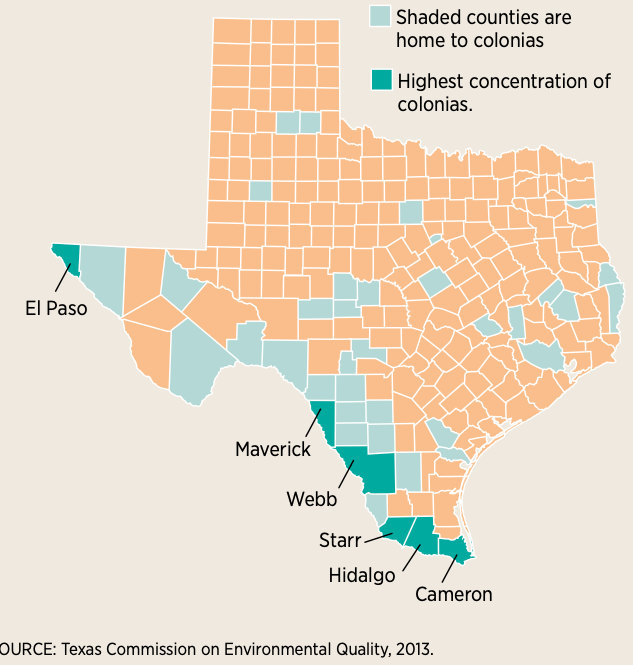
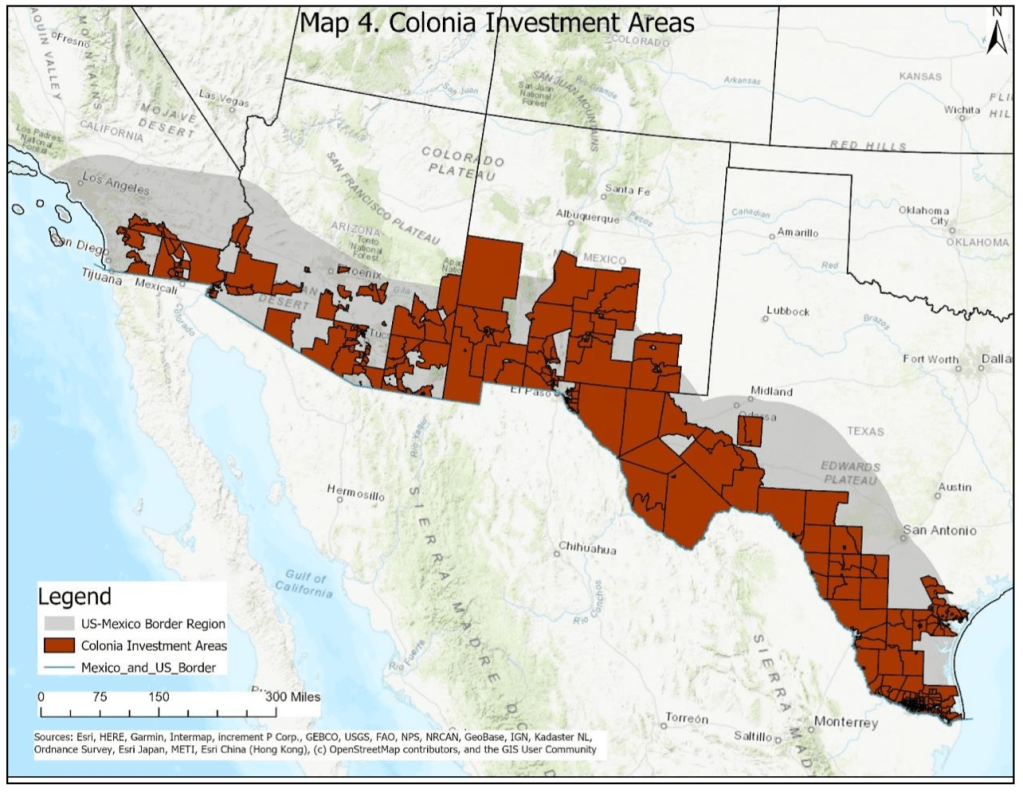
 Bilingual Frontera